
by Osprey Photo Workshops & Tours | Jan 28, 2024
Chincoteague NWR Photo Workshop Fall 2024
With Irene Hinke-Sacilotto
22 – 24 November 2024
Price: $715
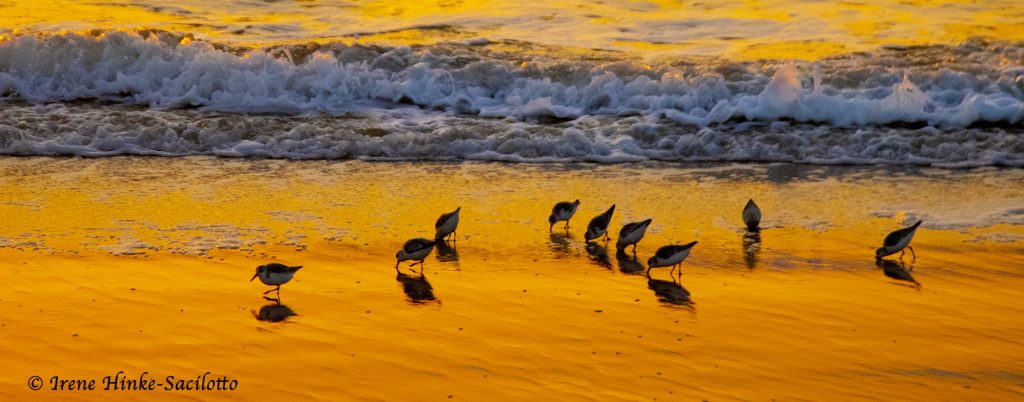
Sanderlings feeding at sunrise.

Red-bellied Woodpecker on trunk

Tundra Swans nipping.
Chincoteague NWR Photo Workshop Fall 2024
Chincoteague NWR is located on the southern Virginia end of the barrier island of Assateague. The refuge attracts large numbers of waterfowl, herons, ibis, ospreys, shorebirds, warblers, and other migrants. It is also the home to wild horses, deer, raccoon, fox squirrels, and other animals. Used to being protected, the wildlife is unusually tolerant of humans and presents visitors with great photo opportunities. The ocean, dunes, shells, workboats, harbor, and spectacular sunrises and sunsets offer workshop participants a variety of subjects with which to work. The program includes tips on locating and approaching wildlife, capturing in-flight shots of birds, equipment selection, composition, lighting, and exposure. We will explore both the refuge, seashore, and the community.
Special feature – Saturday afternoon pontoon boat trip along Assateague’s/Chincoteague’s shoreline with the hope of photographing wild horses, wading birds, porpoise and other wildlife. (weather dependent)
Because of the small class size (8), this Chincoteague Photo Workshop is the perfect blend of one-on-one assistance in the field, instructional PowerPoint presentations, and image critiques.
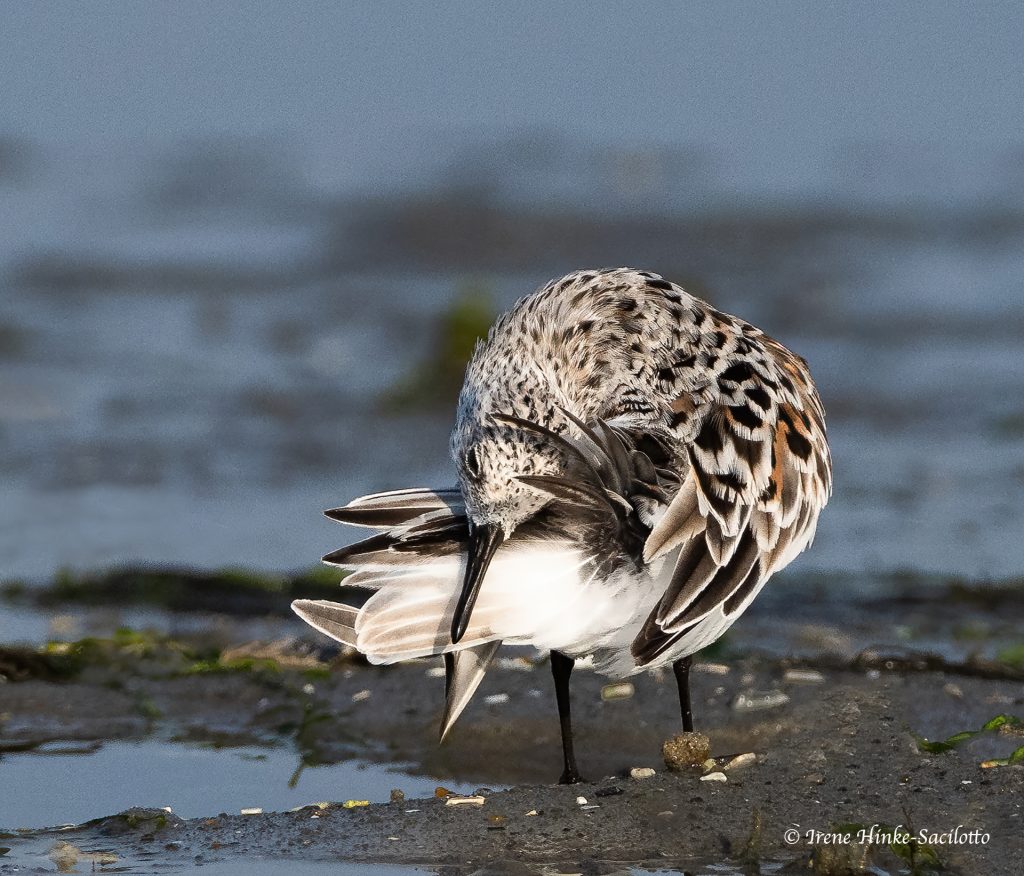
Sanderling twisted preening.

Great Egrets landing in tree.
Friday
7:00 PM-8:15 PM (orientation)
Sunrise to 9:30 AM (photography @ Chincoteague, Assateague Island, and surroundings)
9:30 AM – 11:30 PM (image editing and lunch break)
11:30 – 1:00 PM (discussion/critique of workshop images)
1:00 PM til Sunset (Boat Trip & Sunset)
Sunday
Sunrise to 10:00 AM (photography @ Chincoteague, Assateague Island, and surroundings)
10:00 AM – 12:00 PM (image editing and lunch break)
12:00 – 2:00 PM (discussion/critique of workshop images)
Orientation, meetings, & critiques will be held at the Best Western Plus Motel, Chincoteague Island, VA.)

Osprey taking off

Ocean Sunrise nice color and layers
Description:
This Chincoteague Photo Workshop is designed for those with a basic knowledge of the operation of a 35 mm SLR digital or mirrorless camera with an interest in nature. Workshop emphasis is on improving photographic skills and optimize the use of your camera. Class includes an orientation PowerPoint program followed by photography sessions on Chincoteague National Wildlife Refuge, Assateague Island, and in the town of Chincoteague. Included is a critique/review of images from the weekend. Topics covered: 1) equipment selection and operation, 2) composition, creativity and perspective, 3) metering and exposure, 4) lighting, 5) basic image manipulation and 6) locating, approaching and photographing wildlife.

Fog at sunrise Black Duck Marsh
Based on my findings from scouting the area prior to the workshop, the following will be discussed at the orientation meeting on Friday evening: departure time, current field conditions, potential subjects, equipment needed, safety, field ethics, and other logistical details. Prior to dawn on Saturday, we will depart for the wildlife refuge to photograph sunrise and take advantage of the soft, warm early morning light. Because wildlife is protected on the refuge, animals are abundant and unusually tolerant of humans to the pleasure of most photographers. Situated on the Atlantic Flyway, Chincoteague is a resting and refueling spot for migrating birds. Potential photo subjects include sand dunes, shells, ocean wave, fishing boats, fisherman, the lighthouse, local architecture, and wildlife including sika elk and whitetail deer, fox, otters, raccoons, ponies, herons, rails, swans, geese, ducks, shorebirds, hawks, and other resident and migratory species.

Piping Plover preening

Bald Eagle lifting off from sand dune.
The orientation and discussion sessions for the Chincoteague Photo Workshop, November 2022, will be held at the Best Western Motel in Chincoteague on Maddox Blvd just outside of the wildlife refuge. For the weekend, a small block of rooms is reserved at the Best Western for workshop participants at a reduced price. Contact the hotel for availability at (800) 553-6117 or (757) 336-6557. Mention you are part of the photo workshop led by Irene Hinke-Sacilotto. Also, rooms should be available at other nearby hotels in the town of Chincoteague. For a listing of accommodations other than the Best Western, go to
www.chincoteaguechamber.com

Immature Glossy Ibis feeding.
Cost/Person: $ 715
Deposit: 50% of cost. Final payment due 30 days before start of photo workshop.
To register, go to my website: www.ospreyphoto.com. Click on the home page “Register Now”. Complete the form and send it with your check, Mail to Irene Sacilotto, 542 C Riviera Dr, Joppa, MD 21085
NOTE: Pontoon boat trip included in price of workshop. Students are responsible for their own accommodations, food, transportation, and park/refuge fees. Where possible and COVID risk is minimized, we will carpool to locations. The number of participants is limited to 8. Note: My attention is focused on participants so I do not photograph during the workshop.
Orientation, meetings, & critiques will be held at the Best Western Plus Motel, Chincoteague Island, VA.

Colt feeding outside fence.
Cancellation Policy
Notifications of cancellation must be in writing.
The following charges apply per person at the time I receive your written notification of cancellation:
- Cancel up to 121 days prior to departure date – full refund.
- 120 to 61 days prior to departure, $125 administrative fee charged. ($35 admin fee for weekend workshops.)
- 60 to 46 days prior to departure, 50% of workshop or tour cost.
- 45 days or less prior to departure – NO REFUND
Medical circumstances or emergencies do not constitute grounds for exception to the cancellation policy nor does weather. Therefore, trip cancellation, interruption & medical insurance is HIGHLY recommended. Travelers Insurance Company and others provide such policies at a reasonable rate. In the unlikely event that the trip is canceled due to insufficient enrollment, your money will be refunded in full, with the exception of expenses you personally incurred while preparing for the trip.

Turkey feeding roadside.

by Osprey Photo Workshops & Tours | Jan 6, 2016 | Chicoteague, Fall photography, Nature Photography, Photo Tour, Photo Workshops, Uncategorized, Wildlife Photography
Chincoteague National Wildlife Refuge/Assateague Island
Trip Report (Dec 2015)

Snow Geese Flock
Arrived at Chincoteague, VA on Thanksgiving 2015 to spend several days with friends for the holiday. On Friday, at the Chincoteague National Wildlife Refuge Visitors Center, I delivered a presentation on wildlife photography as I do for the refuge at least once a year. My friends departed at the beginning of the week leaving me to begin scouting locations for my upcoming workshop, sites most likely to provide participants with good photo opportunities. The weather was rainy and cloudy much of the week making my job challenging. To make matters worse, the number of birds, particularly snow geese, this year was fewer than in the past, perhaps due to the warm weather in November and early December. It did not help matters that the phragmites along the banks of the borrow ditches was high in many places making photography difficult and the birds hard to spot.
Luckily there were some small breaks in the weather. Sleeping-in is not wise since you never know what Mother Nature has in store for you. One morning at dawn, light fog floated over the water that reflected the golden color of the sky. Geese floated into the scene and provided some needed foreground. Later that day I spotted a fox squirrel in soft light gathering leaves for her nest. On another day, I spotted her again on the side of the road dining on pinecones. The low light meant I had to use ISOs higher than normal to freeze the action (800 and 1600). On another morning, I grabbed a striking pre-dawn shot of the lighthouse as I enter the refuge.

Sunrise

Sunrise Beach Road

Dawn at Chincotegue Lighthouse

RudyTurnstone
Outside the refuge, I explored the town of Chincoteague and the small boat harbor. I talked to a few watermen and photographed them off-loading their catch. This year was the first time I witnessed workboats returning to the harbor at sunset. This presented me with nice opportunities for sunset photography.

Fishing boat returning
With the low number of birds present of the refuge, I was concerned that my workshop participants arriving on the upcoming weekend would be disappointed with photo opportunities. Besides the small boat harbor, I looked for new subjects to photograph around town. On a foggy morning, I stopped at the intersection where there was a steam driven tractor on display. I had passed it many times but never took the time to examine it. With camera in hand, I discovered interesting details worthy of snapping some shots. Elsewhere in town I took a few shots of outdoor displays and a peculiar mallard with feathers stuck on its bill.

Mallard Duck Quacking
On Friday, finally the weather improved. At dawn, the sky had a bit of color near the horizon so I combined silhouettes of pines against the colored background – layers of color for a slightly abstract feel. Weather conditions continued to improve and so did the number of birds on the refuge. The small group of snow geese that had been hanging out on the beach at Toms Cove near the Life Saving Station, moved north resting on the sand near the beach parking lot. Honking as each new wave of geese arrived, their numbers grew. Against the blue sky, one V of geese after another filled the sky and descended to join the original flock. It was a beautiful sight. I spent the better part of morning photographing the spectacle, much of the time photographing from in my car to avoid disturbing the birds. (Lens primarily used: Nikon 80-400 mm chosen for its flexibility).

Snow Geese landing
In the afternoon Friday, 4 Dec, the impoundment along Beach Road was full of birds – ruddy ducks, buffleheads, cormorants, and flocks of yellowlegs and herons. Weirdly as quickly as the birds appeared, the number dropped significantly the following day when my workshop began.

Trawler at sunset
I had a full workshop this time with 8 participants of varying skill levels. The critique sessions revealed that all walked away from the workshop with very nice images and fresh ideas to improve their photography. Saturday ended with a great sunset at the small boat harbor. We arrived just in time to catch a huge sun dropping behind a trawler tied up at end of the dock. Sunday began with sunrise photography at the beach to be followed by photography of horses and a few herons along the service road. (I rented the Chincoteague Natural History Association tram for part of Sunday morning.)

Fox squirrel
My lesson learned. Don’t give up despite the weather or other disappointments. If you keep a positive attitude, you are bound to find something interesting to photograph.
by Osprey Photo Workshops & Tours | Feb 20, 2015 | Assateague, Bird behavior, Brazil, Chicoteague, Nature Photography, Photo Technique, Photo Tours, Photo Workshops, Wildlife, Wildlife Photography
Animals are more active early I the morning and late in the day as opposed to mid-day when the light is harsh and temperatures are higher. Therefore you have the best chance to capture images that are dynamic at these times. Cameras that perform well (little noise) at higher ISOs are beneficial when the light is low and yet fast shutter speeds are still required.

Spectacled caiman on a ranch in Ibera Argentina. Late afternoon and warm color.
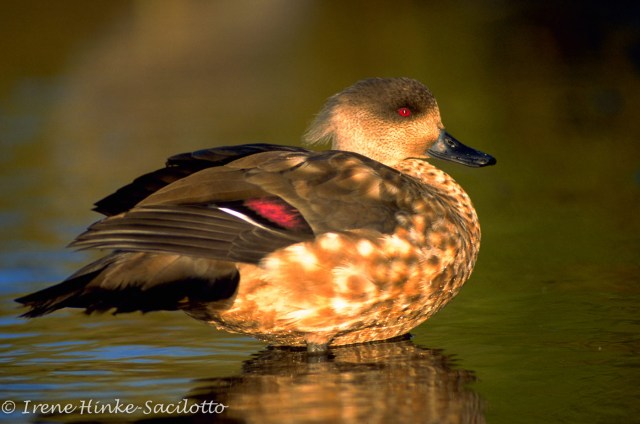
On a pond in the Falklands. Skipped dinner to photograph this and other birds on the pond.
Careful observation of your subject over time is the key to capturing action and behavior. Alterations in body posture, shifting weight, and adjustment in muscle tension (whether noted cognitively or sensed subliminally) can suggest some change in behavior. For instance, shifting of body weight of a resting animal may indicate it is ready to stand or possibly stretch.
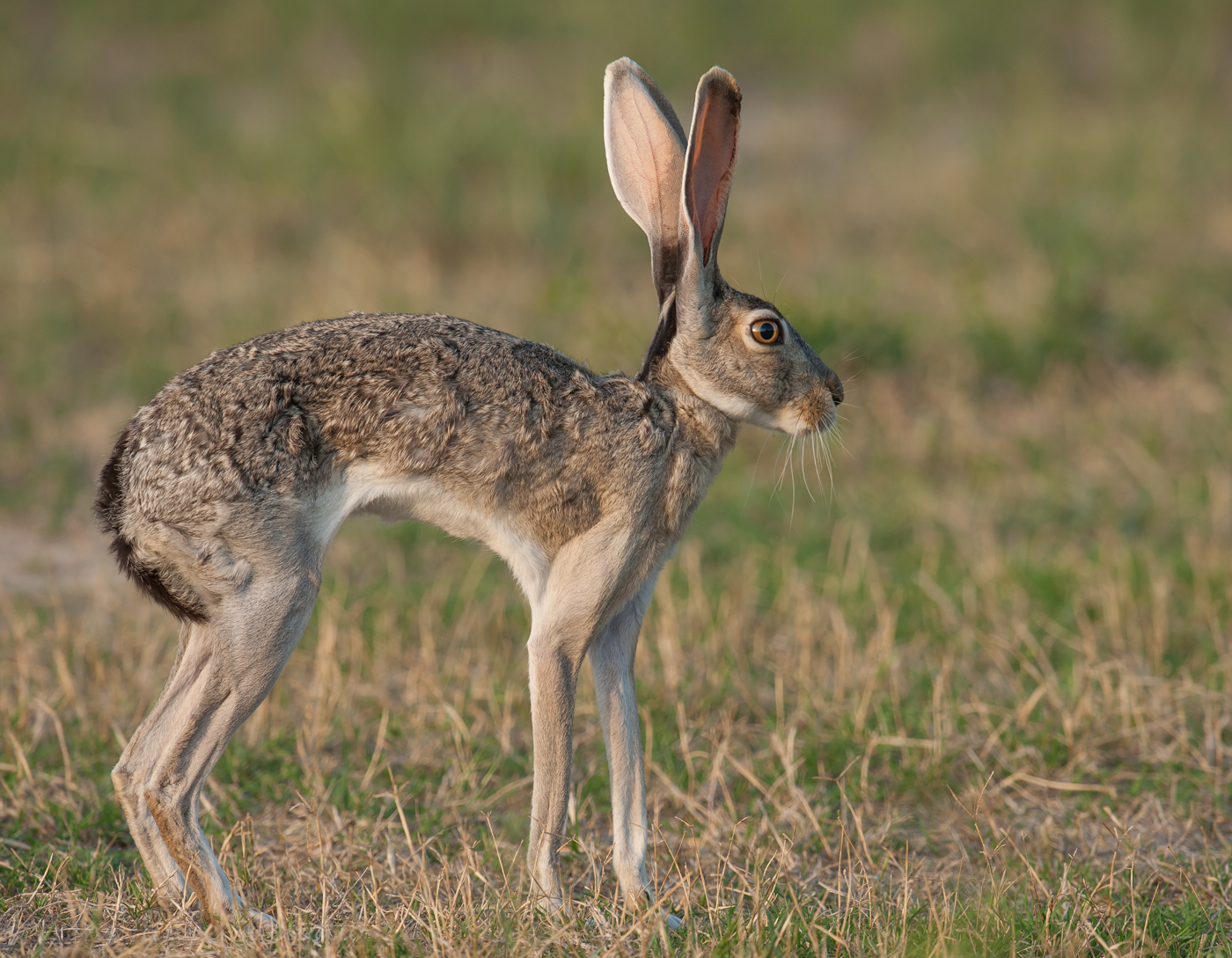
Jack Rabbit stretching.
Birds stretching or flapping wings can often precede flight. Sandhill cranes lean forward before flying. Herons often bend knees and stretch out neck before flying. Seabirds landing on rocky cliffs often employ their wings to provide stability. Birds bathing typically splash while cleaning feathers and then shake off the excess water.

Catching its balance after landing on rock ledge.

Canvas back bathing.

Cinnamon teal bathing.

Black-necked swan taking off from pond. Neck outstretched preceded flight.

Humpback whale preparing to dive. Can predict the point at which the fluke will appear dripping water by observing the curvature of the tail at its base.

Leaning forward before flight. Sandhill cranes, Bosque del Apache.

Bends knees and leans forward before flight.
Chattering and agitated movements within a flock of birds frequently precedes the arrival of more members of their flock, the departure of birds, or the approach of a threatening predator.

Puffin landing. Birds on the ground became animated as the other approach.

Greese were vocal and agitated before leaving the pond.
Photography during breeding season is often rewarding since activities increase – turkeys strut, elk lock antlers, deer mark territory, etc. Nurturing behavior between adult and young often results in touching photos.

Black Browed Albatross preening each other. Pair bonding during breeding season.

Otter protecting young. Difficult to get this photo since rocks were slippery.

King penguin caring for new born.
by Osprey Photo Workshops & Tours | Jan 17, 2015 | Digital Photography, Nature Photography, Photo Technique, Photo Tours, Photo Workshops, Travel, Wildlife, Wildlife Photography
LOCATIONS (PART 4)
Several of the best locations to photograph wildlife are ones where the animals are acclimated to the presence of people or vehicles. These include county, state, and national parks, wildlife refuges & sanctuaries, and eco-friendly ranches (South Texas & South America). In terms of wildlife refuges, I tend to favor those with roads that run along the dikes that separate the impoundments. Parallel to the roads are ditches that typically hold water even when the other ponds are dry and therefore attract wading birds and other wildlife. If these channels are close to the road and vegetation does not block the view, photos of the animals can be taken easily from the car. The vehicle serves as a mobile blind that allows you to move along with the subject and adjust your angle of view and distance. To photograph out the car window, I place the telephoto lens on one or two large home-made bean bags filled with rice which I place on the window sill. You can also purchase bags from Lens Coat http://www.lenscoat.com , Birds as Art https://store.birdsasart.com or other suppliers. Two of my favorite wildlife refuges that are perfect for this style of shooting are Chincoteague NWR and Bosque del Apache NWR. http://www.fws.gov/refuge/chincoteague/ & http://www.fws.gov/refuge/bosque_del_apache/
PHOTOGRAPHY FROM A VEHICLE

Snow goose, shot from the car on the Loop Rd. @ Chincoteague. NWR, VA

Mallard family in a row. Shot from the car in Chincoteague NWR, VA.

Northern Harrier consuming a duck. Shot from rental car in Bosque del Apache, NM.
PRIVATE RANCHES
Eco-friendly ranches that protect native species and habitat such as those in South Texas, Argentina and Brazil often cater to photographers. These offer excellent opportunities to photograph from vehicles, blinds, or even on foot. (Discussion of blinds in later blog)

Rosette Spoonbill feeding in pond on private ranch in Texas. Photographed from a blind.

Caiman resting on bank at private ranch in Argentina.

Photographed late in the afternoon on Sea Lion Island in the Falkland Islands
HIKING
Photographing while randomly hiking in your local woods often fails to provide satisfactory result. The animals flee before you are within shooting distance. However if the habitat attracts wildlife and the animals are protected, they sometimes become acclimated to seeing people on foot . Corkscrew Swamp http://corkscrew.audubon.org and Six Mile Cypress Slough Preserve in South Florida with their boardwalks are often worth a visit as well as Loxahatchee NWR. Hiking in other locations such as Yellowstone NP, Glacier NP, and the Badlands of South Dakota can also be productive particularly if your subject is initially spotted from the road. (See stalking techniques in later blogs).

Great Blue Heron shot while I was walking along a ditch filled with water in Chincoteague NWR, VA

Raccoon photographed while walking along one of the ditches at Chincoteague, VA.

Capuchin Money. Photographed while hiking along trails on hotel property near Bonito Brazil. Semi tame since food is readily available there.
DANGER
When hiking in remote areas, care must be taken not to surprise a grazing buffalo, bear, moose and other large mammals. Even though they may be in national parks or reserves they are still wild and potentially dangerous particularly if their young are present or if it is mating season. When photographing such animals, use long lenses to keep a safe distance from them and to isolate the subject. Approach slowing and always leave them a means of escape. (See safety discussion in a later blog)

White-tailed Deer buck photographed at Canaan Valley, WV many years ago while meandering throughout the meadows in search of deer to photograph.

I was photographing a scene away from the car when I spotted this sow and cubs. I stopped and grabbed a quick shot. She bluffed charged me and I carefully retreated to my car a little distance away. The rest of my shooting was done with my 600 mm from inside the car. A black bear with cubs can be very dangerous.

While hiking I spotted two rams. I took my initial photos from a distance. When they resumed their original behavior eating vegetation and slowly moving through the field, I moved a bit closer to them making sure not to pressure the animals or block its means of escape. I spent nearly an hour following and photographing their activities. At times they eveny closed the distance between u without alarm.
More blogs coming covering other topics relative to wildlife photgraphy. Importance of food, water, and shelter plus timing next.
by Osprey Photo Workshops & Tours | Jan 4, 2015 | Digital Photography, Nature, Nature Photography, Photo Tours, Photo Workshops, Wildlife, Wildlife Photography
Requirements
Knowledge of Equipment —
- Check settings heading out for a day of shooting. If camera has be to the shop for repair or cleaning, often the service people change the settings back to the defaults.
- Make sure the camera batteries are fully charged and there is a memory card of an appropriate size in place. Always carry spares.
- When traveling I back up my images onto two 1 or 2 T portable drive connected to my laptop. Then I import them into Lightroom and verify that they were transferred without any glitches or corrupted files. Only then do I format my memory card. I prefer to start with a clean card each day, 16 or 32 G. At home, I will copy the files from the smaller drives to a larger one.
- As you approach your subject, from a distance preselect the lens and settings that are most appropriate. for the situation. Consider the direction, quality, and color of the light when choosing your approach. Be aware of subtle changes in muscle tension and poses that may indicate action (addressed in later blog) and be prepared to act instantaneously.

Sandhill crane. Saw this crane approaching a pond filled with other birds. Selected my 600 mm lens and set aperture large enough so would be using a fast shutter speed. SInce it was the end of the day, also elevated my ISO. Locked focus on bird at a distance and continued to follow it as it landed. Took a series of shots.

Osprey Nest – Selected 80-400 mm zoom lens and elevated ISO. Waited patiently for the osprey t leave the nest. Took a series of shots. Photographed from the water but nearly drowned my camera when stepped into a hole where the water reached my waist.
Knowledge of Subject —
- Research your subject’s behavior. Where and when is it found? What is its temperament?
- Speak with others familiar with your subject including researchers, biologists and even learning tips from hunters as to the subject’s behavior and tolerance.
- Approach from down wind if animal has an elevated sense of smell as does the Giant Anteater. Those with long/pointy noses tend to have better sense of small than others.

Capuchin Monkey. All animals are attracted to food and are easier to photograph when their attention is on something other than you,

Giant Anteater at termite mound, Pantanal, Brazil. Long nose and good sense of smell so approach animal from down-wind.
Patience and persistence —
- Spend as long as possible with your subject. It some times takes a long time to capture what you are after and may required repeated attempts on different days and with different weather conditions. Avoid distractions and keep your focus. However if another great photo opportunity comes along, go ahead and pursue it.
- Before beginning a project and while at the scene, develop in your mind a vision of what you hope for in terms of results but never limit yourself to just this.
- Continue to develop your skills, trying to surpass previous accomplishments.
- Don’t give up. Look at other ways to achieve your goal. Perhaps move to achieve a better camera angle, light, and background.

Herring Gulls, Common bird by interesting pose.

Canvasback. Often after preening, birds flap their wings to get rid of loose feathers. Watched and waited for one of the ducks to splash water as it flapped its wings.

King Eider, Watched the eiders approach to the beach and waited for nearly an hour before captured this shot.
Curiosity & ability to observe —
- Help you be engaged with the subject and become sensitive to subtle changes in posture, etc. that may precede some behavior of interest.
- No time for snoozing. I find my mind engaged in a detective game. What it happening & why”. What’s next? What do you want to show? What fascinates you?

Billing – greeting and pair bonding. Showing intruder that this is there territory.

Northern Shovler. Anticipated flapping affer some time preening.

Atlantic Puffins. When one animal approaches another there is likely to be some interaction – friendly or otherwise.
See next installment regarding wildlife photography – locating subjects.


