
by Osprey Photo Workshops & Tours | Aug 9, 2021 | Bird behavior, Bird photography, Chicoteague, Digital Photography, Nature Photography, Photo Tours, Photo Workshops, Rookery, Spring Photography, Spring Photography, Spring Photography, Wetlands, Wildlife Photography
May/June 2021- Heron Rookery Photo Project

From 24 April until 18 June 2021 I was on the road. One of my projects involved documenting the activity in a heron colony populated by a variety of wading birds–Great and Snowy Egrets, Black-Crowned Night Herons, Tri-color & Little Blue Herons, and a few Glossy Ibis. The rookery was in a large marsh on a ridge where low shrubs grow such as Bayberry and Wax Myrtle. Nests were low and among tangled branches that help protect the nests, eggs, and offspring from predators. It was a perfect locations with little chance of flooding and rich waters nearby with abundant food to provide for the growing youngsters.
Photographing colonial birds in a rookery setting requires a very careful approach as to not negatively effect breeding success.
Herring Gulls
Surrounding the heron colony in the tall stands of salt-meadow hay Herring Gulls nested. They chose a perfect location since they could swoop over the rookery harassing the herons and attempting to grab eggs and hatchlings. On several occasions, I saw a gull dive down and hit exposed heron. There was evidence that high water flooded the lower part of the marsh and destroyed some of the nests.


Precautions
I took great care to minimize any disturbance of the nesting birds to avoid interfering with nesting behavior, possibly causing displacement of eggs or the herons abandoning nests. I keep. my visits infrequent, limited in time, and when temperatures were moderate.  Since my intent was to document natural behavior and interactions between individuals, I would have been foolish and unethical to disturb the birds.

My route through the marsh was difficult since I had to avoid soft mud, holes, and tidal guts.   I benefited from past experience reading the marsh and noting what grasses and substrate would support me.

Dressed in camouflage, I approached the colony slowly and indirectly.  I photographed from a  low position, sitting or kneeling on the soggy, water-saturated ground.  Once in place, I  minimized my movement.  It was usually distant noise that would cause the birds to flush from their nests -- the rumble of trucks, planes, boats, and construction projects..  Luckily, the birds quickly returned to their nests and young.

Equipment
Lenses primarily used included my 200-500 mm and 80-400 mm Nikon lenses.with my D500 and D850 Nikon cameras attached. The telephotos were necessary to keep my distance from my subjects and yet isolate them. Zoom lenses provided for flexibility. As the birds moved and interacted, I could adjust my focal length to capture the range of motion. Most shots were taken using a tripod with a sturdy ball head or gimbal mount. I used waterproof sleeves over the base of the tripod legs to protect the joints from damaging grit and corrosive brackish water.


Changes from May into June
During May, many herons displayed breeding plumage and bright colors around the eyes and bill. A few still were engaged in mating, courting and nest building, with some birds carrying sticks. In mid-June, courtship feathers were less obvious and the facial colors had faded a bit. There were eggs in some nests and young birds in others.


Capturing action
One of my goals was to capture arial fighting and aggressive behavior as birds landed in the bushes and jockeyed for position to access their nests. I carefully observed the colony concentrating on areas where there was more activity and less tolerant birds. Aggressive actions included nipping, stabbing, feather pulling, hackle raising, or just landing on the back of an opponent.
I had the best luck capturing the arial fights when using my 80 – 400 mm lens and shorter focal lengths since it was nearly impossible to predict exactly where and when the action would occur.


Focus Difficulties
If the birds were flying with sky in the background, I focused using a small group of focus sensors. When multiple subjects were involved, I selected an f-stop that offered a bit more depth of field than usual such as an F11 or 16.  But to freeze action with high shutter speeds, I had to use higher ISOs than I typically prefer (often 1000 or 1250).  When the birds were perched on branches or were landing,  I often used a single focus point over the bird's eye.

With auto focus, I had problems with the sensor locking on branches and leaves, not the bird.  Sometimes manual focus was required. Because the nest were located deep within shrubs, I struggled to get clear shots of the birds landing and interacting without branches, grass, shadows or the wings blocking their faces.

Final Thoughts
Most folks find marsh foreboding with muck, unpleasant smells, and pesky flies and mosquitoes.  For me, they are marvelous places filled life and new things to discover.  When  involved with projects like this one where I am deep within a marsh, I find solace and a connection with nature.

Marshes are critical ecosystems that need our protection, not destruction  They are highly productive and a haven for wildlife. They trap sediments and remove nutrients and toxins from the water that can clog our waterways, poison wildlife, and deplete life-giving oxygen.

by Osprey Photo Workshops & Tours | Apr 21, 2019 | Assateague, Chicoteague, Nature Photography, Photo classes, Photo instruction, Virginia, Wildlife Photography
Photo Opportunities
Chincoteague National Wildlife Refuge & Assateague Island National Seashore

Ospreys can dive to catch fish. Their feathers shed water easily and their talons specifically designed to be able to grab and fly with their catch.
Chincoteague National Wildlife Refuge and Assateague Island National Seashore
Location & Management:
Managed by the US Fish and Wildlife Service, Chincoteague National Wildlife Refuge covers 14,000 acres of beach, dune, marsh, shrub and forest habitats. The majority of the refuge is located on the Virginia end of the narrow, 37-mile-long barrier island of Assateague (Assateague Island National Seashore) just south of Ocean City Maryland. The refuge is managed to benefit wildlife and to protect critical habitat for both resident and migrating species. Birds found on the refuge include ducks, geese, heron, raptors, warblers, and shorebirds plus deer, raccoons, Delmarva Peninsula Fox Squirrels, muskrats, foxes, and otters.

In recent years, there has been a significant drop in the number of migrating snow geese visiting the refuge in the fall. Once reaching nearly 40,000, but today the numbers are much lower. Grabbed this shot several years ago as they landed on the beach. This fall, they were there again this year.
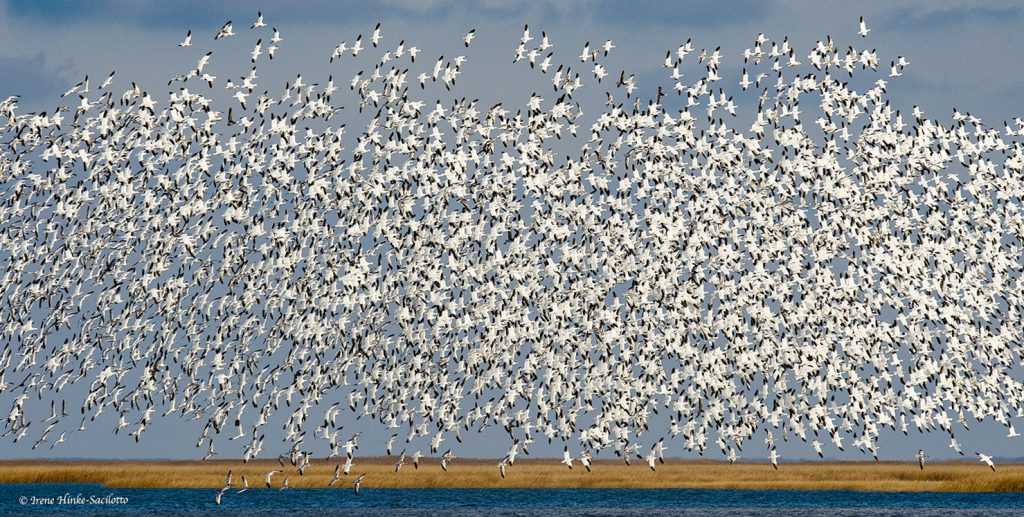
Large numbers of snow geese sometimes stop at Bombay Hook National Wildlife refuge, DE instead of proceeding south to Chincoteague in the fall. This flock circled several times before landing.
A number of impoundments have been created by refuge staff where water levels are managed to provide resting and feeding areas for waterfowl and other species. Some dikes bordering the enclosures are topped with roads adjacent to water-filled borrow ditches where birds congregate. This arrangement offers excellent opportunities to photograph wildlife from your car, steadying your camera on a bean bag or using another means of support. Because the animals are protected on the refuge and are used to seeing people and vehicles, they are less timid than elsewhere and more easily photographed.
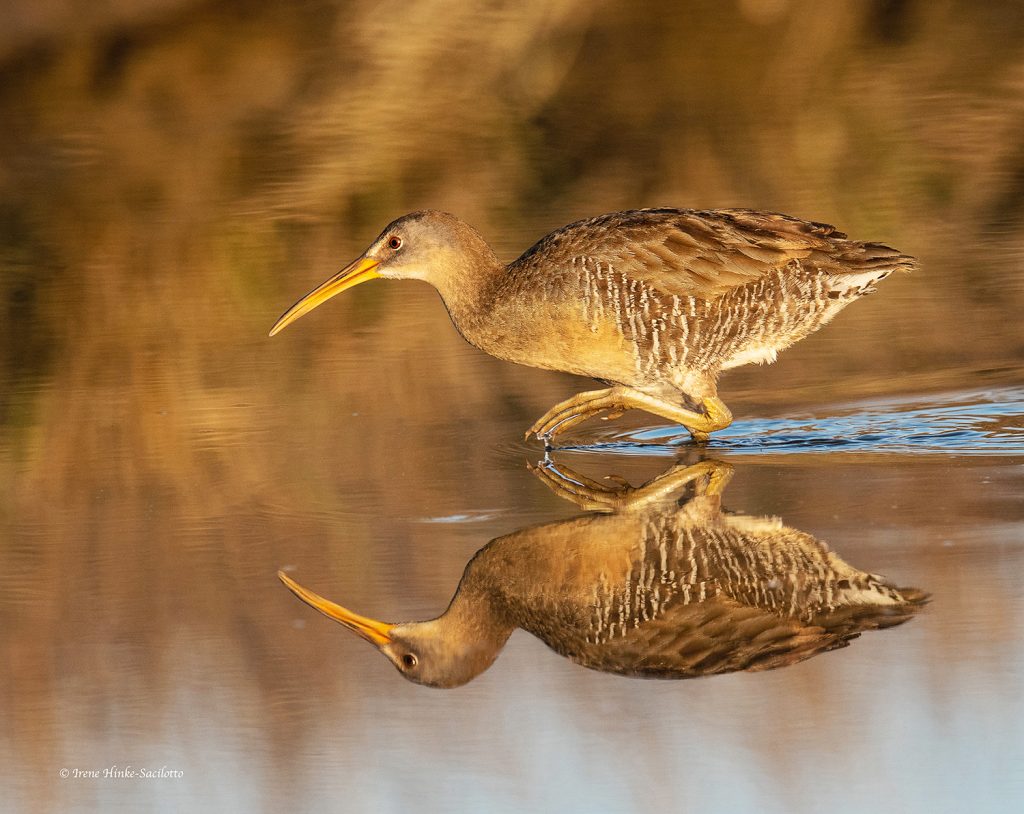
Clapper Rails are secretive birds found in the marshes. They feed at low tide on the exposed mud flats. Rails are often heard before seen.
Wild ponies are a favorite photo subject among visitors. Smaller than standard horses with heavy coats to protect them in this harsh environment. They appear perpetually pregnant with bloated bellies from their diet high in bulk and salt.

New born. Wild pony family.
Constant Change:
As with all barrier islands, the sand shifts with the season and strong storms. The ocean cuts through the dunes sometimes forming temporary inlets. Water-laden sand rolls over the land creating new marsh. With the landscape constantly changing, there are always new and exciting opportunities for photography. No matter when you visit, you will always find something to photograph. Even in the summer when the public beach is packed with people, you can still find photo subjects by venturing out in the early morning and late afternoon when there are fewer people to interfere with your activities.

Once endangered, Delmarva Peninsula Fox Squirrels were transplanted on Chincoteague and now they are often seen at the edge of the maritime forest.
Locating and approaching wildlife:
Spotting animals requires careful scanning of the environment for shapes, tones or colors out of place, and movement. By studying animals, whether photographing or not, you gain insight into their behavior and are better able to capture action shots. Creatures of habit, animals often visit the same locations repeatedly so check these spots on a regular basis. Know your equipment well and be prepared to photograph at any time. Have a suitable camera/lens combination ready with exposure settings pre-set for conditions you are likely to encounter. Once a potential subject is spotted, plan your approach. Consider the lighting, background, subject temperament, and the animals direction of movement. If it is following a predictable path, move slowly and indirectly to position yourself where it is heading. Be careful not to cause it to alter its behavior. Rapidly moving directly towards the animal will normally causes it to flee.

I watched the direction the fox was moving and carefully position my vehicle on the shoulder of the road at a distance in front of where I thought it was going. I made sure the warm afternoon light was illuminating its beautiful red coat

After hearing its distinctive call, I spotted this Belted Kingfisher on one of its favorite branches. As I positioned my camera, it plunged into the water and emerged with a small crab in its bill before returning to its perch. To capture various poses of the bird as the bird struggled to consume the crustacean, I held down the shutter release button and repeatedly fired a series of shots using a high number of frames/second.
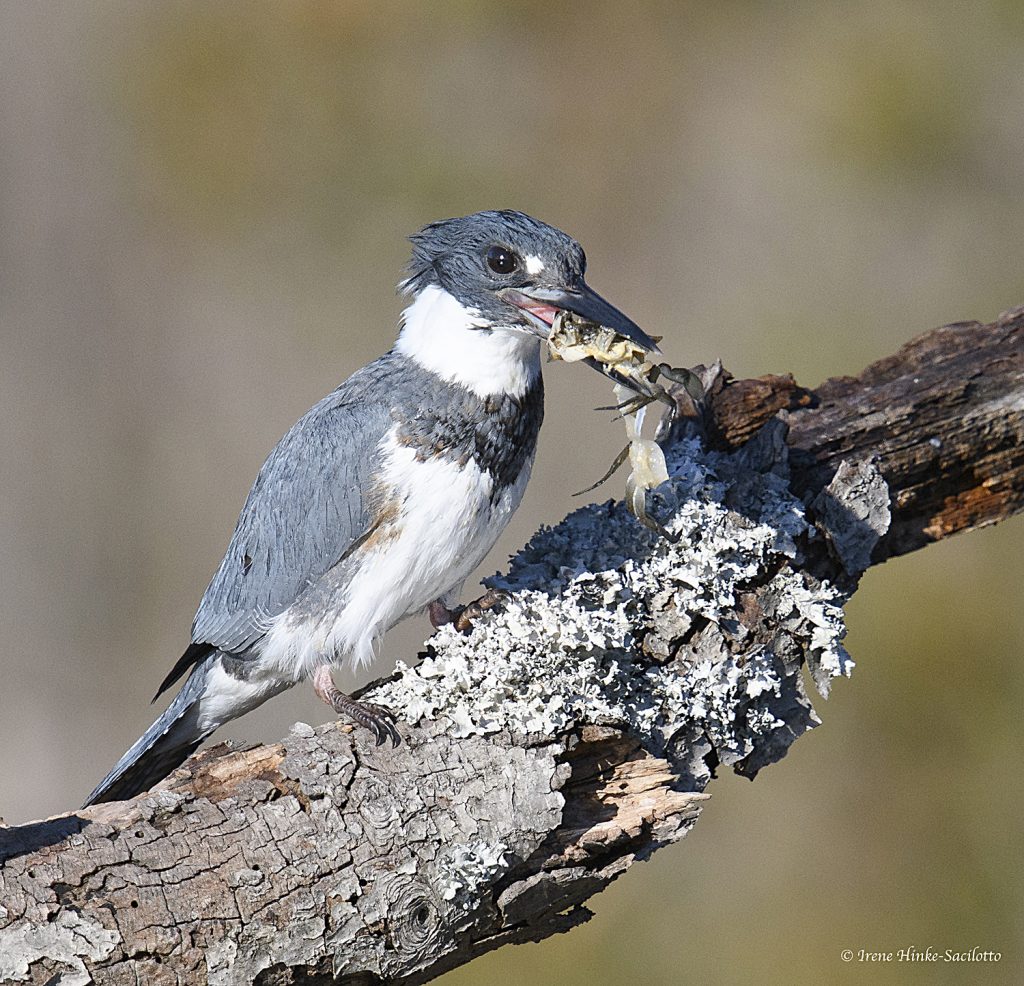
Shot from my car with my Nikon D850 camera and 600 mm lens resting on a bean bag. Settings: ISO 800, F10, and shutter speeds approximately 1/2000 second.
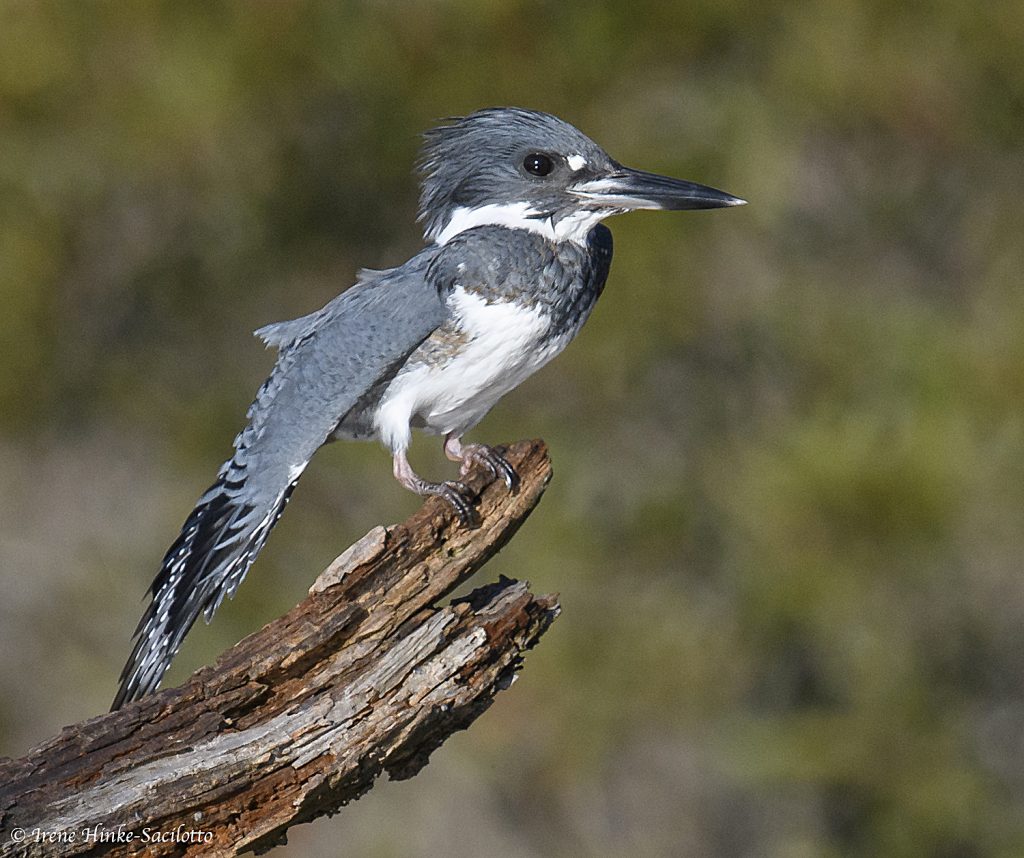
Belted Kingfisher stretched wing just before it dove after fish.
Suggested lenses and other gear:
- A wide-angle for beach scenes, flocks of birds, and sunrise/sunsets and perhaps a 80 to 200 mm zoom lens to isolate portions of the scene.
- A 300, 400 or 600 mm telephoto for small or timid subjects such as shorebirds. It is preferable to buy long lenses that have collars for mounting on a tripod. This makes it easier to handle the camera/lens combination and it allows for quick adjustment of orientation from horizontal to vertical or in-between.

To spot animals, I look for movement. This Cedar Waxwing was part of a flock attracted to the berries. Shot with my 600-mm lens.
- A 1.4 tele-converter to extend the effective focal length of your primary lens for photographing small subjects. Note: The tele-converter reduces the amount of light reaching the sensor, cutting shutter speeds in half. For best image quality, buy one matched to your prime lens.
- A 200-mm macro lens for close focusing and high magnification when photographing a shell, insect, or flower. Compared to shorter macro lenses, with the 200-mm lens, you can obtain the same magnification at a greater working distance from your subject–a benefit if photographing something timid such as a ghost crab.
- Other gear: An electronic shutter release to prevent camera shake when using long exposures or high magnification. A polarizing filter to remove unwanted reflections and shine on surfaces of vegetation intensifying colors. Depending on the angle of the sun, it can also make the sky appear bluer. You might want to include a neutral density filter that reduces the amount of light entering the lens in order to create special effects by using slow shutter speeds to suggest motion of moving objects – the surf, the wings of birds, etc.

The lighting and pose made this photo of a Great Blue Heron special. Shot in the early AM.
- A sturdy tripod, preferably without a center post for maximum stability when using long telephoto lenses. The tripod should be topped with a professional ball head that can easily support the weight of your camera/lens combination or with a Wimberley Head (gimbal) which is preferred by many photographers for manipulating large lenses and tracking animals and birds.
- If shooting on the beach, the wind off the ocean can be fierce and unpredictable, so never walk away from the tripod. Also, watch where you place your camera gear since an incoming wave can swamp your equipment or worse, wash it away. When around blowing sand or dust, shield your camera when changing lenses to avoid particles entering the throat of the camera and making their way to the sensor resulting in dark spots on your images.
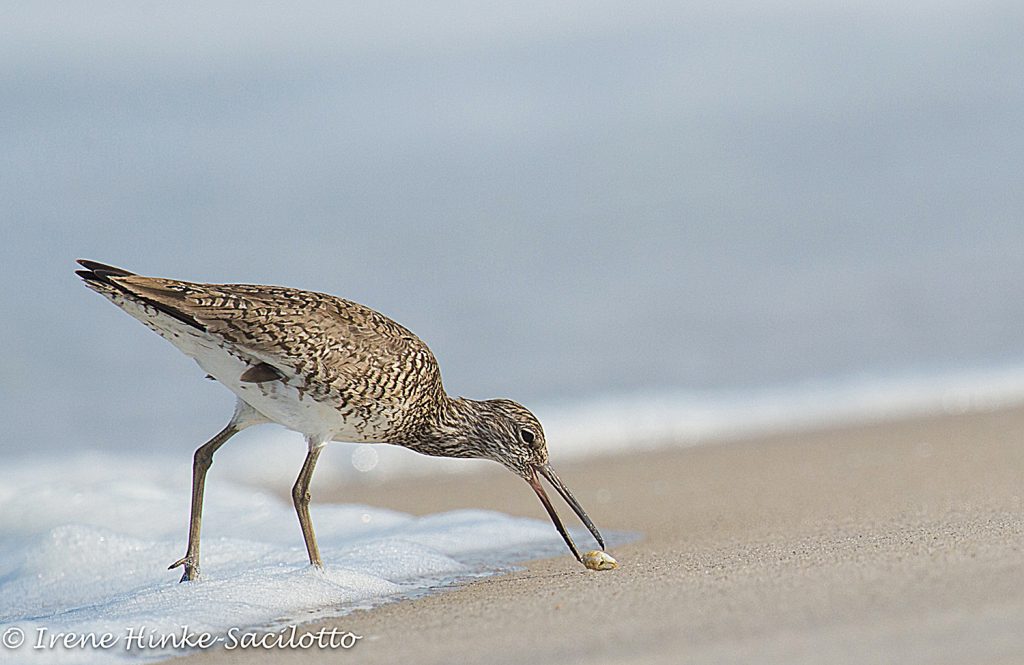
Willet picking up mole crab. Shorebird behavior is often predictable. They follow the edge of the surf, probing for organisms as waves retreat.
Useful tips:
- By having with you two cameras mounted with different lenses when in the field, you can avoid changing lenses in the open and can more quickly switch from one focal length to another.
- When on the beach, wipe or brush the sand off your tripod legs with a damp cloth to prevent particles and salt from entering the joints between tripod segments and making it difficult to adjust the tripod’s height. You can buy or create water-proof tube covers for the lower legs to minimize sand-related problems and to allow you to submerge the legs in the surf.
- If visiting in the spring, summer or early fall, bring insect repellant to guard against mosquitoes, biting flies, and ticks potentially carrying Lyme disease. Reads more on CDC’s website. https://www.cdc.gov/lyme/prev/on_people.html
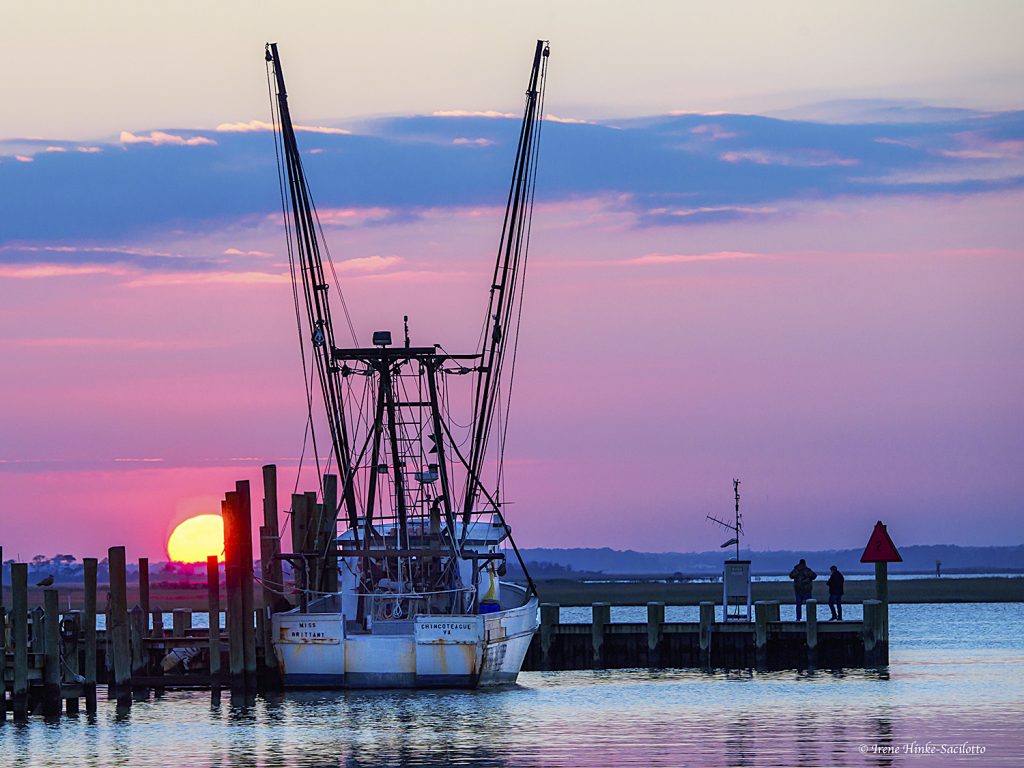
Adjacent to the refuge is the town of Chincoteague with a small boat harbor. Sometimes loons are found here. It is also a good place to photograph sunset.

by Osprey Photo Workshops & Tours | Jan 6, 2016 | Chicoteague, Fall photography, Nature Photography, Photo Tour, Photo Workshops, Uncategorized, Wildlife Photography
Chincoteague National Wildlife Refuge/Assateague Island
Trip Report (Dec 2015)

Snow Geese Flock
Arrived at Chincoteague, VA on Thanksgiving 2015 to spend several days with friends for the holiday. On Friday, at the Chincoteague National Wildlife Refuge Visitors Center, I delivered a presentation on wildlife photography as I do for the refuge at least once a year. My friends departed at the beginning of the week leaving me to begin scouting locations for my upcoming workshop, sites most likely to provide participants with good photo opportunities. The weather was rainy and cloudy much of the week making my job challenging. To make matters worse, the number of birds, particularly snow geese, this year was fewer than in the past, perhaps due to the warm weather in November and early December. It did not help matters that the phragmites along the banks of the borrow ditches was high in many places making photography difficult and the birds hard to spot.
Luckily there were some small breaks in the weather. Sleeping-in is not wise since you never know what Mother Nature has in store for you. One morning at dawn, light fog floated over the water that reflected the golden color of the sky. Geese floated into the scene and provided some needed foreground. Later that day I spotted a fox squirrel in soft light gathering leaves for her nest. On another day, I spotted her again on the side of the road dining on pinecones. The low light meant I had to use ISOs higher than normal to freeze the action (800 and 1600). On another morning, I grabbed a striking pre-dawn shot of the lighthouse as I enter the refuge.

Sunrise

Sunrise Beach Road

Dawn at Chincotegue Lighthouse

RudyTurnstone
Outside the refuge, I explored the town of Chincoteague and the small boat harbor. I talked to a few watermen and photographed them off-loading their catch. This year was the first time I witnessed workboats returning to the harbor at sunset. This presented me with nice opportunities for sunset photography.

Fishing boat returning
With the low number of birds present of the refuge, I was concerned that my workshop participants arriving on the upcoming weekend would be disappointed with photo opportunities. Besides the small boat harbor, I looked for new subjects to photograph around town. On a foggy morning, I stopped at the intersection where there was a steam driven tractor on display. I had passed it many times but never took the time to examine it. With camera in hand, I discovered interesting details worthy of snapping some shots. Elsewhere in town I took a few shots of outdoor displays and a peculiar mallard with feathers stuck on its bill.

Mallard Duck Quacking
On Friday, finally the weather improved. At dawn, the sky had a bit of color near the horizon so I combined silhouettes of pines against the colored background – layers of color for a slightly abstract feel. Weather conditions continued to improve and so did the number of birds on the refuge. The small group of snow geese that had been hanging out on the beach at Toms Cove near the Life Saving Station, moved north resting on the sand near the beach parking lot. Honking as each new wave of geese arrived, their numbers grew. Against the blue sky, one V of geese after another filled the sky and descended to join the original flock. It was a beautiful sight. I spent the better part of morning photographing the spectacle, much of the time photographing from in my car to avoid disturbing the birds. (Lens primarily used: Nikon 80-400 mm chosen for its flexibility).

Snow Geese landing
In the afternoon Friday, 4 Dec, the impoundment along Beach Road was full of birds – ruddy ducks, buffleheads, cormorants, and flocks of yellowlegs and herons. Weirdly as quickly as the birds appeared, the number dropped significantly the following day when my workshop began.

Trawler at sunset
I had a full workshop this time with 8 participants of varying skill levels. The critique sessions revealed that all walked away from the workshop with very nice images and fresh ideas to improve their photography. Saturday ended with a great sunset at the small boat harbor. We arrived just in time to catch a huge sun dropping behind a trawler tied up at end of the dock. Sunday began with sunrise photography at the beach to be followed by photography of horses and a few herons along the service road. (I rented the Chincoteague Natural History Association tram for part of Sunday morning.)

Fox squirrel
My lesson learned. Don’t give up despite the weather or other disappointments. If you keep a positive attitude, you are bound to find something interesting to photograph.
by Osprey Photo Workshops & Tours | Feb 20, 2015 | Assateague, Bird behavior, Brazil, Chicoteague, Nature Photography, Photo Technique, Photo Tours, Photo Workshops, Wildlife, Wildlife Photography
Animals are more active early I the morning and late in the day as opposed to mid-day when the light is harsh and temperatures are higher. Therefore you have the best chance to capture images that are dynamic at these times. Cameras that perform well (little noise) at higher ISOs are beneficial when the light is low and yet fast shutter speeds are still required.

Spectacled caiman on a ranch in Ibera Argentina. Late afternoon and warm color.
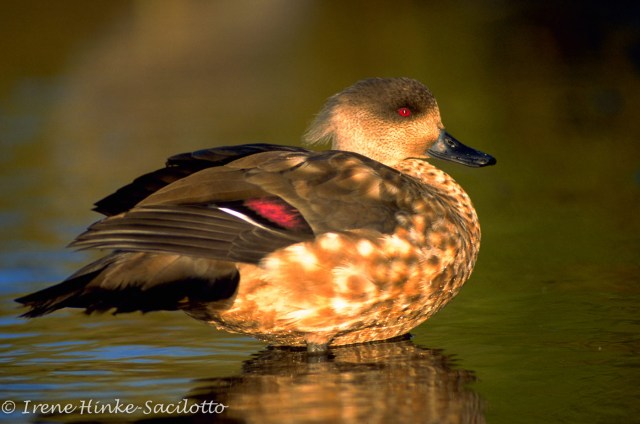
On a pond in the Falklands. Skipped dinner to photograph this and other birds on the pond.
Careful observation of your subject over time is the key to capturing action and behavior. Alterations in body posture, shifting weight, and adjustment in muscle tension (whether noted cognitively or sensed subliminally) can suggest some change in behavior. For instance, shifting of body weight of a resting animal may indicate it is ready to stand or possibly stretch.
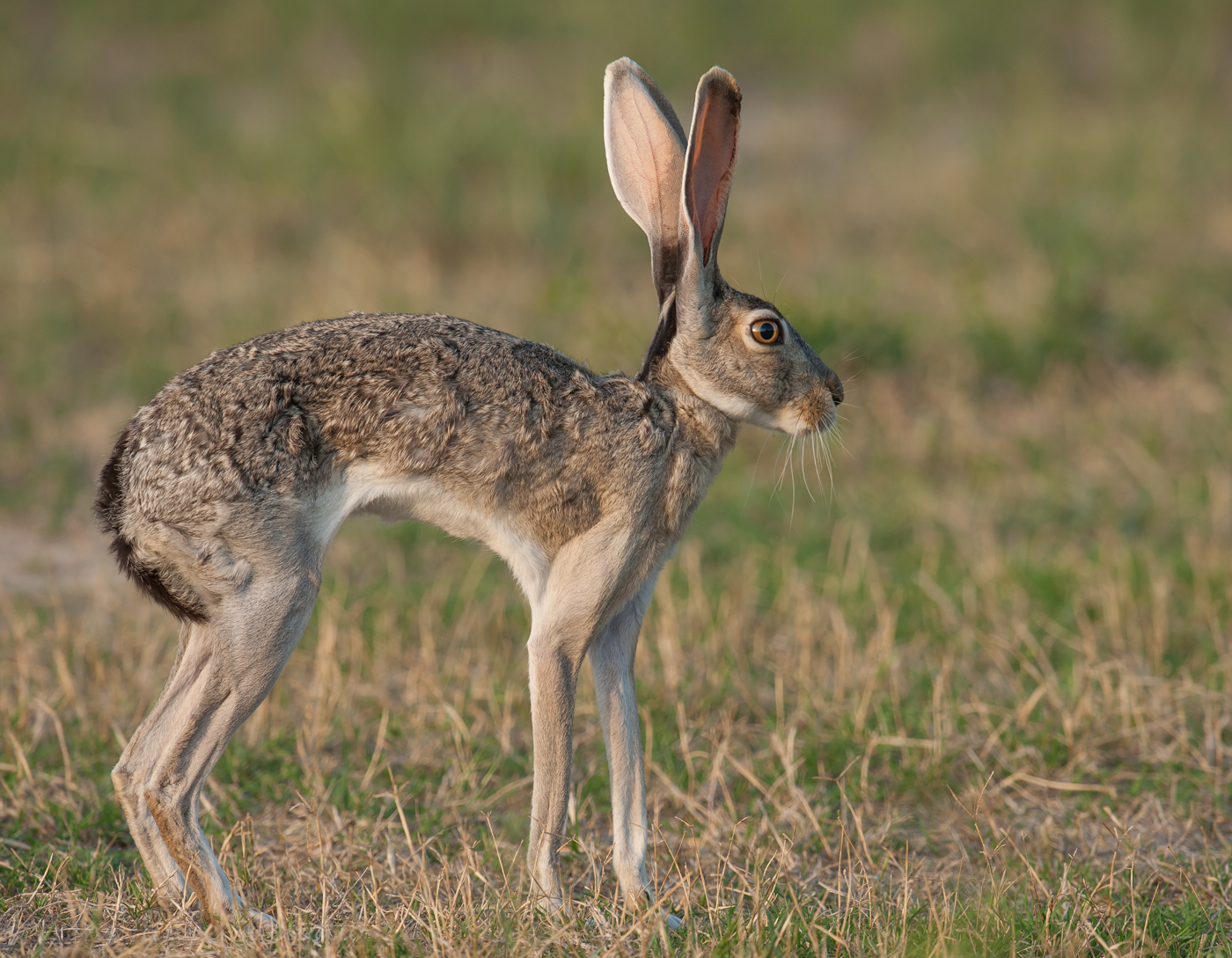
Jack Rabbit stretching.
Birds stretching or flapping wings can often precede flight. Sandhill cranes lean forward before flying. Herons often bend knees and stretch out neck before flying. Seabirds landing on rocky cliffs often employ their wings to provide stability. Birds bathing typically splash while cleaning feathers and then shake off the excess water.

Catching its balance after landing on rock ledge.

Canvas back bathing.

Cinnamon teal bathing.

Black-necked swan taking off from pond. Neck outstretched preceded flight.

Humpback whale preparing to dive. Can predict the point at which the fluke will appear dripping water by observing the curvature of the tail at its base.

Leaning forward before flight. Sandhill cranes, Bosque del Apache.

Bends knees and leans forward before flight.
Chattering and agitated movements within a flock of birds frequently precedes the arrival of more members of their flock, the departure of birds, or the approach of a threatening predator.

Puffin landing. Birds on the ground became animated as the other approach.

Greese were vocal and agitated before leaving the pond.
Photography during breeding season is often rewarding since activities increase – turkeys strut, elk lock antlers, deer mark territory, etc. Nurturing behavior between adult and young often results in touching photos.

Black Browed Albatross preening each other. Pair bonding during breeding season.

Otter protecting young. Difficult to get this photo since rocks were slippery.

King penguin caring for new born.
by Osprey Photo Workshops & Tours | Jan 24, 2015 | Assateague, Brazil, Chicoteague, Digital Photography, Nature Photography, Pantanal, Photo Technique, Photo Tours, Photo Workshops, Wildlife, Wildlife Photography
CAMERA CLUBS & OTHER SOURCES OF INFO
Your fellow camera club members can be helpful pointing out local hotspots for wildlife photography. At one such club meeting in Manassas where I was delivering a lecture, I learned that elk herds exist in Pennsylvania, near Benesette http://elkcountryvisitorcenter.com/drupal/ . They are typically found where there is fresh browse. In the fall, the males bugled just like courtship in Yellowstone. Magazines such as Outdoor Photographer www.outdoorphotographer.com can be a great resource describing favorite locations for photography. Robert Hitchman has a newsletter “Photograph America” with detailed info on trails and photo perspectives for all types of photography. It’s a great resource if planning a trip. www.photographamerica.com Well worth the price.

WATER
Animals require 3 key things for survival, food, water and shelter. Therefore areas that provide these elements attract wildlife add offer photo opportunities. They are also good locations to place photo blinds (later discussion). For example, a pond or spring in an arid area can draw wildlife from great distances. On a ranch in south Texas I placed blinds (hides) near ponds that contained water during the hotter months of the year. At the end of the summer at Chincoteague NWR, water evaporates from the impoundments and waterways. Fish become trapped in the shallows where water remains and attract large numbers of hungry herons, raccoons, and other wildlife. Similarly, during the dry season in the wetlands of Brazil(the Pantanal) http://www.pantanal.org/Mainpant.htm, completion for food becomes fierce and animals become more visible as the water disappears.

Coatimundi drinking at pond in Mexico.

Roadrunner drinking at small pool of water during drought in South Texas.

Deer drinking in one of the few ponds with water on a ranch in south Texas.

Bufflehead in channel at Chincoteague, VA
FOOD
A reliable source of food will attract wildlife. Ripening seeds, acorns, crab apples, and fruit will attract monkeys, bears, and squirrels, as well as songbirds and other bird life. The upwelling of nutrients and food caused by strong currents such as those off the southern tip of South America attract marine life and provide food for whales, seals, sea lions, and penguins as seen in the Falkland Islands. The protected waters around Peninsula Valdes in Argentina offer shelter to elephant seals, southern sea lions, penguins, and calving southern right whales and attract photographers from around the world. But you don’t have to go to exotic places to attract and photograph wildlife. In your own backyard you can put out feeders with seed or suet, add a source of water and include an interesting perch nearby so you can capture images in what appears to be a natural setting.

Squirrel storing nut for the winter.

Chickadee feeding on berries.

Giant River Otter eating fish in the Pantanal.

Great Blue Heron with fish.

Rose-breasted Grosbeak at bird feeder.
FAVORITE PERCHES
Birds such as kingfishers, cormorants, and kiskadees often dive for fish from the same perch and return there to consume their fish offering excellent opportunities for photographs. Turkeys, vultures, snail kites, and other birds often roost in the same location each night. These are perfect places to stake out with your camera.

Kiskadee fishing from favorite branch.

Thick-billed tern perched on pole preening and fishing.

Belted Kingfisher fishing from its favorite perch.
DUSTING AREA & MINERAL LICKS
Mineral licks are also great places to photograph wildlife. At Custer State Park, SD http://gfp.sd.gov/state-parks/directory/custer/ buffalo, mule deer, and pronghorn frequent these bare patches of ground rich in minerals and nutrients. These spots are easy to recognize by the reddish color of the dirt. Other locations where animals return repeatedly are dusting areas, sections of bare ground and loose dirt where “wild burros”, buffalo, guanaco, horses, road runners and other animals kick up and roll in the dust to rid themselves of pests.

Burro dusting in Custer State Park, SD

Elephant seal throwing sand perhaps to cool off.
ICE, ROCKS & ISLANDS
If on a boat in Alaska, ice flows area good areas to look for seals. Round Island is prefect if interested in photographing walrus.

Walrus warming in the sun on Round Island.
by Osprey Photo Workshops & Tours | Mar 2, 2013 | Assateague, Chicoteague, horses, Wildlife
Assateague Island’s Wild Horses & the famous Chincoteague Ponies.
Most likely not the romantic notion that the horses are escapees from a shipwrecked Spanish Galion is not true. They are most likely descendants of domestic animals transported to Assateague Island in the 1600s to graze on marsh grasses, enabling their owners to avoid fencing laws and taxes on livestock. Sturdy animals, they are able to withstand the island’s heat, mosquitos, winds, salt spray, storms, and relatively poor food supply.
There are two separate herds, one in Maryland & one in Virginia on Chincoteague National Wildlife Refuge. They are kept apart by a fence at the MD line. The herds have divided themselves into bands of 2 to 12 animals, each occupying their own home range. The MD herd is managed by the National Park Service and the horses have been left in a relatively wild state. The wild horses attract visitors to Assateague Island National Seashore, a favorite sighting amongst visitors. The herd size is controlled by using birth control. The southern herd is located on Chincoteague National Wildlife Refuge and is owned by the Chincoteague Volunteer Fire Dept. They are visited by a veterinarian periodically, vaccinated, and provided with food when supplies of short. They are allow to graze on the National Wildlife Refuge by special permit and their numbers are limited to 150 in order to protect critical wildlife habitat and to avoid disturbing nesting birds such as the piping plover. Each year at the end of July, during the festival called “pony penning”, the horses are rounded up by the fire department’s “salt water cowboys” and swim from Assateague to Chincoteague Island where young foals are sold at auction, proceeds benefiting the Volunteer Fire Dept.
It’s a joy to watch the horses interact, but this is best done at a distance. Each year people get bitten or kicked when they approach too closely. Despite their friendly, docile appearance, they are still wild animals, not to be trusted. See my face book page (facebook.com/ospreyphotoworkshops) for a series of images of these magnificent animals.
 Join me in a photo workshop on Assateague Island National Seashore, April 19-21, 2013. For info, contact Christina Hulslander 443-614-3547 or the Assateague Island Alliance at assateagueislandalliance@gmail.com. Check facebook.com/ospreyphotoworkshops for more images and details.


