by Osprey Photo Workshops & Tours | Jan 16, 2017 | Autumn photography, Fall photography, Nature, Nature Photography, Photo Tour, Photo Workshops, West Virginia
Southern West Virginia Photo Opportunities
On 14-16 October 2016, I held a weekend photo workshop in Southern West Virginia in the vicinity of the New River Gorge, using the centrally-located town of Beckley, WV as my base of operations. Typically this is a good time to photograph fall color in this mountainous region but this year had been drier and warmer than most. Leaves were just beginning to turn autumn colors and there was more brown than gold. But no mater what the conditions, you can always find great photo opportunities locally. New River Gorge National River, a part of the National Park System, protects 53 miles of the New River and covers 70,000 acres of the surrounding area.
The following is a summary of locations with photographic potential based on my observations during scouting trips to the area and this year’s and past photo workshops.
New River Gorge Rim Trail & Bridge
The New River Gorge Bridge is the longest steel span bridge in the western hemisphere and is the third highest in the U.S. The nearby Canyon Rim Visitor Center provides an overview of the area and nearby trails provide views of the bridge. Just north of the visitor center, off of route 19, is Lansing-Edmond Road, a narrow winding road that leads to trails accessing the canyon rim. From the Fern Creek Trailhead Parking lot, it is a relatively easy hike to the rim of the canyon where you can photograph the river, bridge, rafters, and the walls of the canyon. Diamond Point is one of the more popular overlooks, but there are numerous others that can be explored as well.
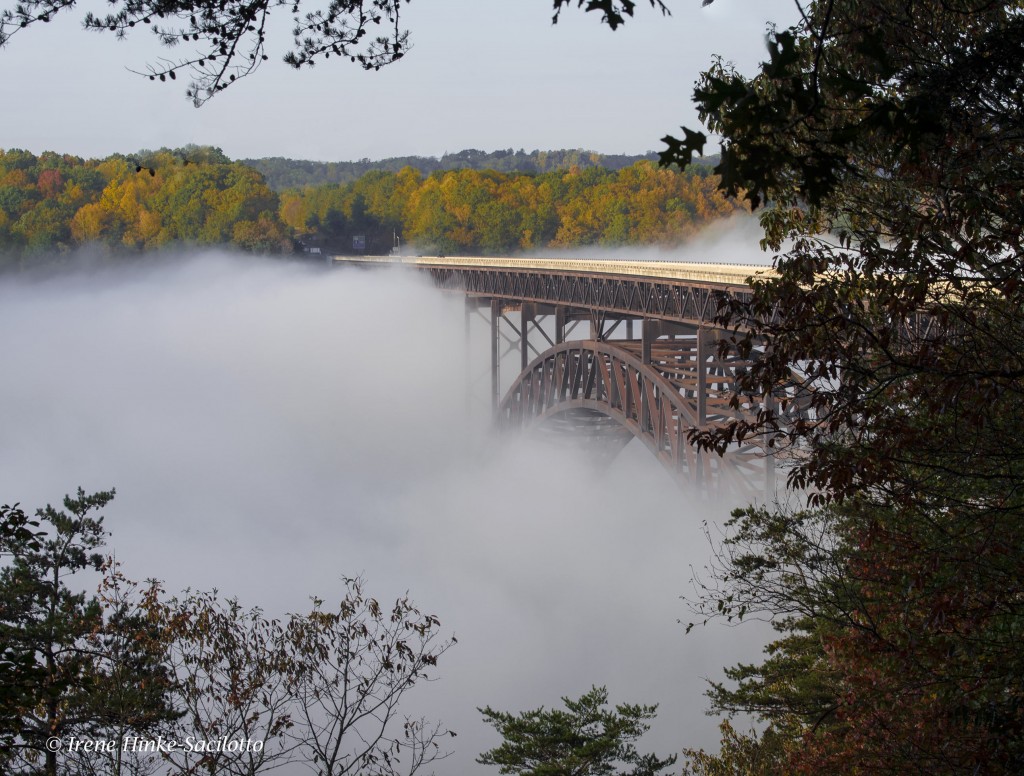
New River Gorge Bridge emerging from fog.
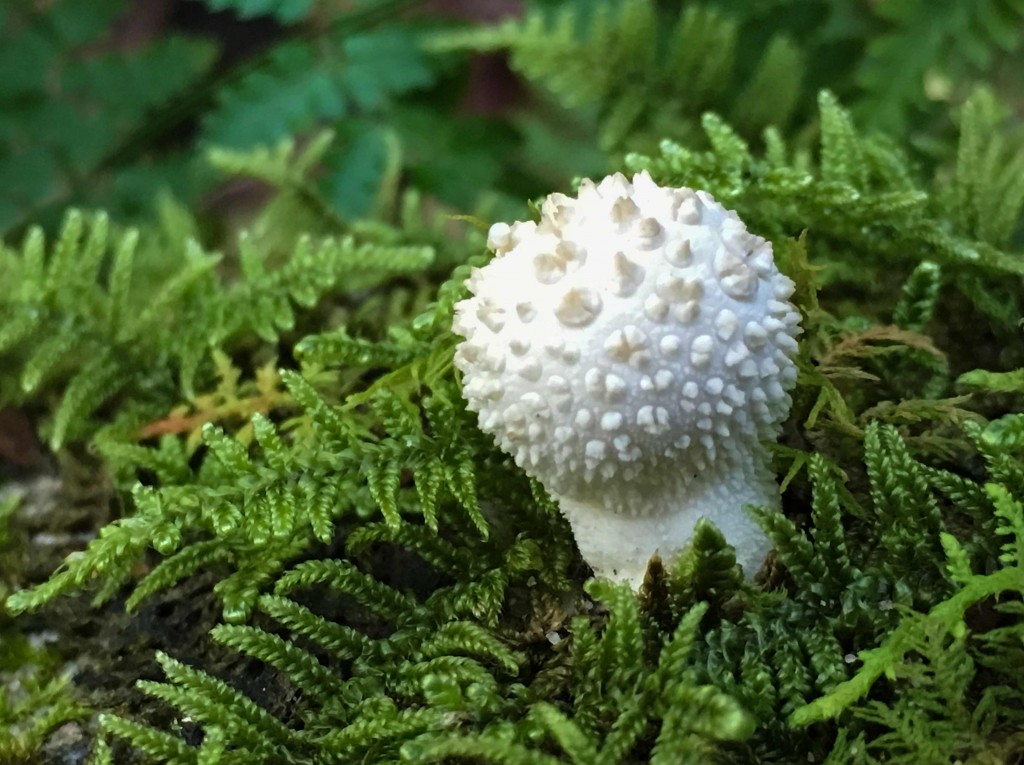
Cell phone shot of a mushroom along the trail to the canyon rim.
Babcock State Park and Glade Creek Grist Mill
The park is approximately an hour drive from Beckley, WV on back roads. I typically time my travel to arrive shortly after sunrise. This year mill’s water wheel was not turning due to damage caused by a severe flood in June. It is more likely to be operating in the spring when there is more water flowing in the adjacent creek. As with most of the locations visited this fall, the color of the surrounding trees was not intense, However the mill with the falls below still presents a number of interesting photo opportunities from both sides of the creek. Soft light is best at this location since on a sunny day as the sun moves higher in the sky, the contrast between the trees surrounding the mill and waterfalls intensifies. During this visit, I looked for subjects other than the mill to photograph, such as softly lit sections of the creek and colorful reflections in the water.

Glade Creek Grist Mill.
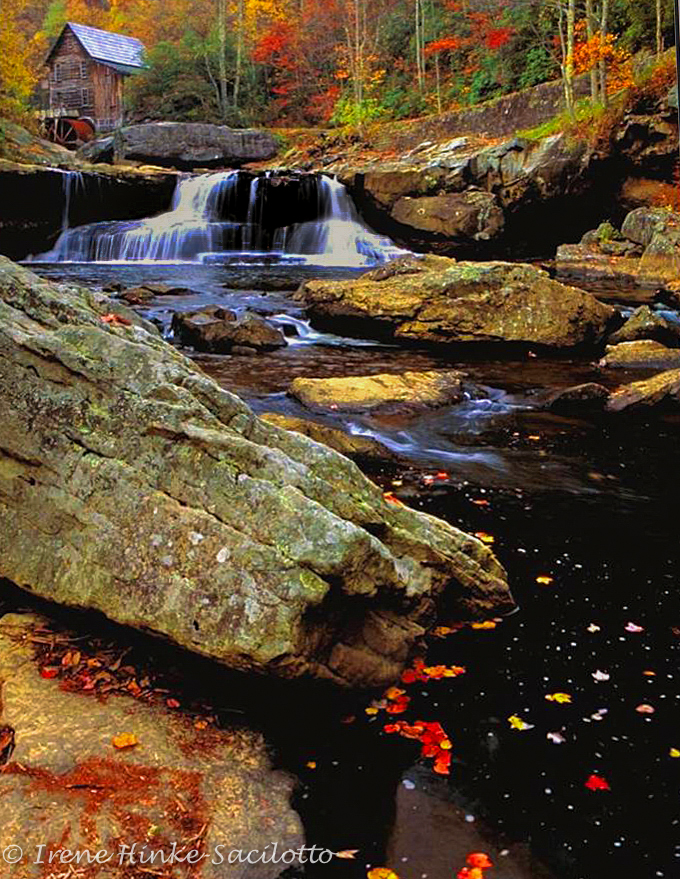
Glade Creek Grist Mill. Photo taken a number of years ago with better fall color.
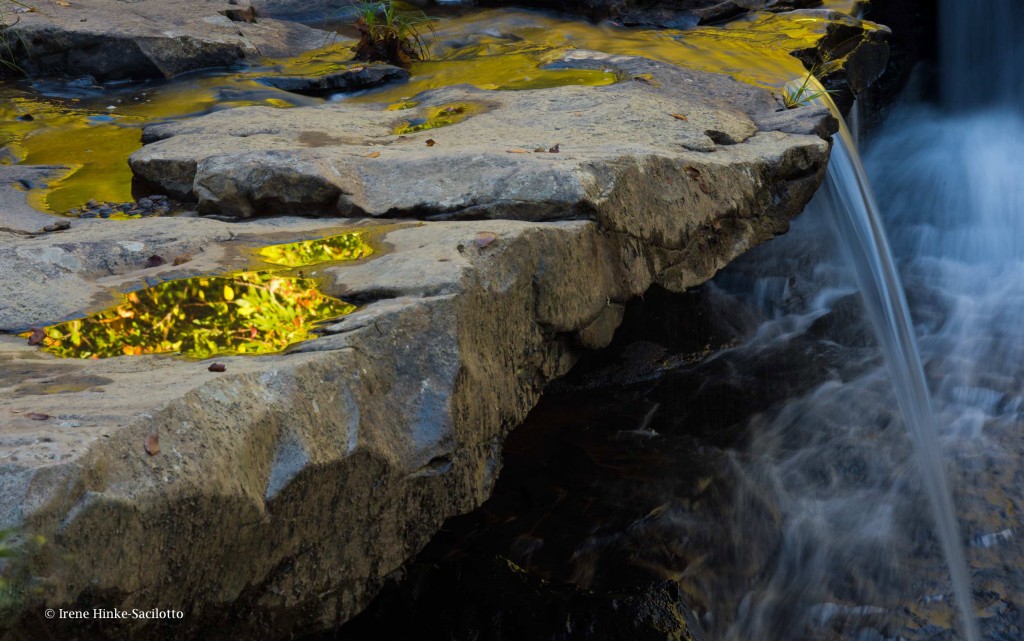
Reflections in puddles from surrounding trees. Falls at Glade Creek Grist Mill, Babcock State Park.
Sandstone Falls
Sandstone falls is the largest waterfall on the New River. Located at a wide point in the river where it is divided by a series of islands, the river drops 10 to 25 feet. A boardwalk with overlooks span the waterways and offer a number of views of cascades and main falls. The first overlook is my favorite, where there is a series of small falls fanning out in a horseshoe shape. There are places to photograph both from the boardwalk and river bank. Access to the higher upper falls is not always possible dependent on the water level.
To reach this section of the National Park, go to the small historic town of Hinton where you cross the New River and travel parallel to its path until you reach the park. (Approximately a one-hour drive from Beckley.) A neutral density filter will enable you to slow shutter speeds for an artistic presentation of the water’s flow. These filters are neutral gray and reduce the amount of light entering the lens. Some are variable in strength and therefore are more versatile. Remove your UV filter before mounting these or a polarizer on your lens Besides extra layers of glass that can soften your image and contribute to flare, when using a wide-angle lens, vignetting of the image can occur (darkening in the corners of the frame). Each time I have visited the park, photographic opportunities differ. As I was leaving the area this time and heading back to Hinton, I noticed the backlit spray of water from the main falls and foreground trees and took the photo below.
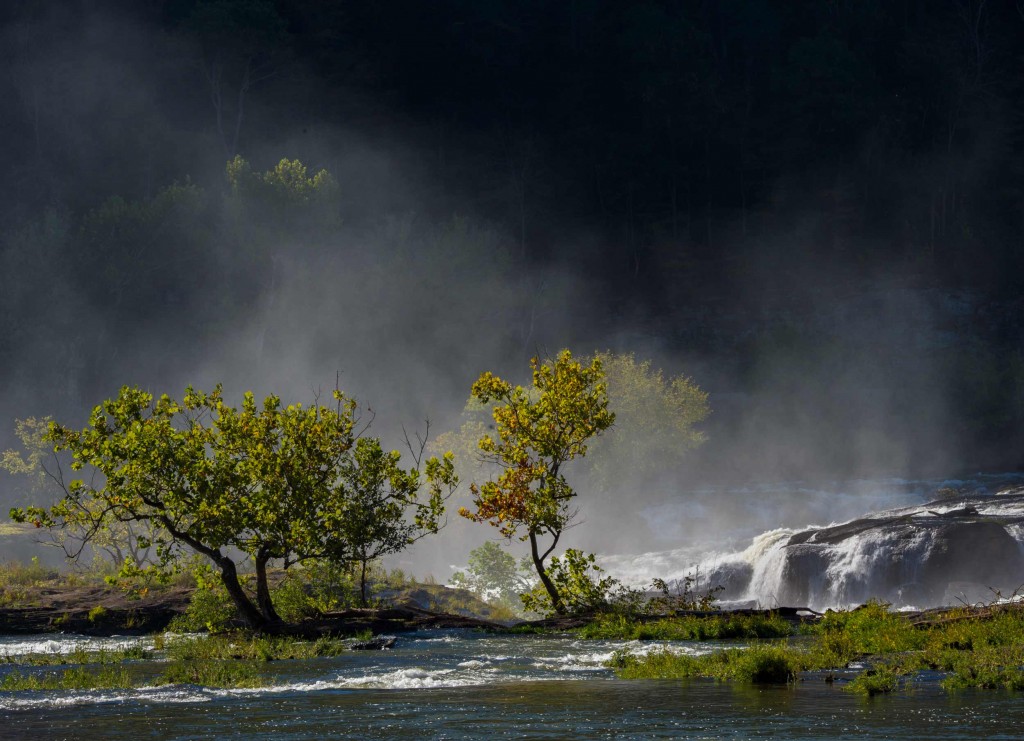
Intrigued by the backlit spray from sandstone falls and the foreground trees, I could not resist taking this photo.
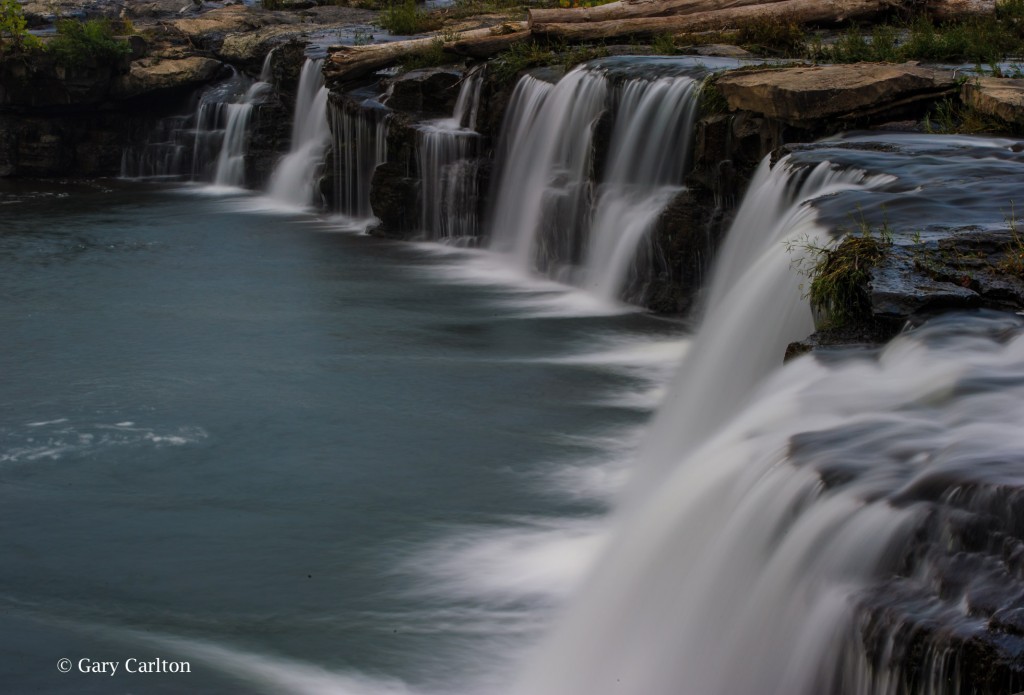
The above photo was taken by one of my 2016 workshop participants, Gary Carlton. He used a variable neutral density filter to for the first time to blur the movement of the water. Pleased with the results, he submitted this image during the critique portion of the program.
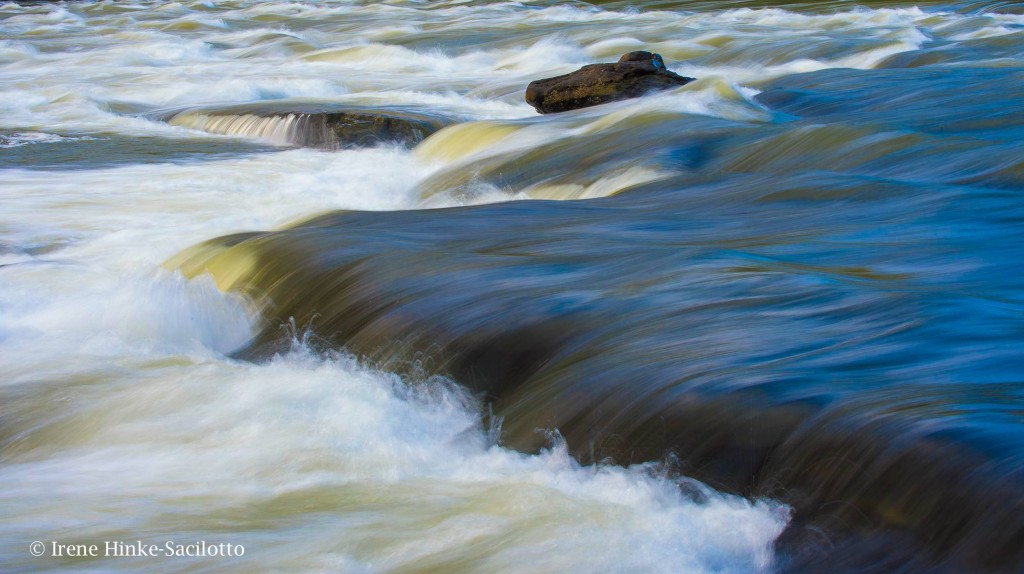
New River downstream from the main falls photographed with a slow shutter speed.
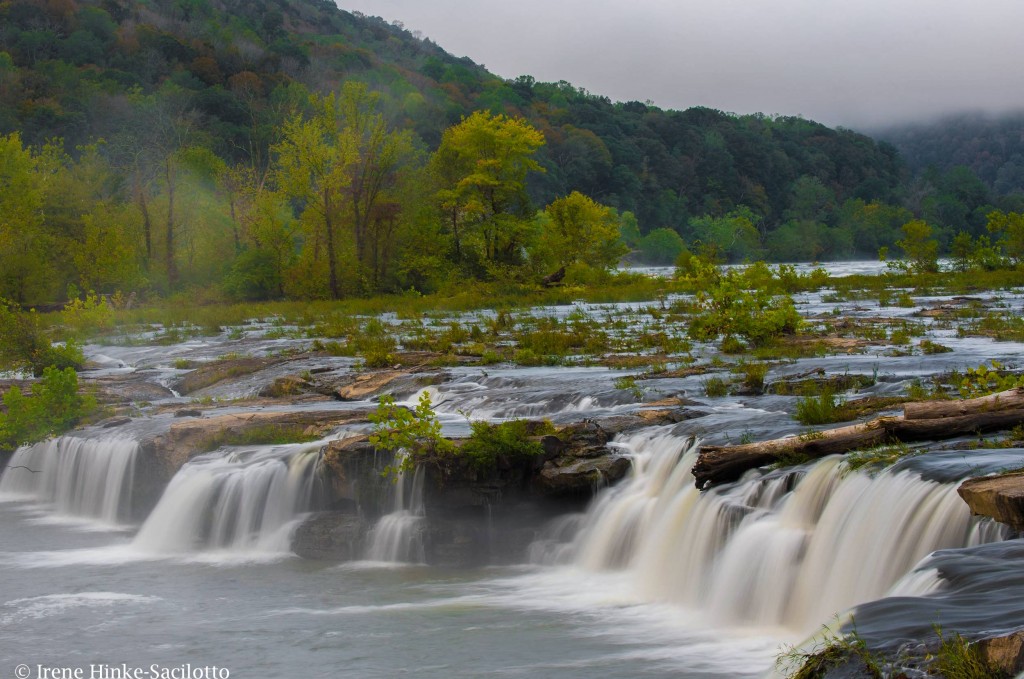
Foggy morning at Sandstone Falls.
Hawks Nest State Park
Hawks Nest State Park offers views of the New River from the side of the river opposite from the Canyon Rim visitor’s center. From Hawks Nest Lodge and overlooks from further down Route 60, there are interesting views of the river and surrounding mountains from a high vantage point. Also there is an aerial tramway to transport you from the lodge to the river below. When you reach the bottom jump off point, you can cross a small bridge and following an easy trail upstream to Turkey Creek Falls. Along the way you can capture photos of the trees gracefully overhanging the river, mushrooms, and wildflowers. Just before the Hawks Nest Dam, you reach a small bridge crossing the creek at the base of the falls. From the bridge and rocks below the falls, you have a good vantage point for photos. The best images of the falls have been taken in the spring when the flow of water is greater. During my visit this October, the flow was minimal.

Shot with the cell phone below Hawks Nest on the trail to Turkey Creek Falls. I used it to show workshop participants photo possibilities along the path to the falls.
Cathedral Falls
If you continue driving down Route 60 from Hawks Nest State Park, just before the town of Gauley Bridge, you will see Cathedral Falls on the right side of the road. Best photographed with late afternoon light. When the sun is high in the sky, there is too much contrast from the upper part of the falls to the base for a good exposure. I recommend using a telephoto lens to isolate portions of the falls, a 80 – 400 mm or 70 – 200 mm zoom lens. On the day of this year’s photo workshop, I spotted a rainbow reflecting in a portion of the falls. It would appear and disappear depending on where one was standing and only lasted for a brief period of time. Several workshop participants got great shots of the phenomena. During my scouting trip, the sky was slightly overcast and the rainbow was not present. But I still was able to capture the etherial beauty of the falls by isolating a section and using a slow shutter speed. Note: Typically I do not photograph with workshop participants during a weekend program, preferring to direct all my attention to helping them achieve the best results possible.
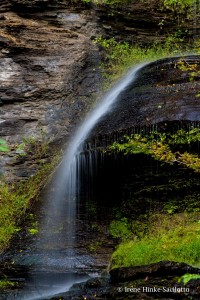
Cathedral Falls in soft light. The most beautiful portion of the falls captured with a telephoto lens.
Kanawha Falls
A short distance down Route 60 from Cathedral Falls is the small town of Gauley Bridge which provides access to the river for photos of reflections in the flowing water and of geese along its bank. Just southeast of Gualey Bridge is Glen Ferris where Gualey River and New River converge. Here you will find Kanawha Falls adjacent to a hydroelectric station. From a trail used by fishermen parallel to the main road, you can isolate a portion of the falls with a telephoto lens and exclude any evidence of the power plant. As an alternative, you can photograph the aging brick power station for a graphic image.
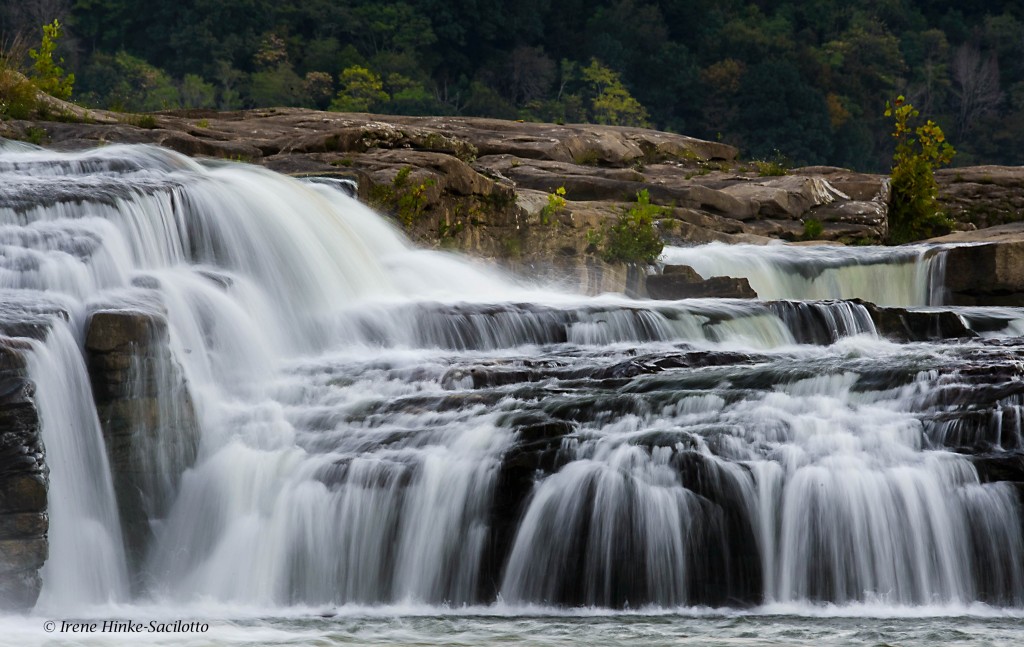
Kanawha Falls photographed with telephoto to isolate falls from its surroundings
Town of Thurmond
The historic town of Thurmond was once an active railroad town like many located along the New River. It can be reached off of Rt 19 at Glen Jean Exit north of Beckley. A narrow winding road leads to the town following a stream that cascades down the mountain. On the way down, there is a pull-off that provides relatively easy access to photograph one of the larger cascades.
At the base of the mountain, you reach the historic town of Thurmond by crossing an old narrow railroad bridge that spans the river. Ahead you will see a parking lot and railway station renovated by the National Park Service and serving as a Visitors Center. What makes this location special is that railroad tracks run through the center of town. Today only a few buildings remain from the past. However with a wide-angle lens, the train tracks create great lines leading into the frame. If you are there at the right time, you may be able to photograph a train as it approaches. Watch the signals above the tracks for an indication that one is on its way.
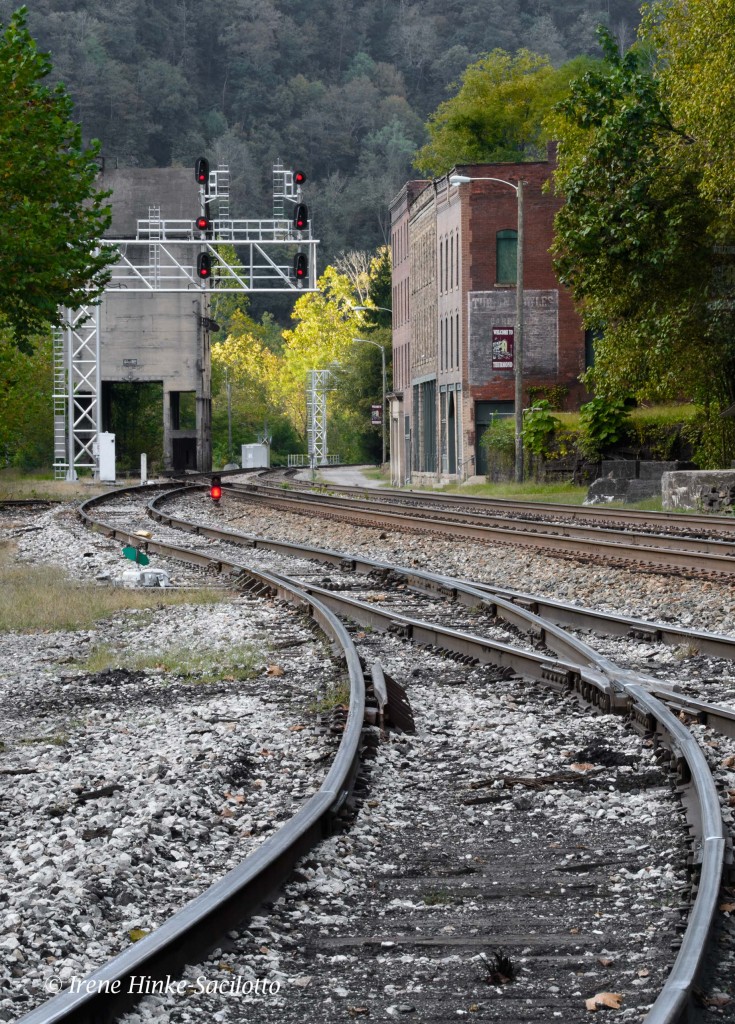
Railroad tracks at Thurmond.
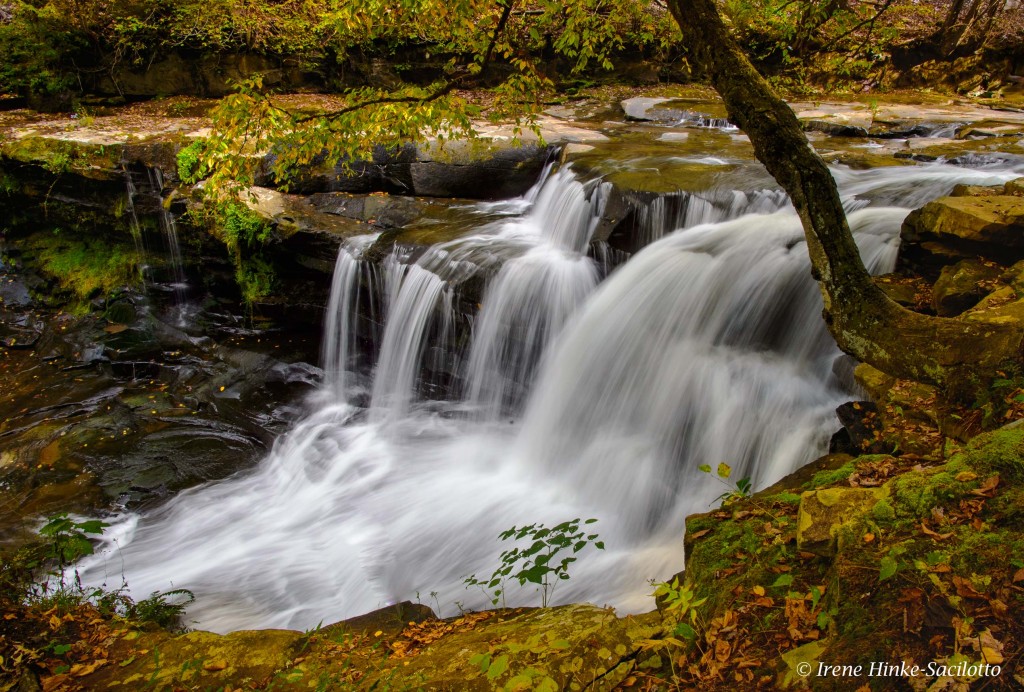
Cascade on way to Thurmond.
Grandview, part of the New River Gorge National River, NP
Grandview lies within the National Park and provides views of the horse-snapped section of the river from 1400 feet above. In the early morning interesting shots can be obtained as the fog slowly lifts from the canyon floor revealing the river below. A trail follows the rim with a few small overlooks which are partially blocked by vegetation. Another overlook farther along the canyon wall is Turkey Spur. Steps lead to viewing platforms, but this year the upper level was closed due to fire damage. In May and June, I understand the area is quite beautiful with blooming rhododendron along the trails. This year there was little fall color but I did take an abstract photo of the forest by zooming my lens during a slow exposure. As I exited the park, I grabbed this photo of a white-tail deer.

Deer photographed just outside of Grandview.

Fall color at Grandview captured by zooming my 70-200 mm lens with my camera set on a slow shutter speed.
Fayetteville Station Road
The 100 year-old Fayetteville Station Road once regularly traveled before the modern New River Gorge Bridge was built in 1977. Access to the road is off of Rt 19 by turning right on Lansing-Edmond Road, near the Canyon Rim Visitors Center. Once on this narrow road, turn right at the sign “Fayette Station Road” and immediately take the left fork. This road is a very narrow with hairpin curves and sections that are only open to one-way traffic. It passes under the current bridge twice, offering unique views of the steel structure. Also it provides access to the banks of the New River, several small waterfalls, and Kaymoor trail which passes a historic coalmine site. The road is worth the drive but is closed to traffic during Bridge Day weekend when the New River Bridge is closed to vehicles an open to pedestrian traffic and BASE jumpers.

New River Gorge Bridge’s steel structure photographed underneath on Fayetteville Station Road.

By selecting sections of the bridge’s iron work, you can create interesting abstract photos.
Nuttallburg Town
Nuttallburg was one of a number of bustling coal mining towns along the New River. The abandon townsite for years was concealed under the cover of trees and vines. It was recently restored by the park service and can be reached from Lansing-Edmond Rd by turning right in the community of Winona onto Keeneys Creek Road. This very narrow road descends into the gorge to a parking area. From here, trails lead to the foundations of buildings and remains of coke ovens that converted the coal into fuel. The most interesting aspect of the site is the coal tipple and conveyor that transported the coal from the mine up the mountainside down to the processing area and railroad below. On a bright sunny day, the scene is difficult to photograph without using HDR technology. The contrasty photo below was taken this fall at mid-day while scouting locations to determine which to include in my upcoming workshop.
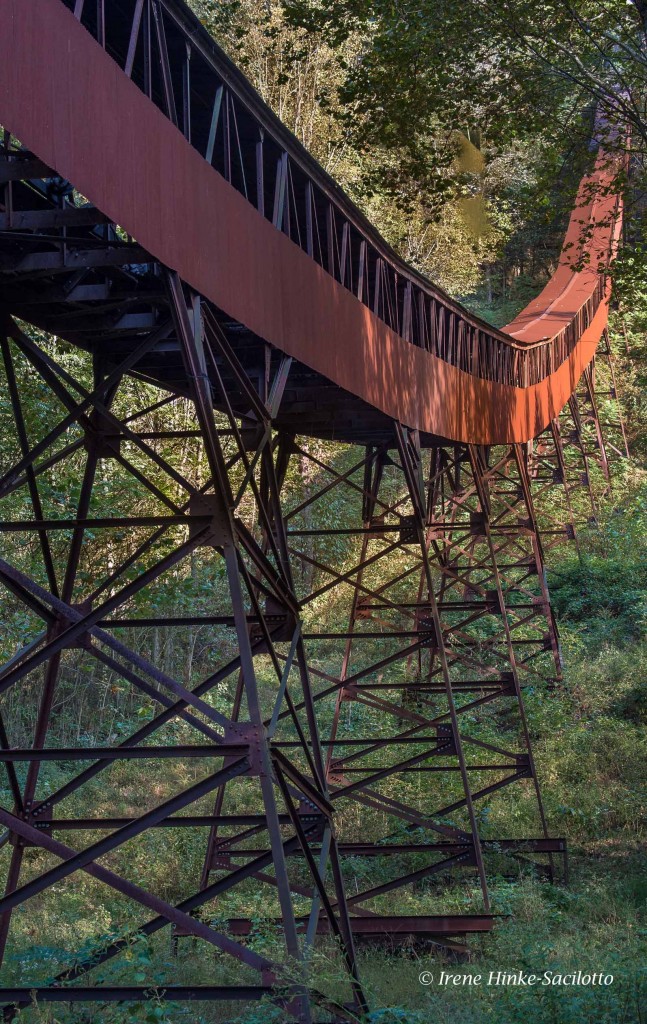
Coal conveyor at Nuttallburg Town. The amount of contrast in the scene was high resulting in distracting deep shadows and burnt-out highlights.. It would be best to photograph this scene when the light is softer.
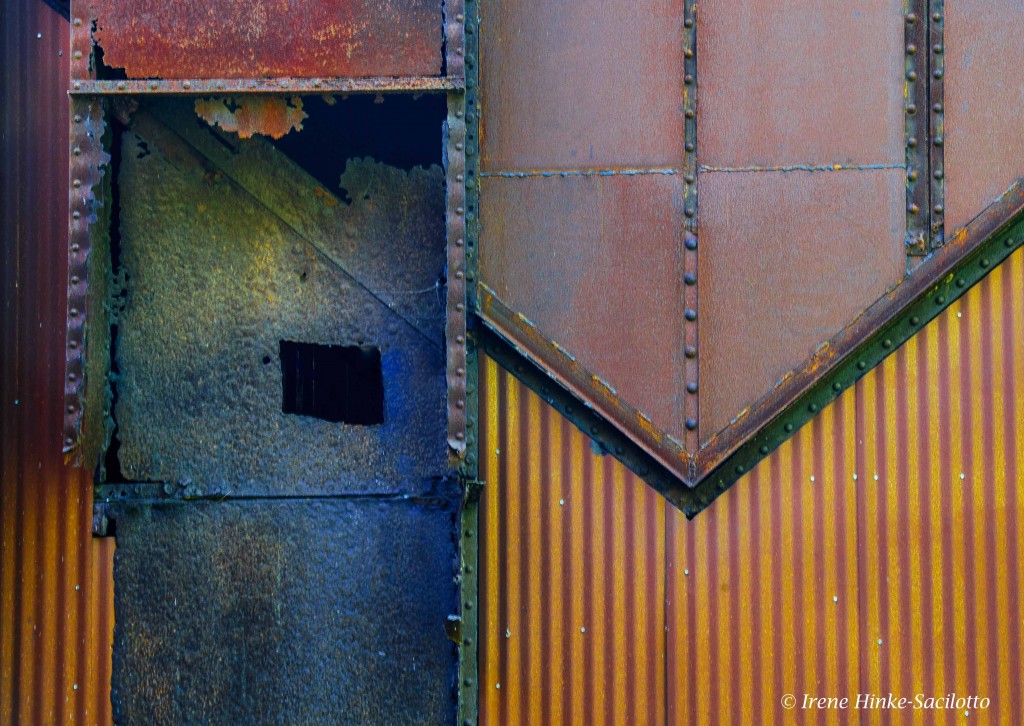
Side of the old tipple in Nuttallburg Town I was attracted to the colors, shapes, textures, and lines displayed by the wall and took this photo of the abstract design. The side of the building was shaded, perfect for this photo.

by Osprey Photo Workshops & Tours | Nov 6, 2016 | Autumn photography, Fall photography, Nature Photography, North Dakota, Photo Tour, Photo Tours, Photo Workshops, South Dakota, Wildlife, Wildlife Photography

NORTH AND SOUTH DAKOTA BADLANDS, Trip Report, September 2016.
While scouting locations with Sandy Zelasko and preparing for our spring workshop, we visited both the Badlands in North Dakota (Theodore Roosevelt NP) and the Badlands and Black Hills in South Dakota.
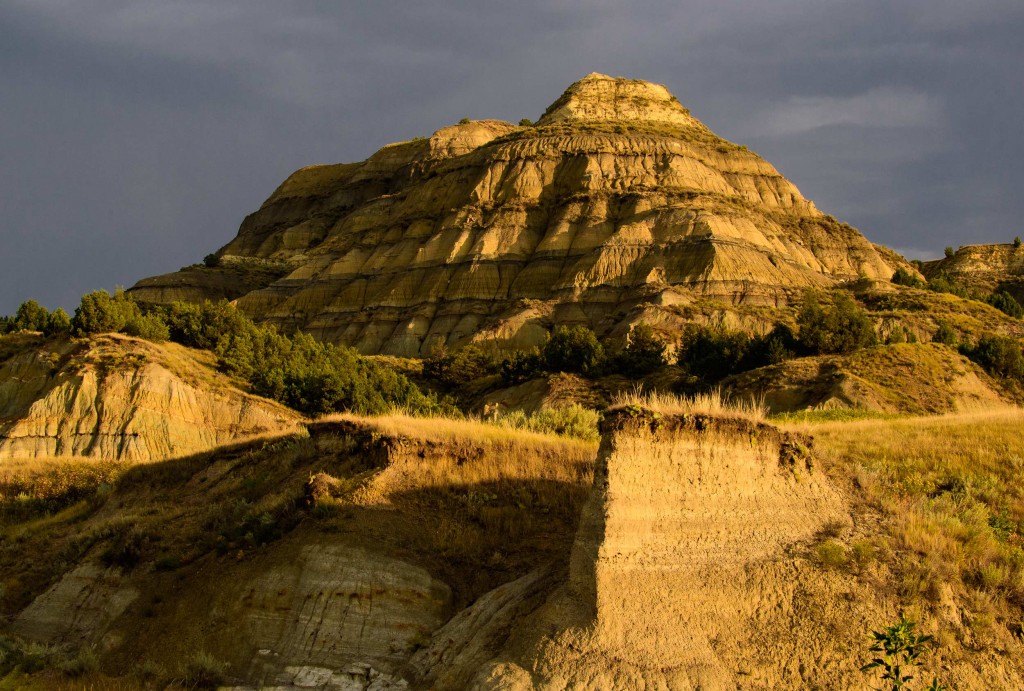
Badlands in North Dakota, Theodore Roosevelt NP.
The Badlands of THEODORE ROOSEVELT National Park (NP) in North Dakota were impressive but not as colorful as those in South Dakota. However some eroded formations were unique including spheres and other oddly shaped rocks balanced on top of ridges or embedded in canyon walls. My favorite subjects were the wild horses, which we encountered in several locations. In North Dakota, the wildlife was not as visible or easy to photograph as in South Dakota Badlands where we found bighorn sheep, pronghorn antelope, mule deer, prairie dogs, buffalo, turkey, grouse, and in the past, badger. From our modest but comfortable motel (Cowboy Inn) in the town of Belfield, ND, we were approximately a 20-minute drive from the southern entrance to the park and an hour from the northern segment. Both areas are worth visiting. However after comparing our experiences in both North Dakota and South Dakota, we decided that the best photo opportunities with a mix of wildlife and landscape photography was in the South Dakota Badlands where we will offer our next photo workshop in early June 2017.
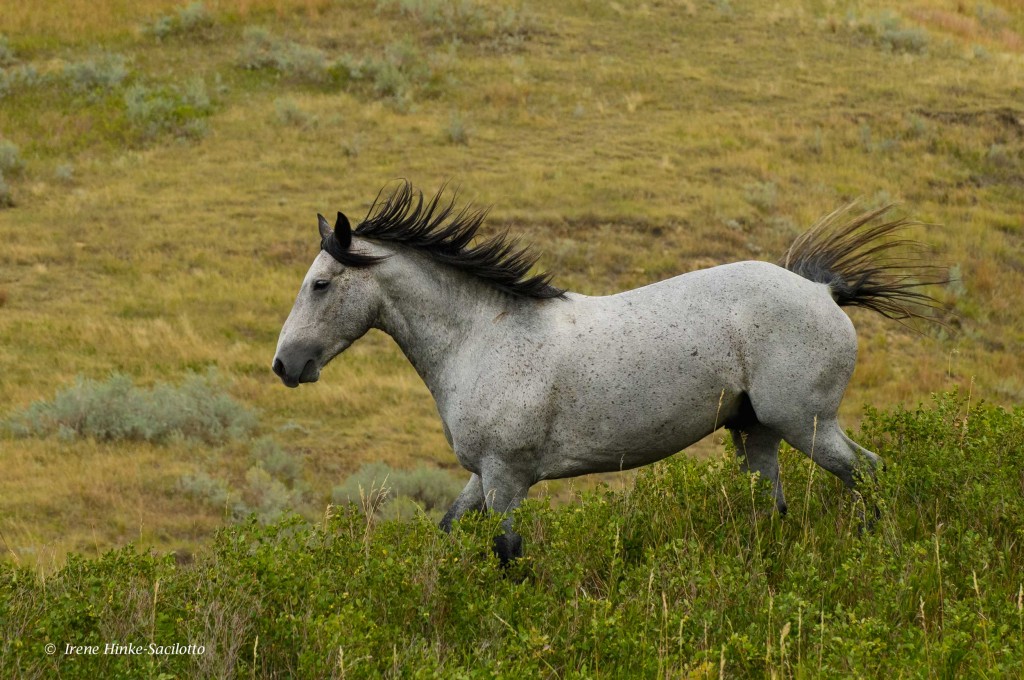
Wild horse

Deer a field in North Dakota
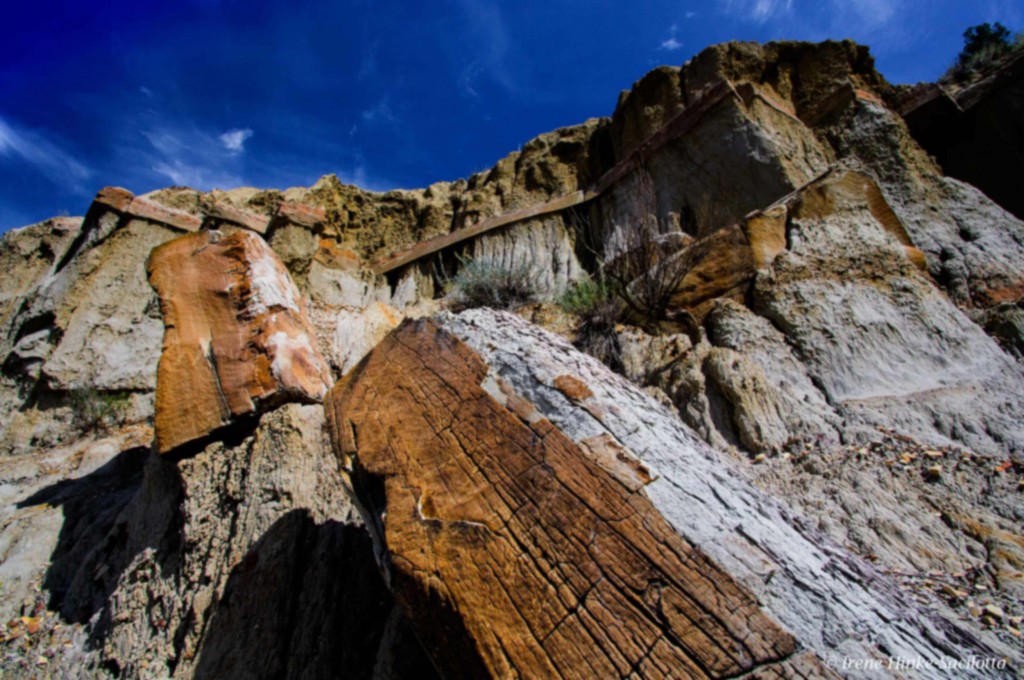
North Dakota Badlands with slanted rock.

Buffalo at sunset.
A paved road loops through the 24,000 acre Badlands NP in South Dakota with scenic overlooks and traveling between the sharply eroded buttes, pinnacles, pedestals, and spires and undisturbed mixed grass prairie that characterizes the park. The badlands were formed from alternating layers of hard and soft rocks and soil. Easily eroded materials such as clay or mud-stone is topped by more resistant materials, such as sandstone, with the harder horizontal layer protecting the soft deposits. There are a number of hiking trails to provide a closer look at the unique geology of the region. North, Door and Window trails near the North East entrance to the park meander amongst the formations, for an up-close and personal look at the rocks layers.
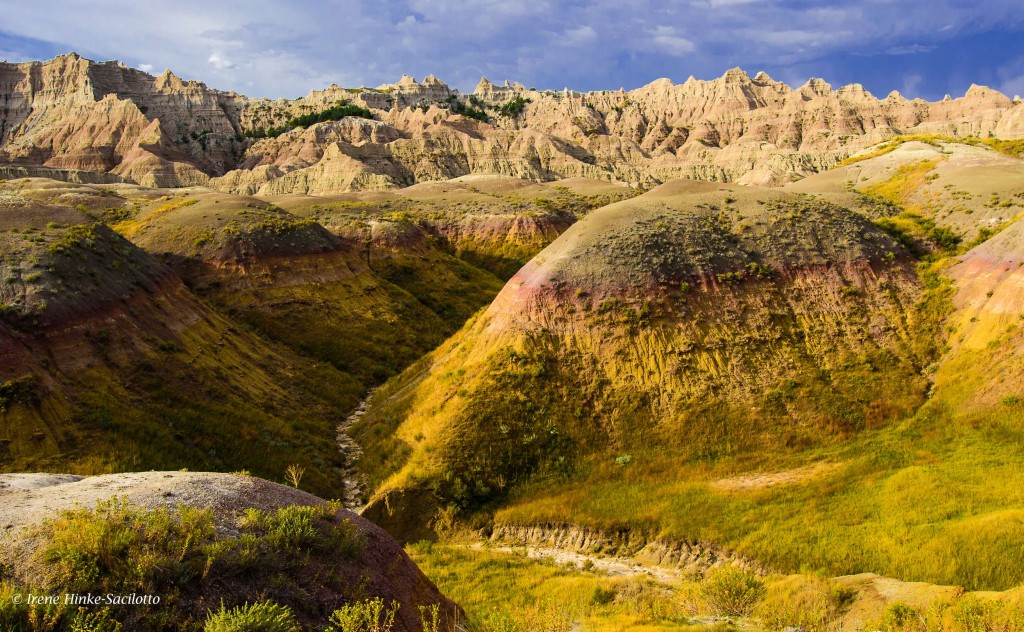
Yellow Mounds
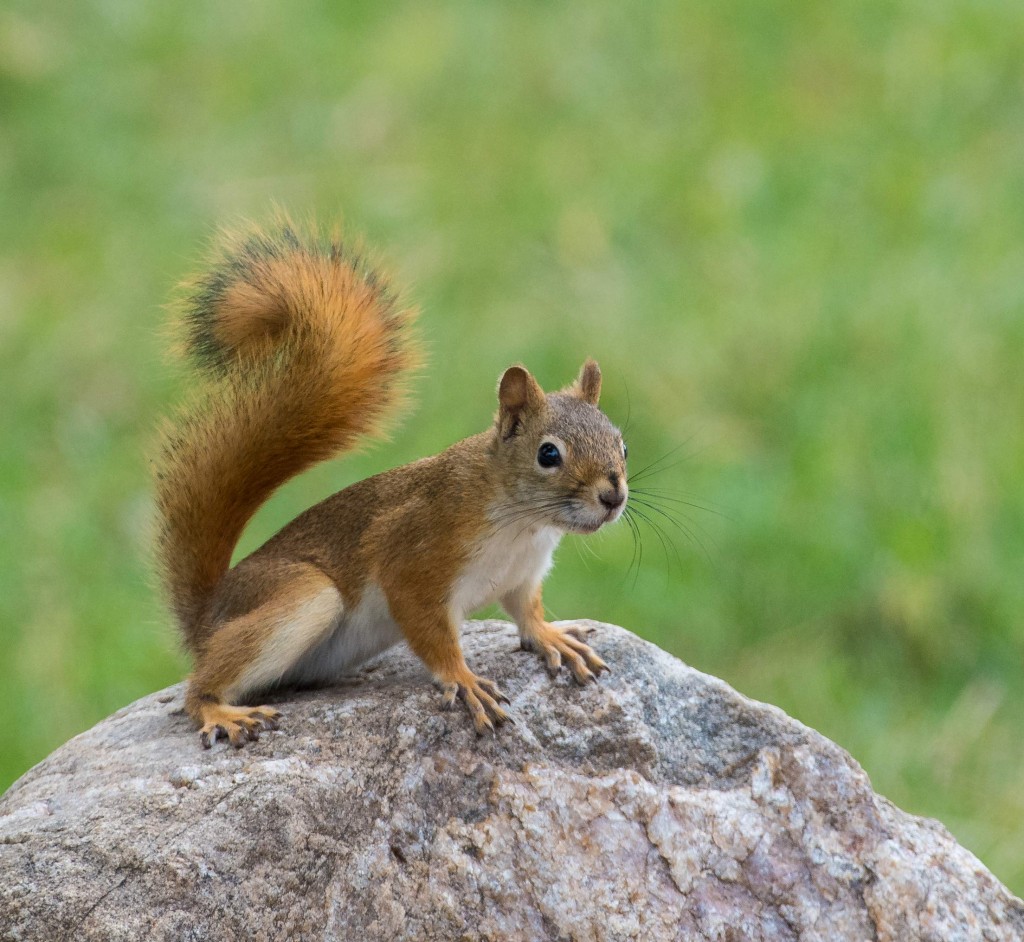
Red Squirrel
It s hard to pick a favorite location for photography within the park since there were so many sites to choose from. I loved the sulfur mounds and eroded formations near Dillon Pass and Conata Basin but was equally fascinated by the alternating tan and rusty bands of color from oxidized iron near Saddle Pass Trail. Southern views from Sage Creek Rim Road also offered great opportunities for landscape photography with deep ravines and colorful mounds eroded by wind and rain. Along the
gravel road is a good place to spot wildlife in and about Roberts Prairie Dog town. Buffalo, pronghorn, and bighorn sheep graze on the grasses while coyotes stalk unsuspecting prey. It was here I photographed a badger at close range during my last visit. Actually the best place this year for prairie dog shots was along a less traveled dirt side road running north as you head east past Contata Road and Dillon Pass. With little disturbance from traffic, the prairie dogs were more cooperative and allowed us to shoot belly down on the ground. More remarkable, along the same road, a coyote slowly walked towards our car and crossed the road in front us into the grassland paying little attention to the sound of our cameras firing off a burst of shots.

Bighorn Sheep
Sheep Mountain Table in the Southern Stronghold area of the park is worth a visit if you have a car with high clearance able to climb the steep dirt road that leads to the top of the mesa. It’s a peaceful place with few visitors where you can enjoy views in all directions from the high vantage point. On the Western edge of the Badlands on the way to the mesa from Sage Creek Rim Road, Scenic is a nearly abandoned town off the main highway that offers you a glimpse in the past with unique photo opportunities. Here you can photograph your friends behind bars in a historic jail or in front of the once lively Longhorn Saloon where steer skulls line the roof of the building. If you look hard at the sign on the face of the building, you will notice a somewhat disturbing message indicating who was welcome. If you look hard, the first word “NO” is painted over.
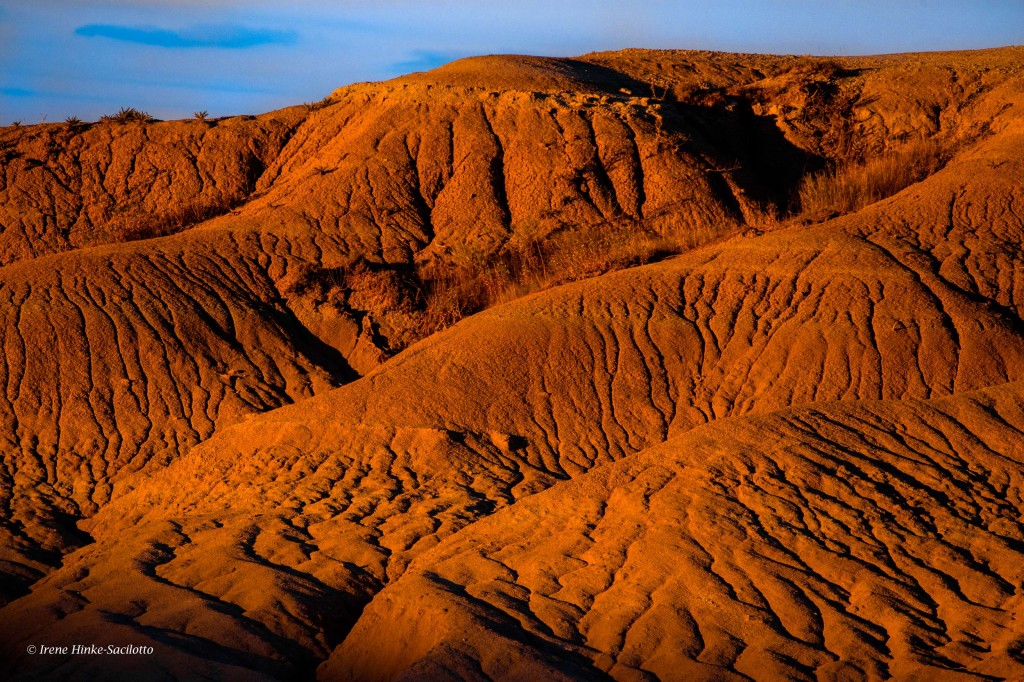
Eroded mounds at Sunset
GIGANTIC FIELDS OF SUNFLOWERS. On the first leg of the trip, Sandy and I explored the back roads from Rapid City to Belfield, ND, where we stayed while exploring the area. From there headed south to Wall and the Badlands of South Dakota. Along route 73 south of Lemmon and elsewhere, we discovered huge fields of sunflowers, much larger than any I have seen in Maryland. Although some flowers were past their prime, we stopped to take photos of several fields in prime condition with macro, telephoto, and wide-angle lenses. Surprised at the number and size of the fields, I checked the Internet to find that this area is one of the highest producers of sunflowers in the U.S. The seeds are used in the production of sunflower oil as well as for consumption by humans and birds.
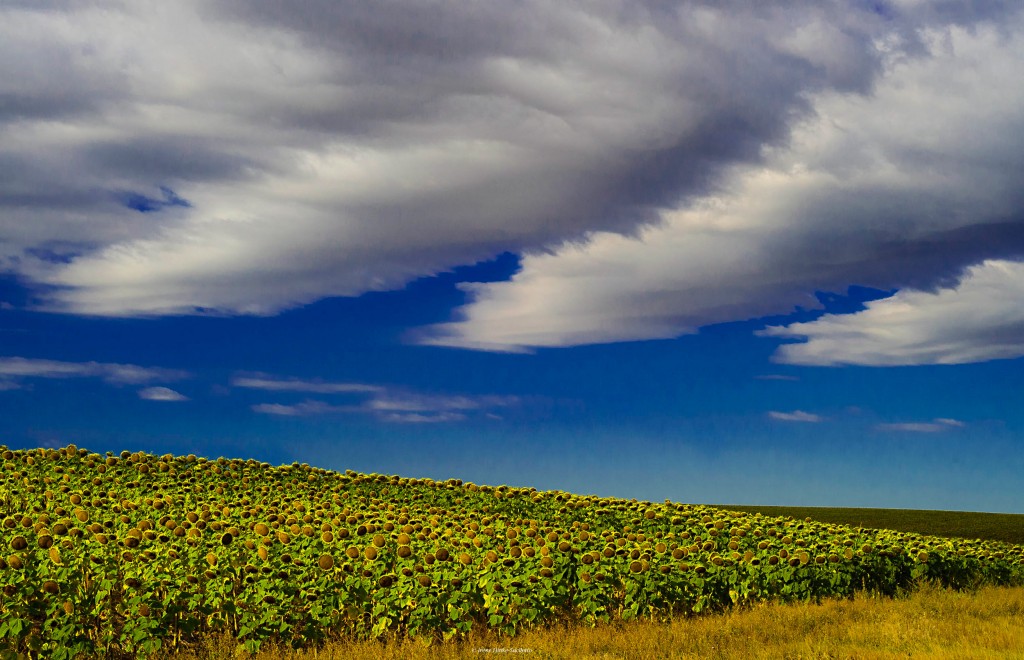
Sunflower field

Marmot
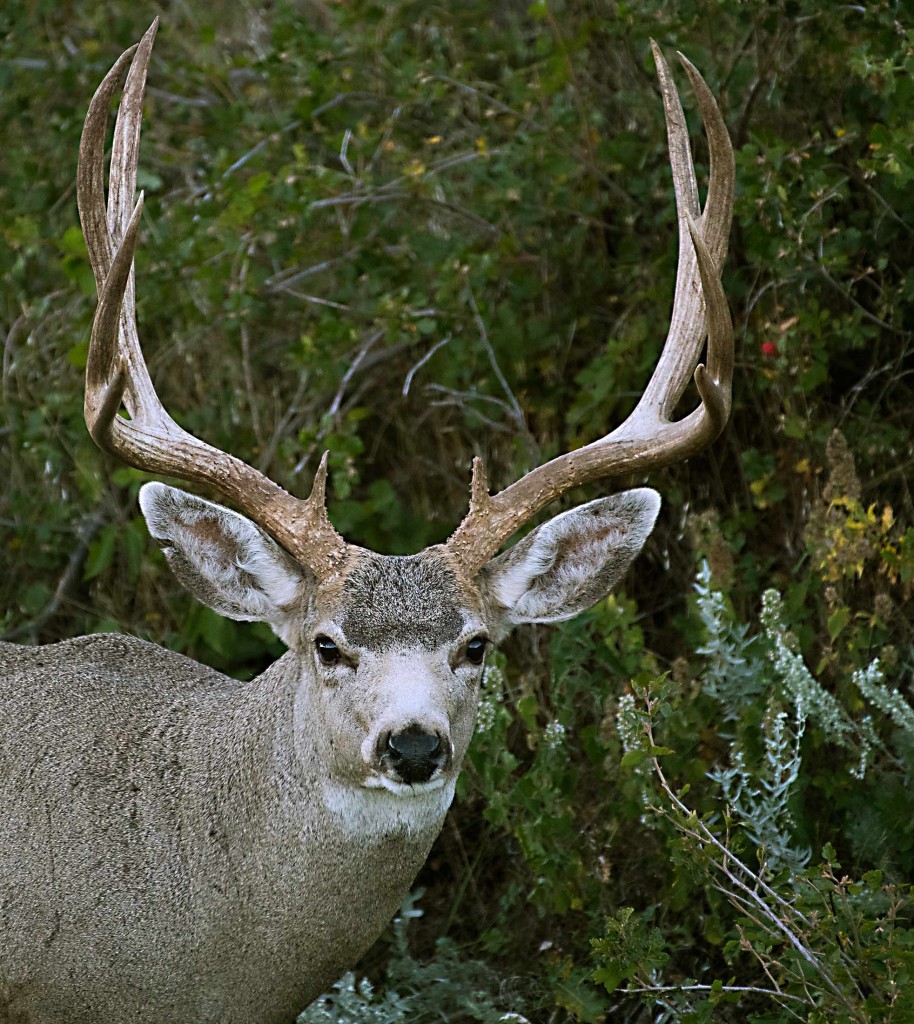
It was 13 September, not a holiday weekend, when we entered the southern gate of CUSTER STATE PARK and encountered bumper-to-bumper traffic on the loop road. There were several tour vehicles with park visitors and accompanied by guitar-playing singers. Needless to say, this was not the environment I had remembered from past visits. Instead of the “wild” burrows grazing on the hillsides and dusting in areas devoid of grass, they gathered on the road, sticking their heads into car windows and begging for food. Also there were more fences than I remember from a previous trip limiting photography in certain areas, but we were told the fences were there to protect sensitive habitat from overgrazing. As we moved further along the loop road the situation improved. We did encounter a large herd of buffalo, lots of bluebirds, a few mule deer, bighorn sheep, and pronghorn. Our favorite areas were along the gravel roads that branched off the main route. Here there was little traffic and the rolling hills were beautiful particularly on the route that led into the backcountry of Wind Cave NP. We encountered buffalo, herds of pronghorn, and the possibility of seeing elk. We found photographing in Wind Cave National Park was more productive with pronghorn on hillsides, energetic red squirrels retrieving and storing pinecones for the winter, wild turkey, and mule deer adjacent to the road.
Needles Highway in the Black Hills not far from the town of Custer includes 14 miles of sharp turns, low tunnels and impressive granite spires. It is a good spot to look for mountain goats, which are known to frequent the high country near Cathedral Spires and Needles Eye Tunnel. They have even been photographed inside the tunnel licking minerals from the rock walls. With little time remaining on our scouting trip, we drove the highway one morning in search of goats but when a heavy fog engulfed the Needles, we could hardly see the car in front of us let alone spot their white coats. The highlight of the drive was witnessing a full sized tour bus carefully position itself and pass unscathed through Needles Eye Tunnel while the extended side mirror of a pick-up truck that entered before the bus scrapped the inside of the wall.

Tour bus
We made a short side trip to Spearfish Canyon on 16 September. We were a bit early for fall color in the canyon, which I had enjoyed on a previous trip. The waterfalls were impressive particularly Roughlock Falls. Bridal Veil falls had little flow and would have been more impressive if it was surrounded by fall color or snow covered trees. Spearfish Falls is near the Southern entrance to the canyon and is photographed best in soft light in the early morning.
NOTE: You are likely to encounter the best leaf color in the South Dakota Badlands and Black Hills the last two weeks of September.
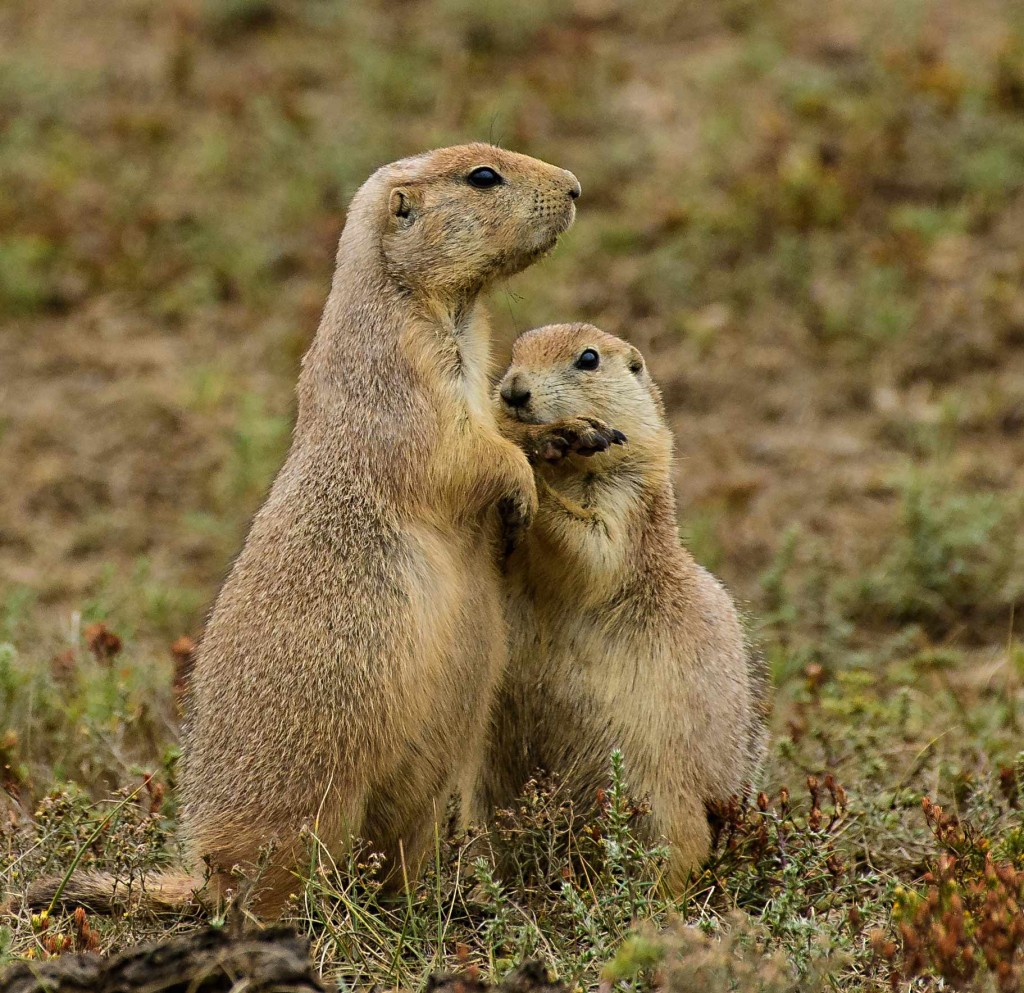
Praire Dog biting paw.
by Osprey Photo Workshops & Tours | Jun 22, 2016 | Bird photography, Brazil, Canadian Rockies, International photo tours, Nature Photography, Photo Workshops, Travel
Tips for International photo tours. Preparation.

Arctic Tern
Documents
If you don’t have a passport you will need to apply for one to visit countries outside the U.S.. If you have one already, check the renewal date several months before departure to be sure it covers the dates of travel. For passport info visit https://travel.state.gov/content/passports/en/passports.html
For visa requirements for the country to be visited, go to the country’s consulate website for requirements and fees. In the past I have successfully used a visa service called Travisa, www.travisa.com in the past and recently recommended them to a friend who also employed their service. In all cases, they were quite helpful answering questions about the visa process and application and review your application before delivering them to the respective embassy. Since you are sending your passport to them to hand-carry to the country’s embassy in Washington, D.C. and returning the documents to you, it is critical that the service is reliable.
Travel Alerts
Check the following websites, US State Department website (www.state.gov), the CDC http://wwwnc.cdc.gov/travel and the World Health Organization (http://www.who.int) for travel advisories for the regions to be visited. The state department site has passport forms and other travel info as well as a convenient travelers check-list https://travel.state.gov/content/passports/en/go/checklist.html. Be sure to photo copy travel documents and store separately from your originals in case the originals are lost or stolen.
Consider signing up for the Smart Traveler Enrollment Program (STEP). They send travel and security updates about your destination and being register can help them contact you in the case of an emergency. https://step.state.gov/step/
Credit Cards:
Notify your credit card company either on-line or via phone of your upcoming travels so your charges from your new location will not be rejected as suspicious. I recommend carrying a travel wallet with protection from theft and with RFID blocking in the lining so scanners can’t read the radio-frequency tags embedded in your credit cards and passport. Distribute you cash in several locations in the event that you loose or have your wallet stolen.

Whale off shore of Iceland
TSA Pre-check
If you travel frequently, you may want to consider enrolling in TSA pre-check. Go to the TSA’s website www.tsa.gov to begin the enrollment process on-line. Afterwards you will have to go to a TSA center to participate in a 10-minute interview and fingerprinting. TSA pre-check status allows U.S. citizens and lawful permanent residents to go through an expedited TSA screening process if available. Those travelers will be allowed to leave on their shoes, light outerwear, and belt. You can keep your laptop in its case and compliant liquids or gels in your carry-ons. When registered, you receive a TSA number that you report when you purchase your airline tickets. In most cases, TSA pre-check will be printed on your boarding pass allowing you to use the TSA pre-check line at the security check- point at the airport. At the airport, a TSA pre-check line may or may not be available depending on availability of staff and security level of alert. If available, the TSA security check is expedited — lines are shorter and passage through TSA security screening is faster.
Currency exchange
Check common policies for acceptance of credit cards in the areas to be visited and the tipping policy. It is best to carry some local currency for tips, small purchases, taxis, sometimes airport taxes, etc. You can exchange dollars at the local airport when you arrive at your destination or at local banks, or money exchange centers but there is usually a higher service charge and less favorable exchange rates than if you can obtain the currency in the U.S. If you belong to AAA, they have a service whereby you can obtain foreign currency before your trip for a reasonable fee or no fee if $200 or more is exchanged. In Italy when we were running out of local currency and had problems finding a bank willing to exchange US dollars for Euros.
Health check-up
Several months before traveling overseas, it is a good idea to investigate what is required in terms of inoculations, etc. I visit Johns Hopkins Travel Clinic in Baltimore for needed shots, medication, and health adversaries. Locally you can obtain similar services through organizations such as Passport Health, https://www.passporthealthusa.com/travel-medicine. In some cases, you may have to be given multiple injections over a period of time. Some malaria medicines require taking pills several weeks prior to travel. With Johns Hopkins, they maintain a record of my visits and prepare a shot record to take with me. Also they provide a summary of the health concerns for the area. Note: Some countries require documentation indicating that you have received certain vaccinations, for example Yellow Fever.

Atlantic puffin.
Prescription medicines
Make sure have enough of your prescription medicines to cover trip and any delays. Keep them in your hand-carry baggage. Have had meds stolen from check luggage. If you need an item refilled in a foreign country, you may have difficulties and may be required to visit a local doctor for a prescription.
Emergency evacuation related to health
MedjetAssist is a global and domestic medical transport company with several membership programs. https://medjetassist.com/ It’s not a health insurance program for travelers but if you are hospitalized 150 miles or more from home, Medjet will arrange air medical transport back to your hospital of choice in your home country — all you pay is your basic plan membership fee.
You might wish to consider purchasing basic travel insurance offered by companies such as Travel Guard http://travelguard.com. Depending on the program, they cover costs related to in-hospital medical care, lost luggage, travel delays, trip cancellation, etc. Prices and plans vary according to benefits and the cost of the trip. It is best to check with your personal health insurance company for their policy regarding paying for overseas treatment and hospitalization.

oystercatcher
On the plane
Stay hydrated and avoid alcohol. Walk or exercise your legs when possible to maintain good circulation and avoid possible blood clots. There are compression socks that are supposed to help.
Relief for long delays between flights
On occasion, I have had excessive delays between flights If you belong to an airline club such as United’s, at some airports they have a lounge with personalized travel assistance, Wi-Fi, beverages, snacks, and most important, it is a much more pleasant environment in which to wait than sitting in the public areas of the airport terminal.
For my upcoming trip to Brazil, I have approximately a 10-hour delay between my domestic and international flight heading back to the U.S. I discovered that within the airport there is a “hotel” with small sleeping quarters where you can rest in privacy while waiting for your flight. At Sao Paulo airport, it’s called “FastSleep” and you pay by the hour.
Equipment check
I typically have my camera cleaned and serviced at least twice a year if used heavily particularly before a major trip. Since I am a Nikon user and Nikon Professional Services member, I send my cameras to Nikon’s New York Service and Repair Center. Using my NPS number, I receive expedited service. It may cost a bit for a “once over” on your camera periodically but it is worth it when you have invested several thousand dollars in a trip. Note: I always carry at least one spare camera. (If camera sent for cleaning, check your setting when the camera is returned. Often set to defaults.
Carry-on luggage
I travel on the airlines with my camera gear loaded in a Gura Gear light-weight backpack and place my computer in a rolling computer bag. Chargers, power strips, filters, tripod ball head, etc., I place in my checked luggage with the more delicate items placed in a small padded backpack that can double a field pack. TSA locks may help against in experienced thieves but do not guarantee absolute protection from others and less reputable TSA inspectors. I have had items removed from my luggage more than once.

Hummingbird
Saving digital files while traveling.
I carry my Apple laptop computer, card reader, and two potable Seagate 2 T drives. When possible, I transfer image files from my compact flash cards each evening after shooting to my portable drives. I don’t save the files on the computer itself since they consume too much room. When possible, I quickly review the images on Adobe Lightroom. Once assured that the camera is working properly and my technique is solid, I then put the cards aside for reformatting in the camera. I usually carry a number of compact flash cards and cardholders to store cards in case transfer of images is not possible. I have card-holders color coded for cards needing to be transferred and others of a different color for cards where the images have been transferred and are ready to be re-formatted in the camera where they will be used. Any scheme that works for you is fine.
International calling plans
I add an international calling/data plan to my cell phone for the month I will be traveling. This provides an economical way to communicate the event of an emergency, delays in travel, urgent business, etc. If you have the Whatsapp application on your phone, you can make long distance calls or send text messages via Internet for free. Recently I used it for the first time and was impressed that the transmission was so clear.

Common Gallinule

by Osprey Photo Workshops & Tours | Jan 6, 2016 | Chicoteague, Fall photography, Nature Photography, Photo Tour, Photo Workshops, Uncategorized, Wildlife Photography
Chincoteague National Wildlife Refuge/Assateague Island
Trip Report (Dec 2015)

Snow Geese Flock
Arrived at Chincoteague, VA on Thanksgiving 2015 to spend several days with friends for the holiday. On Friday, at the Chincoteague National Wildlife Refuge Visitors Center, I delivered a presentation on wildlife photography as I do for the refuge at least once a year. My friends departed at the beginning of the week leaving me to begin scouting locations for my upcoming workshop, sites most likely to provide participants with good photo opportunities. The weather was rainy and cloudy much of the week making my job challenging. To make matters worse, the number of birds, particularly snow geese, this year was fewer than in the past, perhaps due to the warm weather in November and early December. It did not help matters that the phragmites along the banks of the borrow ditches was high in many places making photography difficult and the birds hard to spot.
Luckily there were some small breaks in the weather. Sleeping-in is not wise since you never know what Mother Nature has in store for you. One morning at dawn, light fog floated over the water that reflected the golden color of the sky. Geese floated into the scene and provided some needed foreground. Later that day I spotted a fox squirrel in soft light gathering leaves for her nest. On another day, I spotted her again on the side of the road dining on pinecones. The low light meant I had to use ISOs higher than normal to freeze the action (800 and 1600). On another morning, I grabbed a striking pre-dawn shot of the lighthouse as I enter the refuge.

Sunrise

Sunrise Beach Road

Dawn at Chincotegue Lighthouse

RudyTurnstone
Outside the refuge, I explored the town of Chincoteague and the small boat harbor. I talked to a few watermen and photographed them off-loading their catch. This year was the first time I witnessed workboats returning to the harbor at sunset. This presented me with nice opportunities for sunset photography.

Fishing boat returning
With the low number of birds present of the refuge, I was concerned that my workshop participants arriving on the upcoming weekend would be disappointed with photo opportunities. Besides the small boat harbor, I looked for new subjects to photograph around town. On a foggy morning, I stopped at the intersection where there was a steam driven tractor on display. I had passed it many times but never took the time to examine it. With camera in hand, I discovered interesting details worthy of snapping some shots. Elsewhere in town I took a few shots of outdoor displays and a peculiar mallard with feathers stuck on its bill.

Mallard Duck Quacking
On Friday, finally the weather improved. At dawn, the sky had a bit of color near the horizon so I combined silhouettes of pines against the colored background – layers of color for a slightly abstract feel. Weather conditions continued to improve and so did the number of birds on the refuge. The small group of snow geese that had been hanging out on the beach at Toms Cove near the Life Saving Station, moved north resting on the sand near the beach parking lot. Honking as each new wave of geese arrived, their numbers grew. Against the blue sky, one V of geese after another filled the sky and descended to join the original flock. It was a beautiful sight. I spent the better part of morning photographing the spectacle, much of the time photographing from in my car to avoid disturbing the birds. (Lens primarily used: Nikon 80-400 mm chosen for its flexibility).

Snow Geese landing
In the afternoon Friday, 4 Dec, the impoundment along Beach Road was full of birds – ruddy ducks, buffleheads, cormorants, and flocks of yellowlegs and herons. Weirdly as quickly as the birds appeared, the number dropped significantly the following day when my workshop began.

Trawler at sunset
I had a full workshop this time with 8 participants of varying skill levels. The critique sessions revealed that all walked away from the workshop with very nice images and fresh ideas to improve their photography. Saturday ended with a great sunset at the small boat harbor. We arrived just in time to catch a huge sun dropping behind a trawler tied up at end of the dock. Sunday began with sunrise photography at the beach to be followed by photography of horses and a few herons along the service road. (I rented the Chincoteague Natural History Association tram for part of Sunday morning.)

Fox squirrel
My lesson learned. Don’t give up despite the weather or other disappointments. If you keep a positive attitude, you are bound to find something interesting to photograph.

by Osprey Photo Workshops & Tours | Jul 28, 2015 | Bird photography, Nature Photography, Photo instruction, Photo Workshops, Tangier Island

Photo taken at Bosque del Apache in NM from rental vehicle
I often photograph animals from vehicles, which serve as mobile photo blinds with a telephoto lens supported on its foot by a beanbag resting on the window sill. In wildlife refuges and places where animals are protected and are used to seeing vehicles, you and your vehicle are not perceived as a threat. When photographing, if your subject moves, you can move with it and slowly close the distance between you and it. My bean bags are homemade and are filled with rice. When I travel by air, the bags can be emptied by opening the Velcro closure and refilled once I reach my new destination. The material used allows the lens position to be easily altered. I have several sizes suitable for different lenses. They can be stacked to raise the lenses to the height needed or they can brace a lens solidly in place in an awkward situation. I can also use the beanbag to support a long lens when shooting from ground.

10 to 12 pounds of rice. Len foot place

Shot from beanbag placed on ground to shoot at eye level.

This Eastern Cottontail was photographed from my vehicle on Assateague Island where I conduct photo workshops each year.
Shot at entrance to Mattamuskeet National Wildlife Refuge in NC from vehicle.

I was on the wrong side of the car to use the window for shooting. I slipped out of the passenger seat and placed the bean bag on hood of car and the lens on top;
On Tangier Island, I found them useful to secure my tripod in place while photographing from one of the golf carts, which are the main means of transportation on the island. With my setup, I was able to photograph from the driver’s seat of the vehicle or slip out of the cart and shoot from other angles where I am minimally visible. Since the animals are used to seeing the carts and they are relatively quiet, they often do flee when I approach. The heron with the turtle in its bill was shot from my golf cart. It took 15 minutes and several drinks of water before the bird finally swallowed it. The night heron was also photographed in a similar fashion. (Later article will provide tips for using stationary blinds.)

Braced tripod in place in a golf cart to support my 600 mm lens. Animals were more cooperative than if I was on foot

Heron used water to help swallow the turtle.

Night Heron with crab. Walking into a marsh can be dangerous. Mud can suck off your shoes, you can fall, and may have difficulty finding firm ground. In many areas tidal guts criss-cross the marsh and make it difficult to navigate. On the coast changing tides can complicate the problem.

by Osprey Photo Workshops & Tours | Jun 6, 2015 | Bird behavior, Bird photography, Digital Photography, Nature Photography, Photo classes, Photo instruction, Photo Technique, Photo Workshops

Rudy Turnstone.
Value of Patience when photographing wildlife.
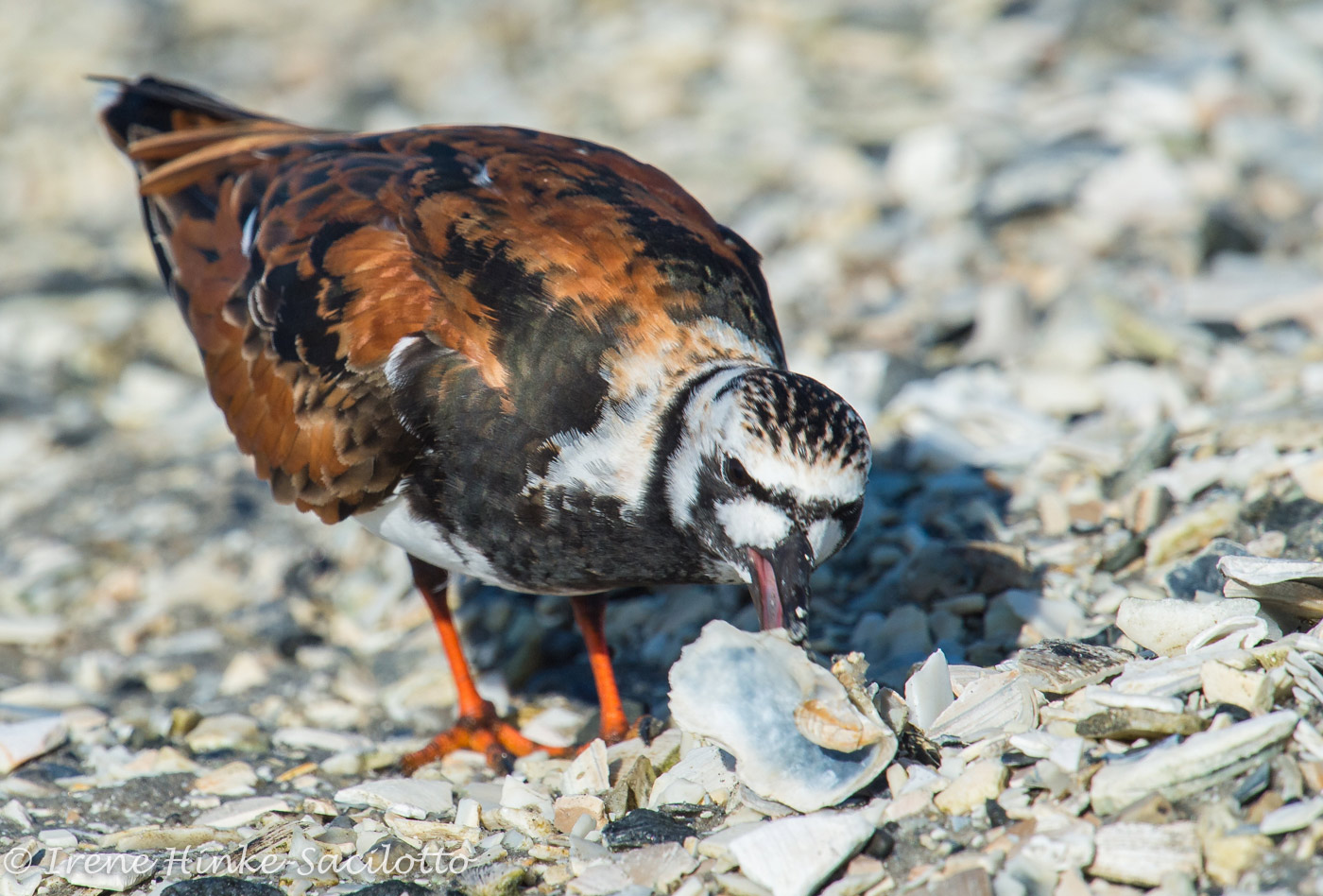
The key to good wildlife photography is patience. During my photo workshop on Assateague Island, I observed two ruddy turnstones at Ferry Landing. Class participants took several fine photos capturing interaction between the two. Since I don’t typically photogrpah with the class, I could not resist returning to the same area on the following day in hopes of having similar success. That morning I spent several hours photographing ruddy turnstones, willets, and least sandpipers until canoers arrived interested in launching their boats from the shore. My patience resulted in several great shots including one showing the turnstone flipping shells in search of food, another feeding on eggs, one bathing, another stretching its wings, etc. If you want to capture action, you must watch and wait. If lucky, you will be able to capture behavior that you can not see with your eye. Of course you need fast shutter speeds for this. That is where fast lenses and cameras that perform well at high ISOs give you an advantage, With careful observation, you may be able to predict what is coming next which makes your images more unique. This sense of satisfaction is part of the reward for pursuing wildlife photography.

RuddyTurnstone

Ruddy Turnstone

Ruddy Turnstone bathing.

ruddy turnstone