
by Osprey Photo Workshops & Tours | May 8, 2015 | Digital Photography, Flower Photography, FlowerPhotography, Nature Photography, Photo Technique, Photo Tours, Photo Workshops

CREATIVE APPROACH to GARDEN PHOTOGRAPHY
@ Norfolk Botanical Garden, VA
12-14 June 2015
Designed for those who wish to advance their photographic skills, creating images that are more imaginative, distinctive, and visually exciting. Classroom discussions include subject selection, equipment, camera settings, composition, lighting, spatial relationships, and utilization of graphic elements. Includes PowerPoint program, class discussions, and image critiques. Class assignments will encourage creativity and reinforce concepts discussed during the workshop. Includes field practice at the Norfolk Botanical Gardens, in the Tropical Display Greenhouse, outside gardens, and butterfly house. Roses, azalea, camellia, magnolia, dogwood, and other spring flowers should be in bloom. Mirror Lake and other reflecting pools and ponds should provide opportunities to capture images of frogs, turtles, wading birds, waterfowl, dragonflies, and colorful reflections. Includes sunrise photography on Sunday over Lake Whitehurst. To register contact Norfolk Botanical Garden Education Department, http://norfolkbotanicalgarden.org/events/the-joy-of-garden-photography-2/
by Osprey Photo Workshops & Tours | Mar 19, 2015 | Digital Photography, Nature Photography, Photo Technique, Photo Tours, Photo Workshops, Wildlife Photography
Hunting vs. Wildlife Photography

Young javelina attracted by corn under log. Shot from blind.
Similarities
Both disciplines require knowledge of subject, i.e. where and when to find the animal. What does their behavior indicate? The hunter and photographer can both gain useful knowledge from signs that an animal is present – tracks, scat (cat, bear, etc.), rubs, scrapes (deer), slides (otter), broken branches and claw marks on tree (bear), freshly gnawed logs near a beaver lodge or dam (active beaver), paths through vegetation, etc.

Game calls Found at hunting stores – Bass Pro, Dicks’s, and Cabelas.
At times hunters attract animals using decoys, game calls (predator, courtship, challenge}, camo clothing or netting for concealment, cover scents (fox urine, skunk), baiting, stalking, or blinds/hides So can the photographer. (see later blog).

Ghille suit used to hide from wildlife. Option to a blind.

Shot during a workshop in SD. The workshop group tracked a herd of pronghorn. Eventually the male left herd and approached us . It stop, stared and slowly turned around and walk away with his females. Guess we were to ugly for his herd.
Differences between hunting and photography (besides the obvious that the animal can walk away).
Hunting depends on concealment & you can successfully bag your prey at 100 to 200 yards. On the other hand, photography depends more on acceptance and the shooting distance is much closer (mallard, ¾ frame, @ 30 feet w/600 mm lens.) Much of the time photographers cannot approach the animal close enough to be able to photograph it successfully without being seen. Therefore stealth is critical and the ability to carefully approaching the subject in a non-threatening way (see later blog on stalking techniques). Approaching from the water can make the task easier whether you are wading in the surf or photographing from a canoe or kayak. It appears that without your legs showing you are not perceived as a threat. The animal’s curiosity also acts in your favor. These factors do not mean that blinds and camo cover should not be used when required.

Painted bunting. Because of the bird’s small size, used a 600 mm lens with 1..4 tele-converter for this shot. Was at my closest focusing distance, less than 15 feet away.

Waded into the icy waters of Iceland for this shot. Curiosity drew him closer to me.
Stallking & the use of blinds – see upcoming blogs.
by Osprey Photo Workshops & Tours | Jan 24, 2015 | Assateague, Brazil, Chicoteague, Digital Photography, Nature Photography, Pantanal, Photo Technique, Photo Tours, Photo Workshops, Wildlife, Wildlife Photography
CAMERA CLUBS & OTHER SOURCES OF INFO
Your fellow camera club members can be helpful pointing out local hotspots for wildlife photography. At one such club meeting in Manassas where I was delivering a lecture, I learned that elk herds exist in Pennsylvania, near Benesette http://elkcountryvisitorcenter.com/drupal/ . They are typically found where there is fresh browse. In the fall, the males bugled just like courtship in Yellowstone. Magazines such as Outdoor Photographer www.outdoorphotographer.com can be a great resource describing favorite locations for photography. Robert Hitchman has a newsletter “Photograph America” with detailed info on trails and photo perspectives for all types of photography. It’s a great resource if planning a trip. www.photographamerica.com Well worth the price.

WATER
Animals require 3 key things for survival, food, water and shelter. Therefore areas that provide these elements attract wildlife add offer photo opportunities. They are also good locations to place photo blinds (later discussion). For example, a pond or spring in an arid area can draw wildlife from great distances. On a ranch in south Texas I placed blinds (hides) near ponds that contained water during the hotter months of the year. At the end of the summer at Chincoteague NWR, water evaporates from the impoundments and waterways. Fish become trapped in the shallows where water remains and attract large numbers of hungry herons, raccoons, and other wildlife. Similarly, during the dry season in the wetlands of Brazil(the Pantanal) http://www.pantanal.org/Mainpant.htm, completion for food becomes fierce and animals become more visible as the water disappears.

Coatimundi drinking at pond in Mexico.

Roadrunner drinking at small pool of water during drought in South Texas.

Deer drinking in one of the few ponds with water on a ranch in south Texas.

Bufflehead in channel at Chincoteague, VA
FOOD
A reliable source of food will attract wildlife. Ripening seeds, acorns, crab apples, and fruit will attract monkeys, bears, and squirrels, as well as songbirds and other bird life. The upwelling of nutrients and food caused by strong currents such as those off the southern tip of South America attract marine life and provide food for whales, seals, sea lions, and penguins as seen in the Falkland Islands. The protected waters around Peninsula Valdes in Argentina offer shelter to elephant seals, southern sea lions, penguins, and calving southern right whales and attract photographers from around the world. But you don’t have to go to exotic places to attract and photograph wildlife. In your own backyard you can put out feeders with seed or suet, add a source of water and include an interesting perch nearby so you can capture images in what appears to be a natural setting.

Squirrel storing nut for the winter.

Chickadee feeding on berries.

Giant River Otter eating fish in the Pantanal.

Great Blue Heron with fish.

Rose-breasted Grosbeak at bird feeder.
FAVORITE PERCHES
Birds such as kingfishers, cormorants, and kiskadees often dive for fish from the same perch and return there to consume their fish offering excellent opportunities for photographs. Turkeys, vultures, snail kites, and other birds often roost in the same location each night. These are perfect places to stake out with your camera.

Kiskadee fishing from favorite branch.

Thick-billed tern perched on pole preening and fishing.

Belted Kingfisher fishing from its favorite perch.
DUSTING AREA & MINERAL LICKS
Mineral licks are also great places to photograph wildlife. At Custer State Park, SD http://gfp.sd.gov/state-parks/directory/custer/ buffalo, mule deer, and pronghorn frequent these bare patches of ground rich in minerals and nutrients. These spots are easy to recognize by the reddish color of the dirt. Other locations where animals return repeatedly are dusting areas, sections of bare ground and loose dirt where “wild burros”, buffalo, guanaco, horses, road runners and other animals kick up and roll in the dust to rid themselves of pests.

Burro dusting in Custer State Park, SD

Elephant seal throwing sand perhaps to cool off.
ICE, ROCKS & ISLANDS
If on a boat in Alaska, ice flows area good areas to look for seals. Round Island is prefect if interested in photographing walrus.

Walrus warming in the sun on Round Island.
by Osprey Photo Workshops & Tours | Jan 17, 2015 | Digital Photography, Nature Photography, Photo Technique, Photo Tours, Photo Workshops, Travel, Wildlife, Wildlife Photography
LOCATIONS (PART 4)
Several of the best locations to photograph wildlife are ones where the animals are acclimated to the presence of people or vehicles. These include county, state, and national parks, wildlife refuges & sanctuaries, and eco-friendly ranches (South Texas & South America). In terms of wildlife refuges, I tend to favor those with roads that run along the dikes that separate the impoundments. Parallel to the roads are ditches that typically hold water even when the other ponds are dry and therefore attract wading birds and other wildlife. If these channels are close to the road and vegetation does not block the view, photos of the animals can be taken easily from the car. The vehicle serves as a mobile blind that allows you to move along with the subject and adjust your angle of view and distance. To photograph out the car window, I place the telephoto lens on one or two large home-made bean bags filled with rice which I place on the window sill. You can also purchase bags from Lens Coat http://www.lenscoat.com , Birds as Art https://store.birdsasart.com or other suppliers. Two of my favorite wildlife refuges that are perfect for this style of shooting are Chincoteague NWR and Bosque del Apache NWR. http://www.fws.gov/refuge/chincoteague/ & http://www.fws.gov/refuge/bosque_del_apache/
PHOTOGRAPHY FROM A VEHICLE

Snow goose, shot from the car on the Loop Rd. @ Chincoteague. NWR, VA

Mallard family in a row. Shot from the car in Chincoteague NWR, VA.

Northern Harrier consuming a duck. Shot from rental car in Bosque del Apache, NM.
PRIVATE RANCHES
Eco-friendly ranches that protect native species and habitat such as those in South Texas, Argentina and Brazil often cater to photographers. These offer excellent opportunities to photograph from vehicles, blinds, or even on foot. (Discussion of blinds in later blog)

Rosette Spoonbill feeding in pond on private ranch in Texas. Photographed from a blind.

Caiman resting on bank at private ranch in Argentina.

Photographed late in the afternoon on Sea Lion Island in the Falkland Islands
HIKING
Photographing while randomly hiking in your local woods often fails to provide satisfactory result. The animals flee before you are within shooting distance. However if the habitat attracts wildlife and the animals are protected, they sometimes become acclimated to seeing people on foot . Corkscrew Swamp http://corkscrew.audubon.org and Six Mile Cypress Slough Preserve in South Florida with their boardwalks are often worth a visit as well as Loxahatchee NWR. Hiking in other locations such as Yellowstone NP, Glacier NP, and the Badlands of South Dakota can also be productive particularly if your subject is initially spotted from the road. (See stalking techniques in later blogs).

Great Blue Heron shot while I was walking along a ditch filled with water in Chincoteague NWR, VA

Raccoon photographed while walking along one of the ditches at Chincoteague, VA.

Capuchin Money. Photographed while hiking along trails on hotel property near Bonito Brazil. Semi tame since food is readily available there.
DANGER
When hiking in remote areas, care must be taken not to surprise a grazing buffalo, bear, moose and other large mammals. Even though they may be in national parks or reserves they are still wild and potentially dangerous particularly if their young are present or if it is mating season. When photographing such animals, use long lenses to keep a safe distance from them and to isolate the subject. Approach slowing and always leave them a means of escape. (See safety discussion in a later blog)

White-tailed Deer buck photographed at Canaan Valley, WV many years ago while meandering throughout the meadows in search of deer to photograph.

I was photographing a scene away from the car when I spotted this sow and cubs. I stopped and grabbed a quick shot. She bluffed charged me and I carefully retreated to my car a little distance away. The rest of my shooting was done with my 600 mm from inside the car. A black bear with cubs can be very dangerous.

While hiking I spotted two rams. I took my initial photos from a distance. When they resumed their original behavior eating vegetation and slowly moving through the field, I moved a bit closer to them making sure not to pressure the animals or block its means of escape. I spent nearly an hour following and photographing their activities. At times they eveny closed the distance between u without alarm.
More blogs coming covering other topics relative to wildlife photgraphy. Importance of food, water, and shelter plus timing next.
by Osprey Photo Workshops & Tours | Jan 4, 2015 | Digital Photography, Nature, Nature Photography, Photo Tours, Photo Workshops, Wildlife, Wildlife Photography
Requirements
Knowledge of Equipment —
- Check settings heading out for a day of shooting. If camera has be to the shop for repair or cleaning, often the service people change the settings back to the defaults.
- Make sure the camera batteries are fully charged and there is a memory card of an appropriate size in place. Always carry spares.
- When traveling I back up my images onto two 1 or 2 T portable drive connected to my laptop. Then I import them into Lightroom and verify that they were transferred without any glitches or corrupted files. Only then do I format my memory card. I prefer to start with a clean card each day, 16 or 32 G. At home, I will copy the files from the smaller drives to a larger one.
- As you approach your subject, from a distance preselect the lens and settings that are most appropriate. for the situation. Consider the direction, quality, and color of the light when choosing your approach. Be aware of subtle changes in muscle tension and poses that may indicate action (addressed in later blog) and be prepared to act instantaneously.

Sandhill crane. Saw this crane approaching a pond filled with other birds. Selected my 600 mm lens and set aperture large enough so would be using a fast shutter speed. SInce it was the end of the day, also elevated my ISO. Locked focus on bird at a distance and continued to follow it as it landed. Took a series of shots.

Osprey Nest – Selected 80-400 mm zoom lens and elevated ISO. Waited patiently for the osprey t leave the nest. Took a series of shots. Photographed from the water but nearly drowned my camera when stepped into a hole where the water reached my waist.
Knowledge of Subject —
- Research your subject’s behavior. Where and when is it found? What is its temperament?
- Speak with others familiar with your subject including researchers, biologists and even learning tips from hunters as to the subject’s behavior and tolerance.
- Approach from down wind if animal has an elevated sense of smell as does the Giant Anteater. Those with long/pointy noses tend to have better sense of small than others.

Capuchin Monkey. All animals are attracted to food and are easier to photograph when their attention is on something other than you,

Giant Anteater at termite mound, Pantanal, Brazil. Long nose and good sense of smell so approach animal from down-wind.
Patience and persistence —
- Spend as long as possible with your subject. It some times takes a long time to capture what you are after and may required repeated attempts on different days and with different weather conditions. Avoid distractions and keep your focus. However if another great photo opportunity comes along, go ahead and pursue it.
- Before beginning a project and while at the scene, develop in your mind a vision of what you hope for in terms of results but never limit yourself to just this.
- Continue to develop your skills, trying to surpass previous accomplishments.
- Don’t give up. Look at other ways to achieve your goal. Perhaps move to achieve a better camera angle, light, and background.

Herring Gulls, Common bird by interesting pose.

Canvasback. Often after preening, birds flap their wings to get rid of loose feathers. Watched and waited for one of the ducks to splash water as it flapped its wings.

King Eider, Watched the eiders approach to the beach and waited for nearly an hour before captured this shot.
Curiosity & ability to observe —
- Help you be engaged with the subject and become sensitive to subtle changes in posture, etc. that may precede some behavior of interest.
- No time for snoozing. I find my mind engaged in a detective game. What it happening & why”. What’s next? What do you want to show? What fascinates you?

Billing – greeting and pair bonding. Showing intruder that this is there territory.

Northern Shovler. Anticipated flapping affer some time preening.

Atlantic Puffins. When one animal approaches another there is likely to be some interaction – friendly or otherwise.
See next installment regarding wildlife photography – locating subjects.
by Osprey Photo Workshops & Tours | Dec 30, 2014 | Digital Photography, Nature Photography, Photo Tours, Photo Workshops, Wildlife, Wildlife Photography
“A Passion for Wildlife Photography, the Stories Behind the Images” is the title of a presentation that I delivered numerous times during the last three years for a variety of sponsors– conferences, universities, environmental organizations, libraries, and camera clubs. During the program, I discuss the strategies, techniques, and equipment required to capture the beauty of animals in the wild and their behavior with a D-SLR camera. Over a series of blogs I will share some of my thoughts, tips and images relating to the subject.
What motivates me?
Wildlife photography…
Allows me to see anatomical details
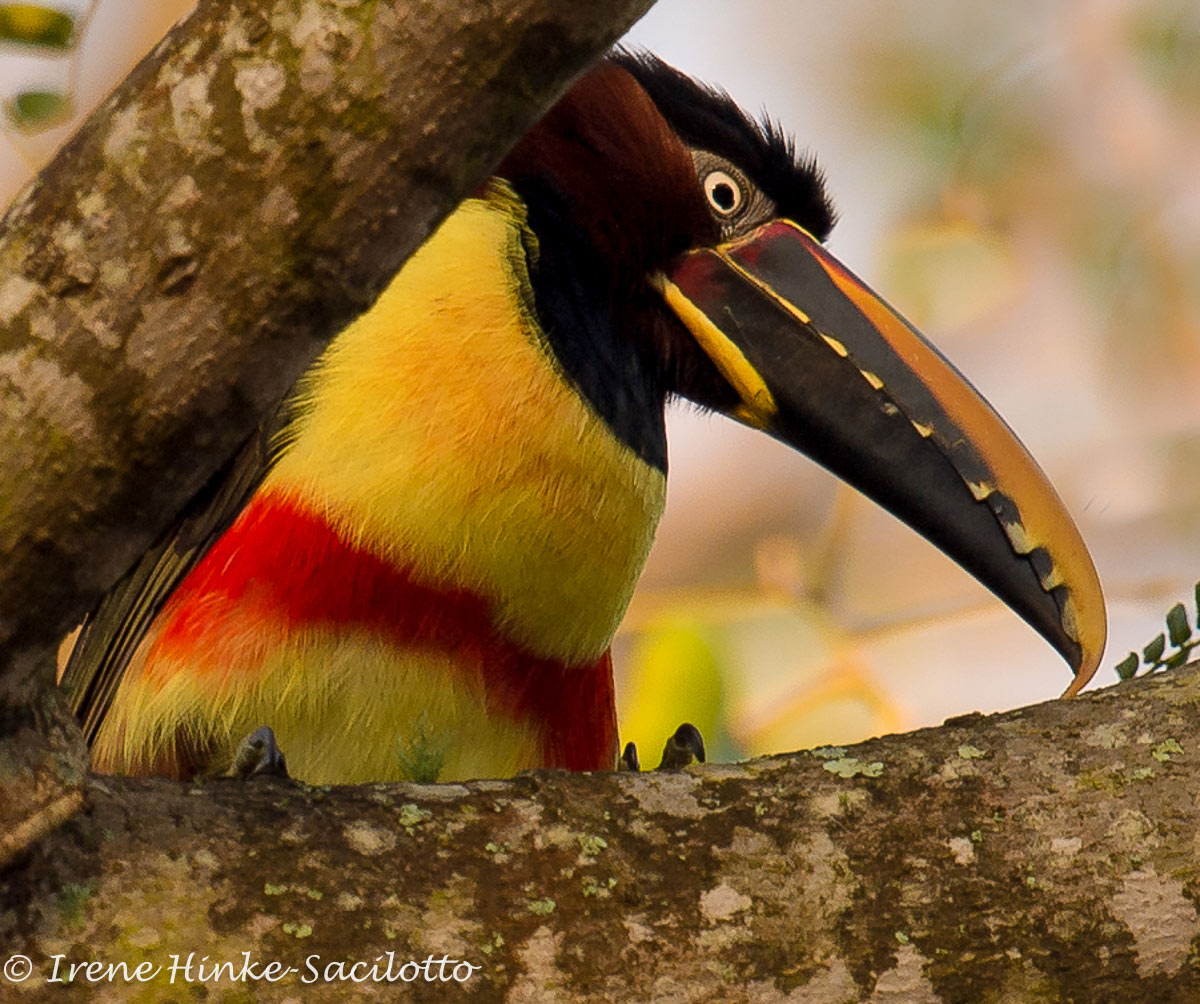
Provides insight into aspects of animal behavior often missed by casual observation

Crested Caracara
Helps me develop increased awareness of my surroundings, seeing things that never would have been noticed without a camera in hand

Monk Parakeet
Enables me to freeze action and see things that happen too fast for the eye to register

Willets
Provides me with a sense of inner peace since quality wildlife photography requires total absorption & focus on the subject

Prairie Dog
Allows me to connect with the subject and react to its movements without thinking.

American Oystercatcher
Provides me with a way to share my adventures and vision

Toco Toucan
Enjoy the New Year and give thanks for nature’s amazing gifts.
Irene


