by Osprey Photo Workshops & Tours | Feb 2, 2015 | Bird behavior, Nature, Nature Photography, Photo Technique, Photo Tours, Photo Workshops, Wildlife, Wildlife Photography
If you can predict what your subject may do next, you can select equipment, settings, and camera angle to take advantage of the information. There are a number of hints suggesting an animal’s next move. I will discuss some of them in this and the following blog. 1) Repeated behavior, 2) reaction to the approach of another animal (friend or foe), 3) assuming a subservient pose, 4) behavior after preening, 5) preparation for flight, 6) nervousness (turning head side to side or bobbing) suggesting flight, and 6) changes in muscle tone or shifting of weight. If I am lucky, such observations allow me to capture the action. See the following images.

Osprey carrying grass to next

It was easier to capture the images of these birds in flight since I knew where the birds were going – to their nest.

American oystercatchers attempting to fighter off black skimmers attempting to nest nearby.

Pelican landing initiates defense on part of other pelicans with young in the area.

Egrets fighting over fish concentrated in a small pool of water

Guanaco fight. Anticipated when one approached other running with its head down and neck out-stretched.

One puffin invades the territory of another and a fight ensues.

Turkey. As it happens with other species of birds, female assumes subservient position in the presence of a strutting male indicating its willingness to mate.

Sanderlings fighting. When meeting another bird entering what it considers its territory, the defender sometimes puffs up making itself look more formidable or it may immediately attack the other bird. If it squats, it is indicating that it is the weaker of the two trying to avoid confrontation.

Puffins announcing to intruding bird that they are a pair.
When one animal approaches another it initiates some kind of behavioral response – a warm reception, indication of a willingness to mate, or an aggressive reaction. I prepare to capture whatever occurs when I always prepare for a photo opportunity when this occurs. See descriptions above.

Bufflehead in channel at Chincoteague, VA after preening.

Puffin after preening.

Canvasback Duck flapping wings to rid itself of loose feathers.
Preening is often followed by the flapping of wings in terms of birds to rid itself of loose feathers.

Black skimmer baring gifts as part of courtship.
If see one adult bird approach another adult with a fish or other gift, watch carefully for what will happen next. In this case, both are carrying fish. Predicting behavior often requires careful observation of the scene in front of you. More info & photos in next blog.
by Osprey Photo Workshops & Tours | Jan 17, 2015 | Digital Photography, Nature Photography, Photo Technique, Photo Tours, Photo Workshops, Travel, Wildlife, Wildlife Photography
LOCATIONS (PART 4)
Several of the best locations to photograph wildlife are ones where the animals are acclimated to the presence of people or vehicles. These include county, state, and national parks, wildlife refuges & sanctuaries, and eco-friendly ranches (South Texas & South America). In terms of wildlife refuges, I tend to favor those with roads that run along the dikes that separate the impoundments. Parallel to the roads are ditches that typically hold water even when the other ponds are dry and therefore attract wading birds and other wildlife. If these channels are close to the road and vegetation does not block the view, photos of the animals can be taken easily from the car. The vehicle serves as a mobile blind that allows you to move along with the subject and adjust your angle of view and distance. To photograph out the car window, I place the telephoto lens on one or two large home-made bean bags filled with rice which I place on the window sill. You can also purchase bags from Lens Coat http://www.lenscoat.com , Birds as Art https://store.birdsasart.com or other suppliers. Two of my favorite wildlife refuges that are perfect for this style of shooting are Chincoteague NWR and Bosque del Apache NWR. http://www.fws.gov/refuge/chincoteague/ & http://www.fws.gov/refuge/bosque_del_apache/
PHOTOGRAPHY FROM A VEHICLE

Snow goose, shot from the car on the Loop Rd. @ Chincoteague. NWR, VA

Mallard family in a row. Shot from the car in Chincoteague NWR, VA.

Northern Harrier consuming a duck. Shot from rental car in Bosque del Apache, NM.
PRIVATE RANCHES
Eco-friendly ranches that protect native species and habitat such as those in South Texas, Argentina and Brazil often cater to photographers. These offer excellent opportunities to photograph from vehicles, blinds, or even on foot. (Discussion of blinds in later blog)

Rosette Spoonbill feeding in pond on private ranch in Texas. Photographed from a blind.

Caiman resting on bank at private ranch in Argentina.

Photographed late in the afternoon on Sea Lion Island in the Falkland Islands
HIKING
Photographing while randomly hiking in your local woods often fails to provide satisfactory result. The animals flee before you are within shooting distance. However if the habitat attracts wildlife and the animals are protected, they sometimes become acclimated to seeing people on foot . Corkscrew Swamp http://corkscrew.audubon.org and Six Mile Cypress Slough Preserve in South Florida with their boardwalks are often worth a visit as well as Loxahatchee NWR. Hiking in other locations such as Yellowstone NP, Glacier NP, and the Badlands of South Dakota can also be productive particularly if your subject is initially spotted from the road. (See stalking techniques in later blogs).

Great Blue Heron shot while I was walking along a ditch filled with water in Chincoteague NWR, VA

Raccoon photographed while walking along one of the ditches at Chincoteague, VA.

Capuchin Money. Photographed while hiking along trails on hotel property near Bonito Brazil. Semi tame since food is readily available there.
DANGER
When hiking in remote areas, care must be taken not to surprise a grazing buffalo, bear, moose and other large mammals. Even though they may be in national parks or reserves they are still wild and potentially dangerous particularly if their young are present or if it is mating season. When photographing such animals, use long lenses to keep a safe distance from them and to isolate the subject. Approach slowing and always leave them a means of escape. (See safety discussion in a later blog)

White-tailed Deer buck photographed at Canaan Valley, WV many years ago while meandering throughout the meadows in search of deer to photograph.

I was photographing a scene away from the car when I spotted this sow and cubs. I stopped and grabbed a quick shot. She bluffed charged me and I carefully retreated to my car a little distance away. The rest of my shooting was done with my 600 mm from inside the car. A black bear with cubs can be very dangerous.

While hiking I spotted two rams. I took my initial photos from a distance. When they resumed their original behavior eating vegetation and slowly moving through the field, I moved a bit closer to them making sure not to pressure the animals or block its means of escape. I spent nearly an hour following and photographing their activities. At times they eveny closed the distance between u without alarm.
More blogs coming covering other topics relative to wildlife photgraphy. Importance of food, water, and shelter plus timing next.
by Osprey Photo Workshops & Tours | Jan 10, 2015 | Nature Photography, Photo Technique, Photo Tours, Photo Workshops, Wildlife, Wildlife Photography
SPOTTING WILDLIFE
SHAPES, COLORS, TONES
Spotting wildlife is a learnable skill. When visiting an unfamiliar area, my ability to see animals in the new habitat improves with time. I become sensitive to colors, shapes, and tones that are out of place in the new environment.

Burrowing Owl – Yellow Eyes

Eastern cottontail, Shape out of place

Badger, White stripes attract attention

Bighorn Sheep, easy to spot white rumps
MOVEMENT
When animals are highly camouflaged by their surroundings, they are more easily spotted when they move. This is ideal for spotting coyotes or grouse hidden by prairie grasses or herons blending in or hidden by reeds.

Coyote hiding in grass

Yellow-crowned Night Heron, feeding on crabs. Most of the time hidden in grass.

American Bittern, When facing forward and pointing the bill skyward, bird is nearly invisible appearing to be grass.

Ghost Crab. Camouflaged with coloration that matches the sand and reflects light keeping it cool. Hard to see until it moves.
SOUND
Characteristic bird calls such as those from an osprey or kingfisher, courtship songs, screams of alarm or distress, rustling brush, spouting whales, the rattle of a rattle snake, splashing water, etc. Just listen.

Sandhill flying to join group, call got my attention

Prairie Rattle Snake

Prairie dog barking a warning brought my attention to the colony.

Osprey, Easily recognized high pitch call

Roadrunner courting. Call woke me from mid-day siesta.
HABITS & PATTERNS
Animals repeat behaviors and knowing the patterns can give you an edge photographing them. When I see an animal in the same area at about the same time each day, I know there is an increased chance I will encounter it again in the same region and hopefully this time with a camera in hand. If a heron is fishing in a pond, does it move in a predictable manner where you could photograph it as it moves or pre-focus at a point where it will cross? Does a heard of pronghorn or elk meander in a consistent direction where you could adjust your movements to intersect their path?

Sanderlings running along edge of surf

Black Skimmer, fishes in shallows often following bank

Pronghorn, herds often move in a particular direction. Anticipate where they are heading and move to intersect their path. Don’t walk directly towards them.
More to come about photographing wildlife in future blogs.
by Osprey Photo Workshops & Tours | Dec 30, 2014 | Digital Photography, Nature Photography, Photo Tours, Photo Workshops, Wildlife, Wildlife Photography
“A Passion for Wildlife Photography, the Stories Behind the Images” is the title of a presentation that I delivered numerous times during the last three years for a variety of sponsors– conferences, universities, environmental organizations, libraries, and camera clubs. During the program, I discuss the strategies, techniques, and equipment required to capture the beauty of animals in the wild and their behavior with a D-SLR camera. Over a series of blogs I will share some of my thoughts, tips and images relating to the subject.
What motivates me?
Wildlife photography…
Allows me to see anatomical details
Provides insight into aspects of animal behavior often missed by casual observation

Crested Caracara
Helps me develop increased awareness of my surroundings, seeing things that never would have been noticed without a camera in hand

Monk Parakeet
Enables me to freeze action and see things that happen too fast for the eye to register

Willets
Provides me with a sense of inner peace since quality wildlife photography requires total absorption & focus on the subject

Prairie Dog
Allows me to connect with the subject and react to its movements without thinking.

American Oystercatcher
Provides me with a way to share my adventures and vision

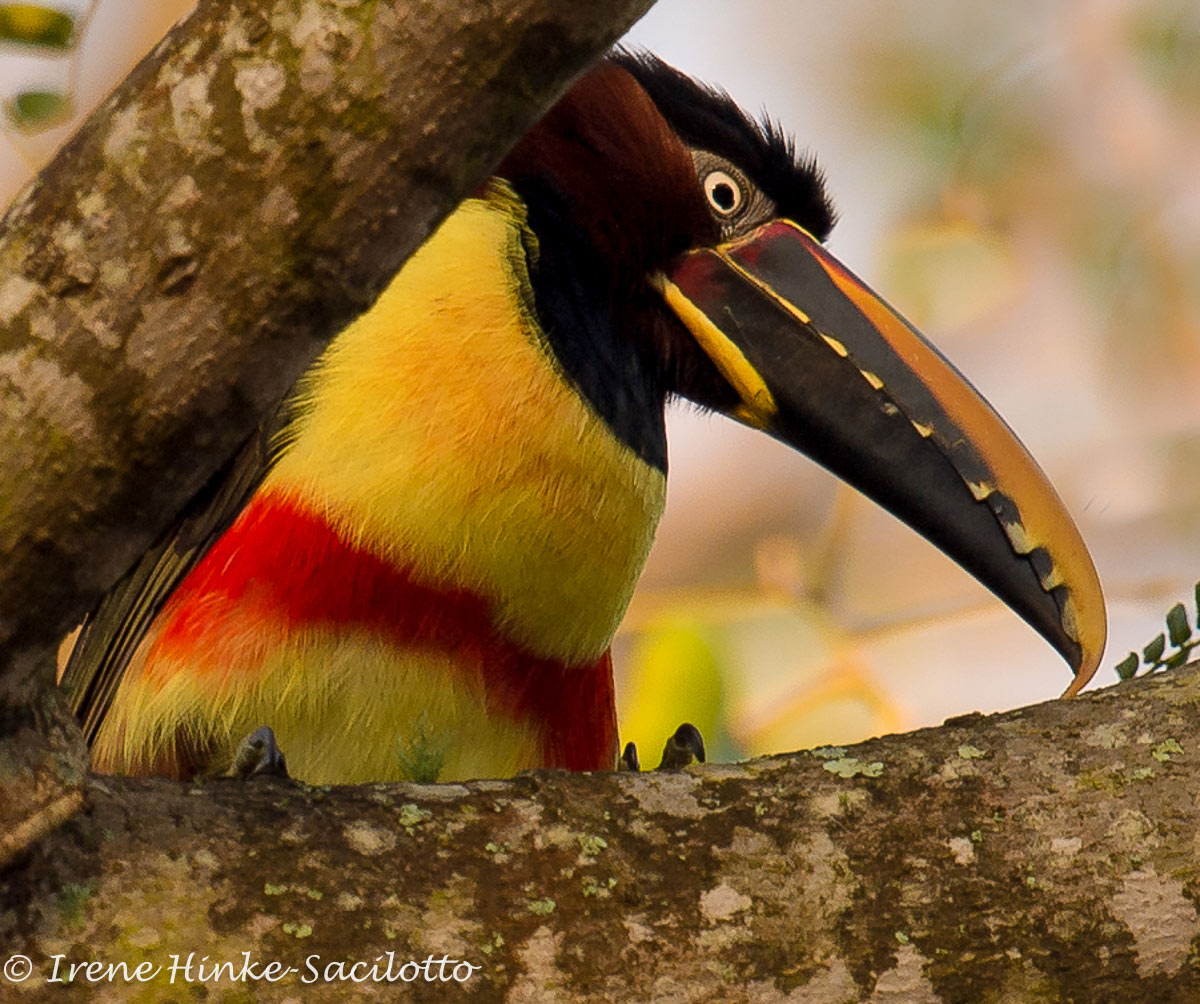
Toco Toucan
Enjoy the New Year and give thanks for nature’s amazing gifts.
Irene
by Osprey Photo Workshops & Tours | Dec 19, 2014 | Fun Photos, Photo Technique, Photo Workshops, Wildlife
UPCOMING PRESENTATION: Camera Clubs & Conferences

“A Passion for Wildlife Photography, The Stories Behind the Images”
by Irene Hinke-Sacilotto
Based on my more than 30 years’ experience photographing birds and other animals, this program covers the knowledge, strategies, techniques, and equipment required to capture professional images. Includes interesting insight into Irene’s motivation for pursuing wildlife photography. I will cover methods for locating, attracting, and approaching animals along with prime locations for wildlife photography, the use of photographic blinds, and stalking techniques. Includes images and experiences from my recent trip to Brazil’s Pantanal, one of the world’s largest tropical wetlands.
CLUBS & DATES
St. Mary’s County Camera Club, 4 Feb 2015
Fairhaven Comcam, 13 Feb 2015
Florida Camera Club Conference – 6-8 Mar 2015
Churchville Camera Club, 6 Apr 2015
Ocean Pines Camera Club, 11 May 2015
Berks Photographic Society’s 2015 Photography Conference, 5-7 Jun 2015, www.berksphotocon.com
OLLI photo club (Fairfax Co.), 10 July 2015
Carroll Camera Club, 20 Jul 2015
New Clubs Welcomed


