by Osprey Photo Workshops & Tours | Oct 7, 2020 | Bird behavior, Bird photography, MD, Nature, Nature Photography, Photo instruction, Photo Technique, Photo Workshops, Uncategorized, Wildlife, Wildlife Photography
Urban Wildlife Photo Project
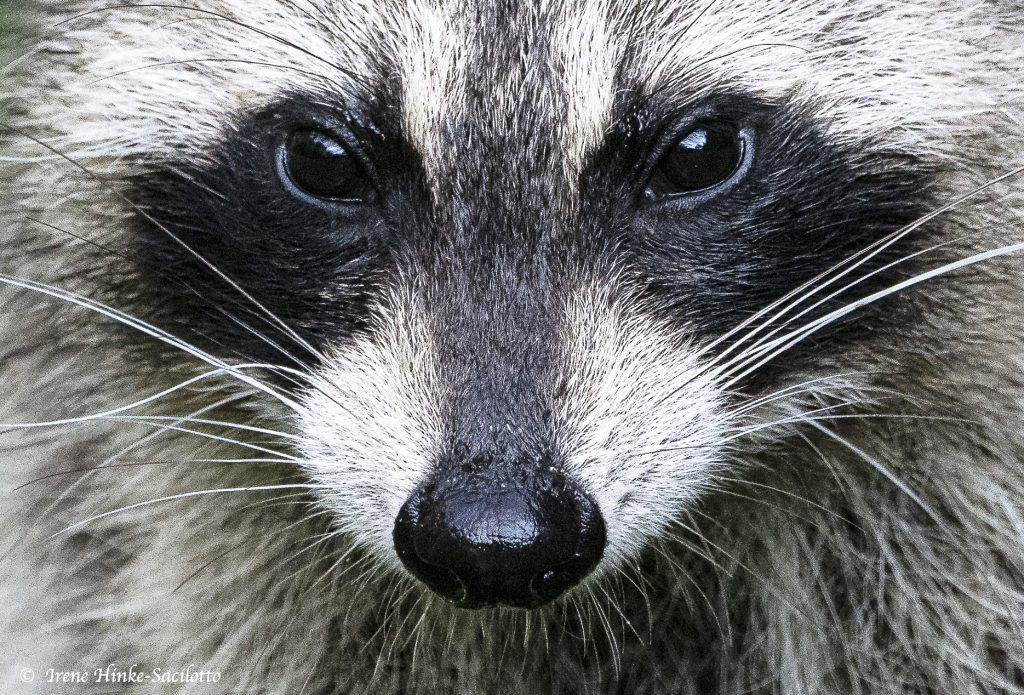
Raccoon Eyes
Overview
As mentioned in my last newsletter, in recent months I have reconnected with an old friend who has been allowing me to photograph on her property. She lives nearby and owns several acres of land with an open area, vegetable garden, flower beds, woods, and a pond by the house with aquatic plants, dragon flies and frogs. She has two permanent bird feeder locations that are near bushes and tall trees. One is located at the far end of the yard with the other near her house. Bushes and tall trees were nearby both. They provide cover from which the animals could safely approach the feeders as well as escape if threatened by hawks, foxes, or other predators. When the weather allowed from late April until today, I would spend several hours early in the morning or late in the afternoon photographing in her yard. In July when, temperatures soared into the mid to high 90s and humidity rose feeder activity slowed and was limited to the cooler times of the day and after sunset. The drop in activity seemed to continue into September.
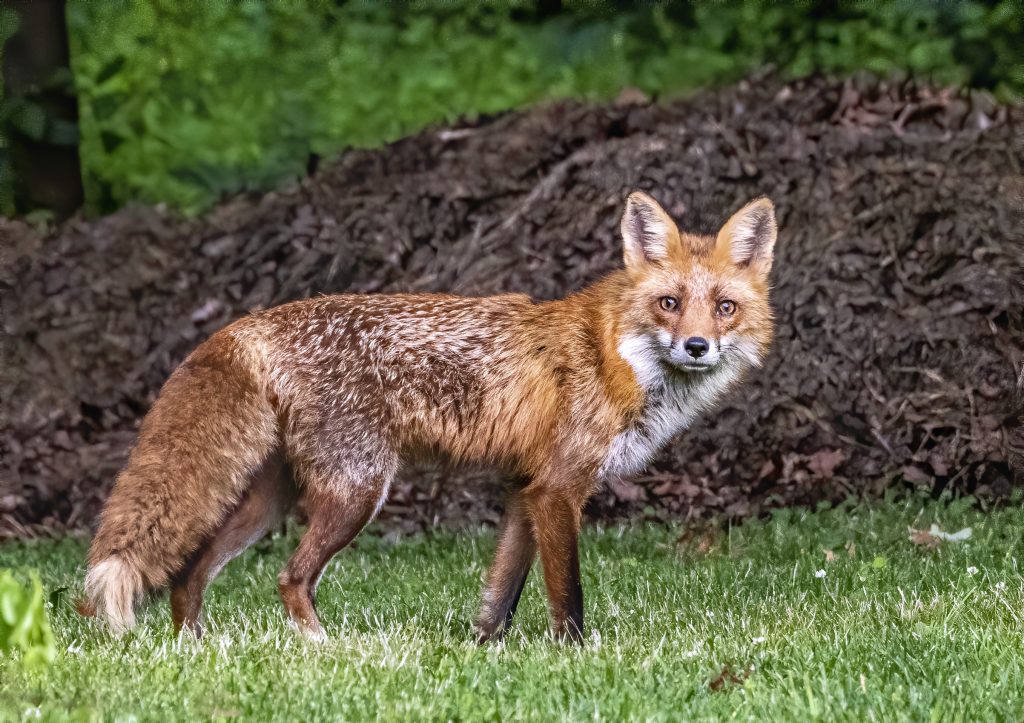
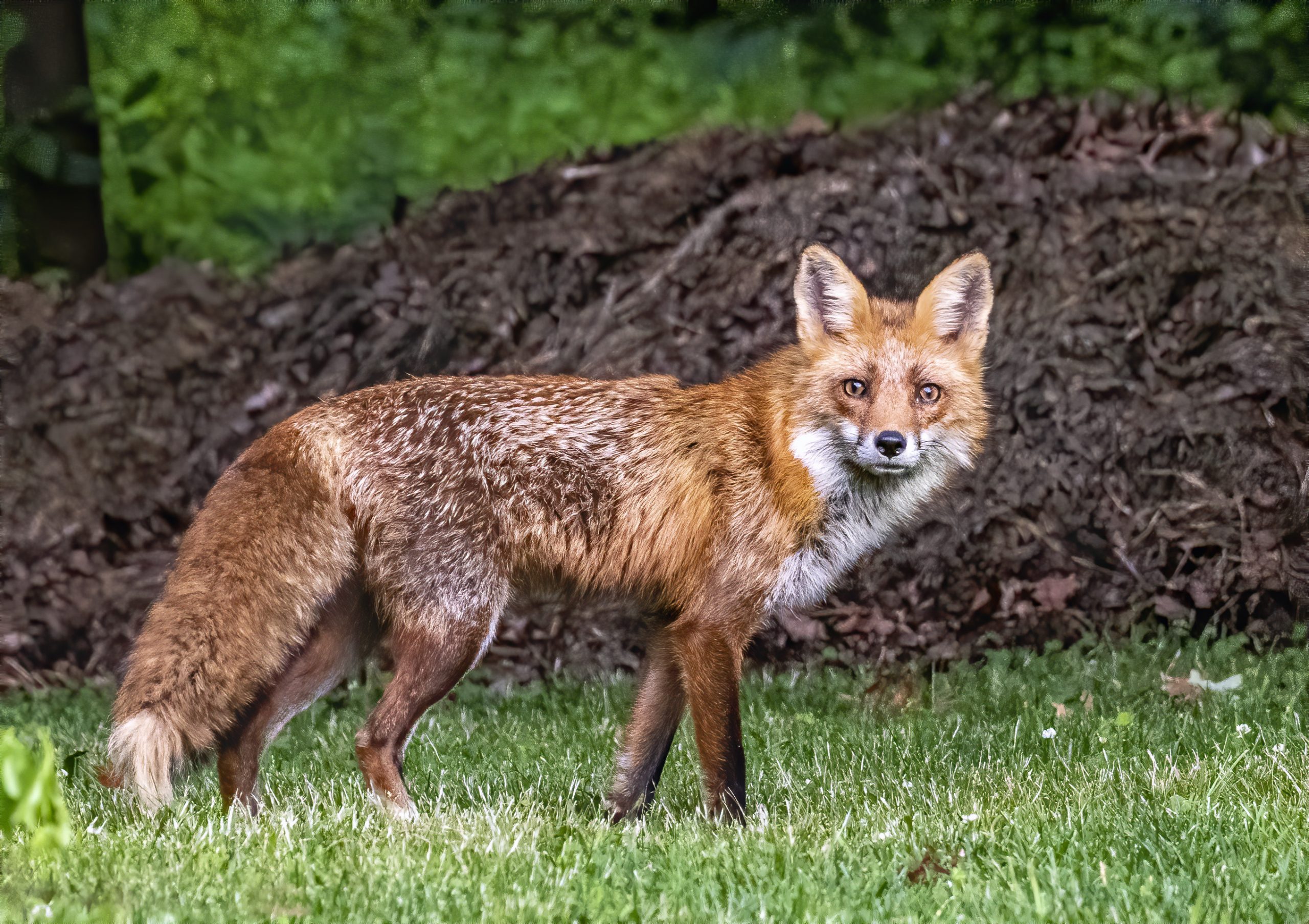
Red Fox emerging from woods.
Initial setup
In late April, I began photographing at the bird feeder nearest the house. It was close enough that I could photograph from my friend’s dining room window. In addition to standard bird seed and suet feeders, we hung a thistle sock on a branch to attract gold and purple finches. The non-melt suet, that could withstand the summer heat, attracted the small woodpeckers, chickadees, and nuthatches. At times we added meal worms to the mix, which seemed to be a favorite of the Carolina Wrens. The bird feeder at this location was elaborate with arms and multiple hooks from which to hang a variety of feeders. I added a few natural perches for the birds to land on, but to my disappointment, they seemed to prefer sitting on the iron appendages of the feeder stand. After several days shooting, I concluded that the way the sunlight hit the area was not ideal for it cast unwanted shadows on the birds. In addition, the bushes behind the feeders were very close making it difficult to blur the background even with the lens wide open and a shallow depth of field. It became even more distracting when hit by bright sunlight.

Raccoon eating apple put out to attract deer.
Second location
Adaptability, perseverance, and patience are all keys to successfully photographing animal behavior. When I failed to get satisfactory results at my first location, I shifted my attention to activity around the permanent feeder at the far end of the yard. Nearby, there was a bird bath and kiddy pool filled with water to attract wildlife on hot dry days. Since I did not want to photograph the birds at the feeder, I created what I have affectionately call my animal jungle jim. With logs, tree roots, branches, other items that I collected roadside and from nearby woods, I created a setup where I hung additional feeders and provided a safe place for the birds to perch. At key locations on the logs, I smeared peanut butter and suet. For the squirrels, raccoons, and jays, I added unsalted, raw peanuts to the wildlife buffet. After watching squirrels for an extended period of time, I am convinced that they are smart and agile and that very few bird feeders are squirrel-proof.

Black-capped Chickadee with the sun breaking through trees behind it.

Post to attract woodpeckers and the birds with suet block nearby.
Urban Wildlife Photo Project (cont.)
Periodically, I changed the arrangement to vary the background in my photos. For variety, I added a vertical 4-foot-long tree trunk cemented in a bucket that I could move to different locations. I baited it with a peanut butter/suet mix and placed a cage filled with suet nearby hoping woodpeckers and other birds would first perch on the trunk before jumping to the feeder. I added a small tree to the mix for birds to perch in, hoping to vary the appearance of my images.
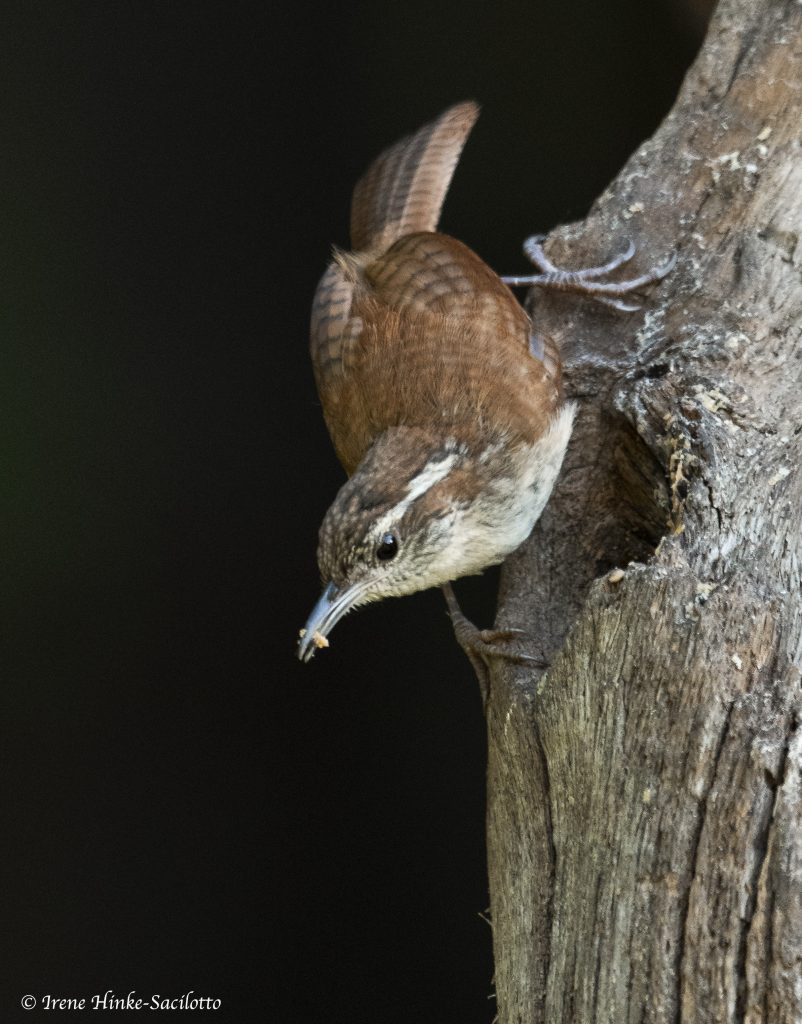
Carolina wren on post.

Downey woodpecker on side of tree trunk.

Frog escaping from backyard pond.
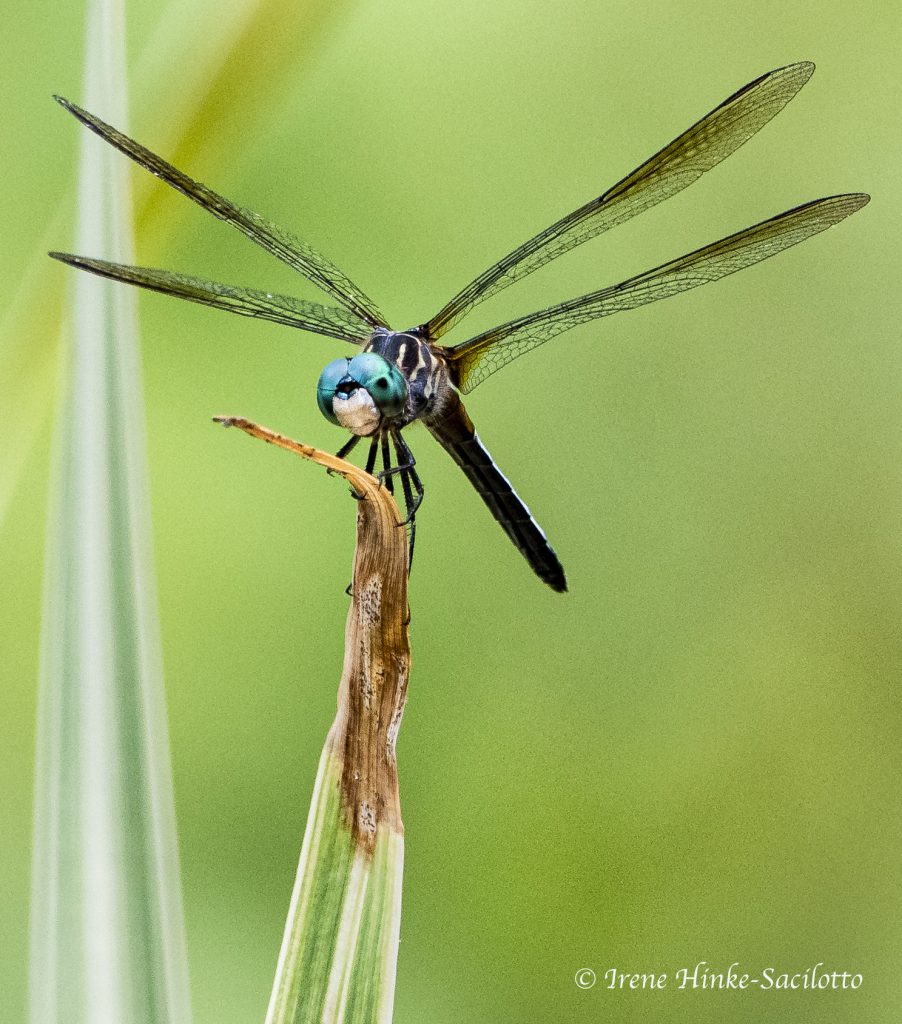
Dragonfly at pond
A couple days when activity at the feeders was low, I switched my attention to smaller subjects, dragonflies and frogs. But I only had my Nikon 200 to 500 mm lens with me instead of my 200 mm macro lens designed for close focusing. When I moved forward towards the subject to increase magnification to what I desired, the autofocus could not lock on it. Remembering a similar situation in the past, I switched to manual focus and discovered I could get closer to the subject and still keep it in focus. For the dragonfly, I had to avoid my shadow falling on it. I took advantage of the fact that if it flew away, it typically returned to the same spot. For the frog photos, I had to be careful to stay low and move slowly. The biggest problem was finding a camera angle where the background was satisfactory.

Gray squirrel peaking around tree trunk.

by Osprey Photo Workshops & Tours | Mar 23, 2020 | Bird behavior, Bird photography, Blue Heron Reclamation Wetlands, Florida, Florida's Atlantic Coast, Nature Photography, Orlando Wetlands, Photo Workshops, Waste Water Reclamation, Wetlands, Wildlife, Wildlife Photography

Florida Sandhill Cranes at Orlando Wetlands
This is Part 1 of a report on the photography along Florida’s East Coast.
The last two weeks of February I flew to the East Coast of Florida to scout for a future photo workshop in March of 2021 or 2022. In the past, I have conducted several workshops in Florida but on the west coast and in the Florida Everglades. This time, I spent 12 days visiting 18 locations along the east coast from St. Augustine to Boca Raton. Sites included wildlife refuges, state parks, zoos, gardens, and wastewater reclamation wetlands. I spent the majority of time at locations where wildlife was abundant and accessible. At other sites, I limited my visit to just enough time to evaluate the area for inclusion in a workshop.
Because of my busy lecture schedule, my visit was limited to late February. Even though it is a month earlier than I plan to offer a workshop, wintering birds were present and nesting was beginning. Breeding birds were carrying sticks, constructing nests, fighting over territory, mating, and displaying. Many wading birds displayed nuptial plumes and the color changes that come with breeding. In a few nests, chicks were present. In late March and early April, heron rookeries are much more active with screeching, hungry chicks and parents busy feeding in order to care for their young.

Sandhill Crane Feeding in field. Orlando Wetlands.

Snowy egret photographed at Orlando Wetlands
Two sites covered by this newsletter are Orlando Wetlands and Blue Heron Water Reclamation Facility and Wetland Area. These are natural and man-made wetlands fed by reclaimed wastewater, creating an environment beneficial to wildlife. Both are within a short drive from Titusville. Florida has a number of these sites with some open to visitation by birders and photographers and others are closed to the public. Some encourage visitation with boardwalks for easy access and viewing of wildlife. Several have bird rookeries within their boundaries.

Limpkin with snail at Orlando Wetlands.
What is reclaimed waste water? It is raw wastewater that has passed through a sewage treatment plant to remove solids, toxic contaminants, and some nutrients. To kill pathogens, the waste is treated with chorine which dissipates before entering the wetlands. This “reclaimed,” non-potable water is sometimes discharged into waterways or dedicated to uses like watering lawns and other purposes, but not as drinking water. However, in some cases when discharged to waterways, the nutrient loading may be high enough to create choking algal blooms which can lower oxygen levels as the algae dies and is decomposed by bacteria. Low dissolved oxygen in waterways can produce “dead zones” where aquatic animals cannot live. On the other hand, when discharged into man-made or natural wetlands, the marsh plants take up the phosphorous and nitrogen and flourish, creating environments suitable for wildlife. For sites using wetland treatment of waste, they are proactively managed and the water tested. Their condition is monitored to benefit flora, fauna, and biochemical processes. In simple terms, at both Orlando and Blue Heron Wetlands, sections of natural or man-made marsh populated with native aquatic plants are impounded and surrounded by dikes with provisions for adjusting the water level as needed. Wetland plants support large populations of tiny aquatic organisms that form the basis of a food chain that supports higher organisms. This rich supply of food acts as a magnet attracting wildlife. In addition, wetlands provide shelter and nesting habitat for birds and serve as a nursery for aquatic organisms.
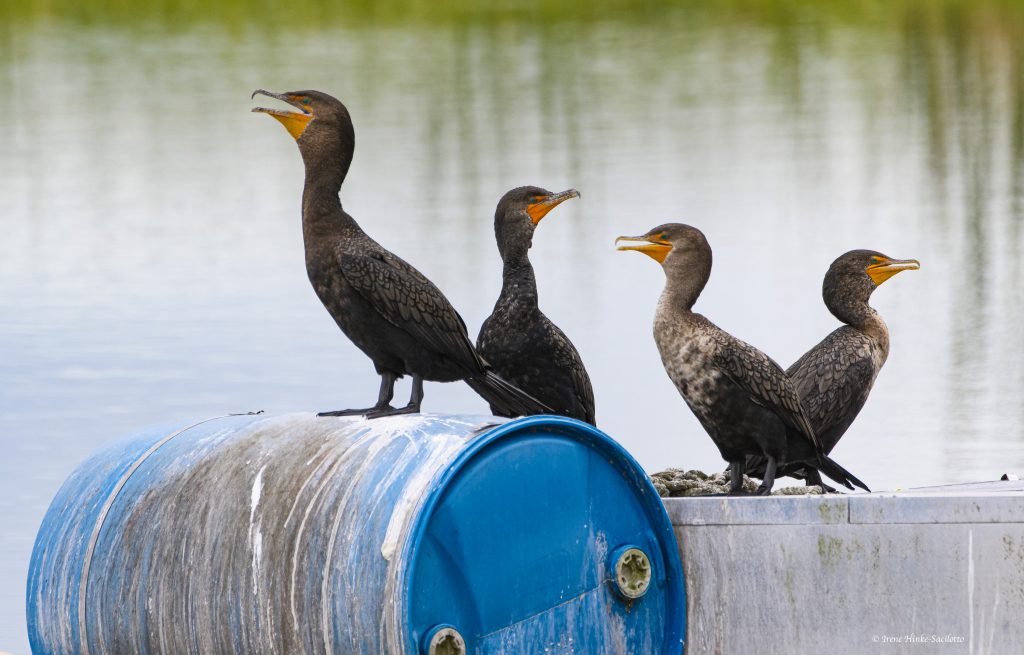
Double-crested Cormorant at Blue Heron Wetlands Facility
In the case of Orlando Wetlands, you can walk along the extensive series of dike roads. At certain times, you can take a tram tour of the facility. In the case of Blue Heron Water Reclamation Wetland Area, you must sign-in & out at their administrative office on site. When I was there, you could drive selected dike roads that provided great opportunities for photography with animals at close range and use to human presence. However, for all locations that I mention in this and the following newsletter, you must check current conditions and regulations.
A number of images in this newsletter are labeled with the location where they were taken. I first visited Orlando Wetlands about a half hour from Titusville. I walked along the dike roads expecting wildlife to be far away and intolerant of my presences. I was pleasantly surprised that many animals just ignored me and went about their normal activities. Alligators, limpkins, ibis, egrets, gallinules, and sandhill cranes were within easy camera range for photography. After conducting several December photo workshops at Bosque del Apache National Wildlife Refuge where thousands of sandhill cranes spend their time from mid-November to mid-February, I was surprised to see several cranes feeding in the first field I encountered. These Florida Sandhill Cranes are resident birds that nest in Florida and don’t migrate. They are omnivorous eating seeds, insects, frogs, mice and other organisms abundant in the marsh. Near Viera Wetlands, I actually saw a crane feeding in someone’s front lawn in the middle of a development. Later I discovered that they can be found on golf courses, parks, and in other public places.

Wood Stork sitting on branch at Orlando Wetland.
To visit Blue Heron Wetlands on weekends, you must make prior arrangements. In general many of the locations I visited were closed on certain days of the week. Those providing early entry for photographers who have purchased photo passes, such as St. Augustine’s Alligator Farm and Gator World’s rookery near Orlando, limit this privilege to certain days of the week or particular months, unfortunate for me February was not included. It is critical to check each location before visiting for rules, open dates, and conditions. For example, a favorite of many photographers, Green Cay Wetlands was closed to visitation due to renovations starting in November 2019. I had visited it several years ago and was impressed with its long boardwalk and large population of nesting birds.

Great Blue Heron at Blue Heron Reclamation Wetlands exposing underside of wings.
In following newsletters, I will cover Merritt Island National Wildlife Refuge and Cape Canaveral National Seashore plus several other areas along Florida’s east coast. The pelican/spoonbill photo at the opening of this newsletter was shot on Merritt Island one morning during my recent visit.

Great Blue Heron resting at Blue Heron Reclamation Facility.

Great Blue Heron at Blue Heron Reclamation Facility.

Red-shouldered Hawk perched in tree on Blue Heron Reclamation Wetland.
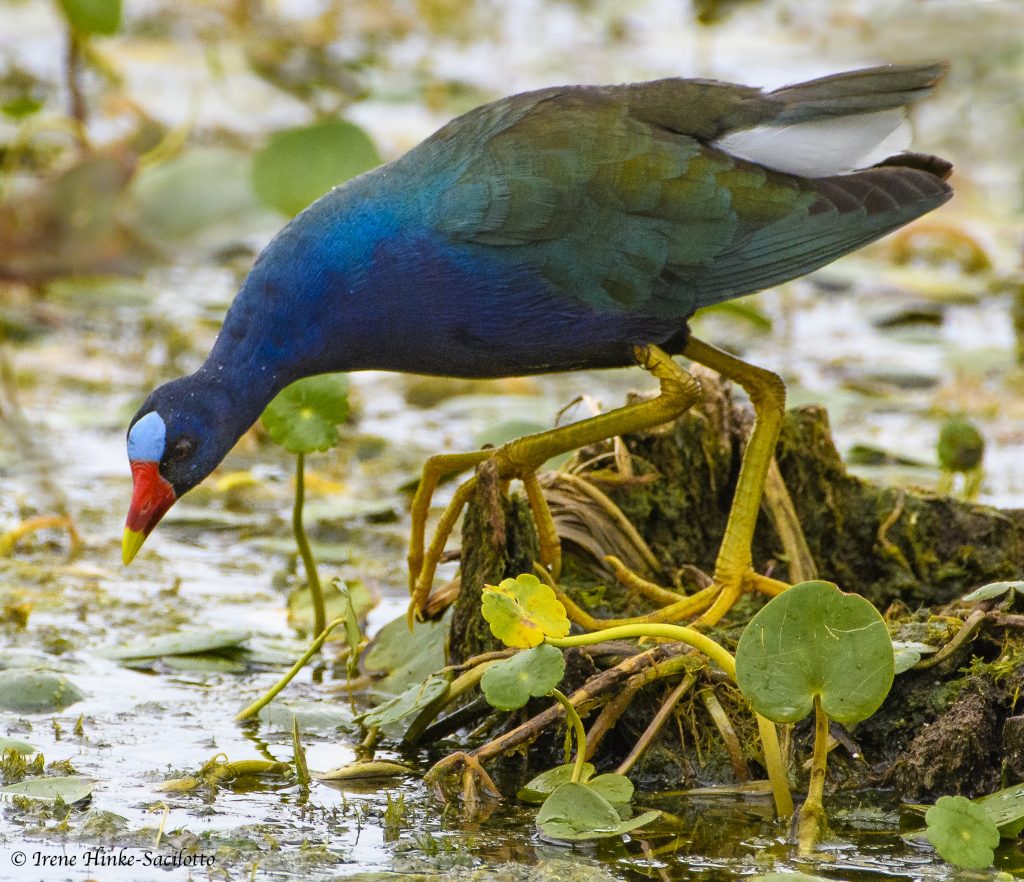
Purple Gallinule Feeding ay Blue Heron Reclamation Wetlands.
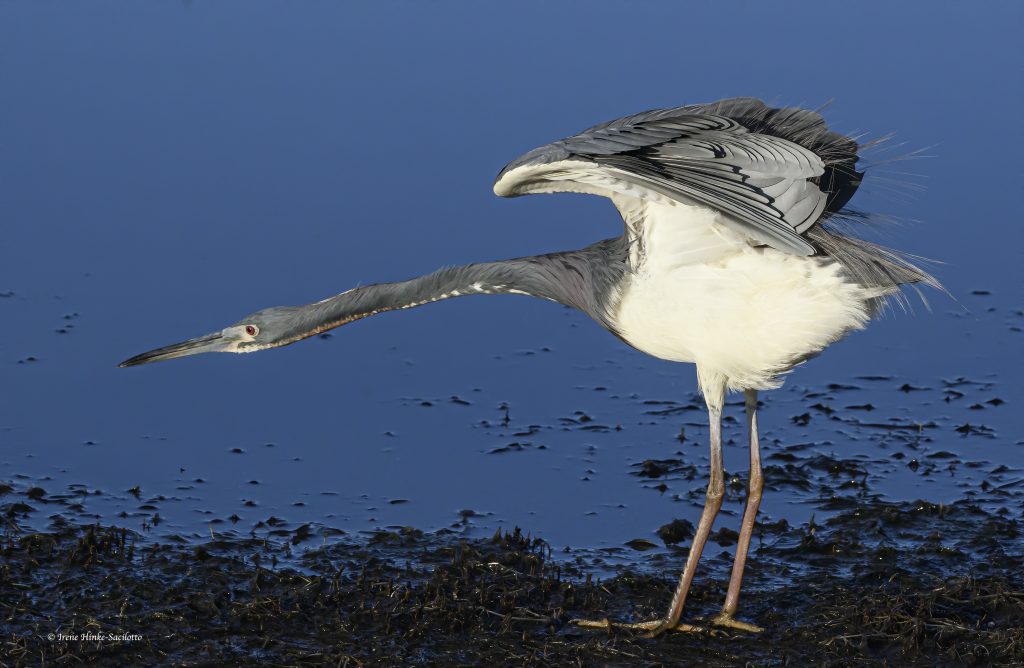
Tricolor Heron stretching on Merritt Island NWR Subject of next blog.

White Pelicans and Spoonbills at Merritt Island NWR.

by Osprey Photo Workshops & Tours | Oct 27, 2019 | Mc Neil River State Game Sanctuary, Nature, Nature Photography, Uncategorized, Wetlands, Wildlife, Wildlife Photography
Passion for Wildlife Photography

Inspiration
Why is wildlife my favorite subject to photograph? To begin, I inherited love of animals from my father. He lived in the Baltimore’s inner city in a row home with 12 siblings, but escaped whenever possible, walking great distances beyond city limit into the woods with his dog by his side. I am grateful for the knowledge he shared and reserving free time to take me for walks in the woods turning over logs looking for salamanders and in treetops for squirrels. He instilled in me an appreciation for nature and love of animals, no matter how common or unusual.
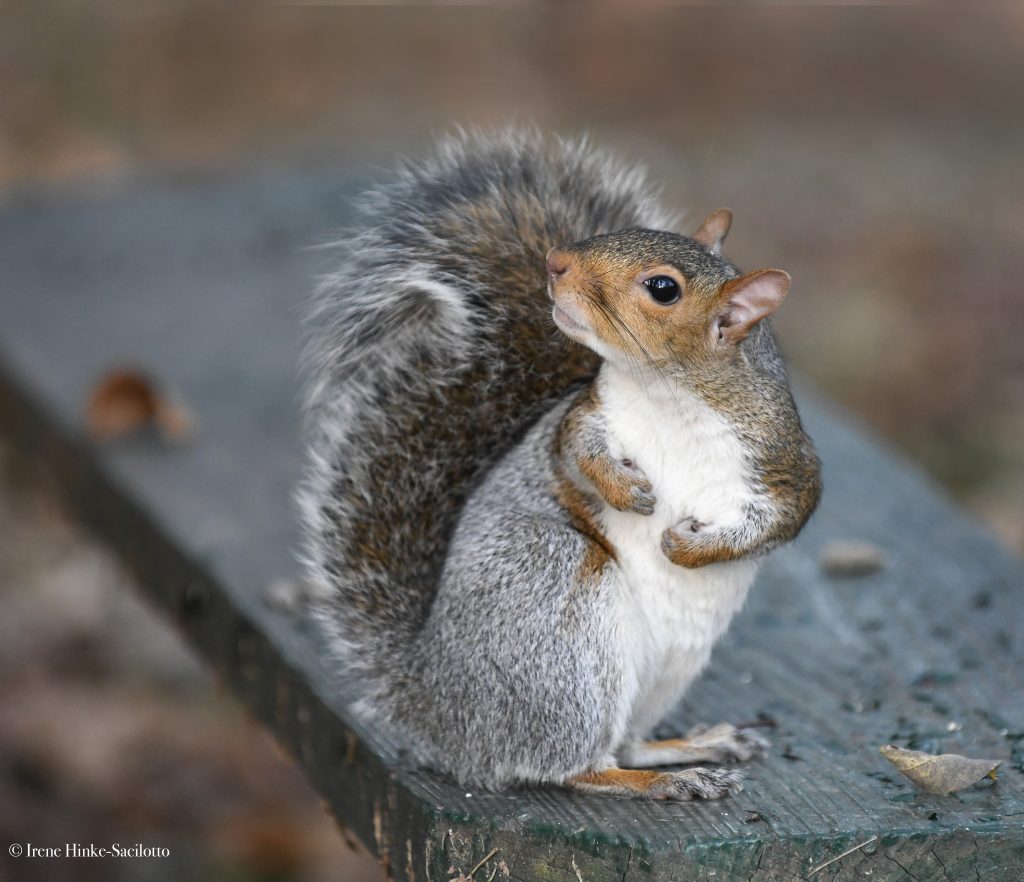
The Eastern Gray Squirrel is commonly found on the east coast of the U.S. They are known for their acrobatic skills. With specialized feet that you can see here, they can hang upside-down on trees trunks, run along the top of a fence, and gain access to the most sophisticate bird feeders.
Engagement & Mindset
I am curious by nature and love the challenges that wildlife photography presents to include locating animals and anticipating behavior. For me, the pursuit of wildlife photography has a calming influence in my life. I call it “Photo Yoga”. When observing animals, my attention is totally focused on the subject. Negative thoughts, worries, and concerns disappear. Immersed in moment, I often instinctively sense what is going to happen next as my subconscious recalls past encounters and visual cues. Even if I never take a shot, each encounter provides me with a mental database that helps me take better images in the future and with stories to share. The observations are often interjected in my presentations for camera clubs and entertain friends. For some photographers, post processing is the favorite part of rendering an image. For me, my greatest joy is capturing images in the field.
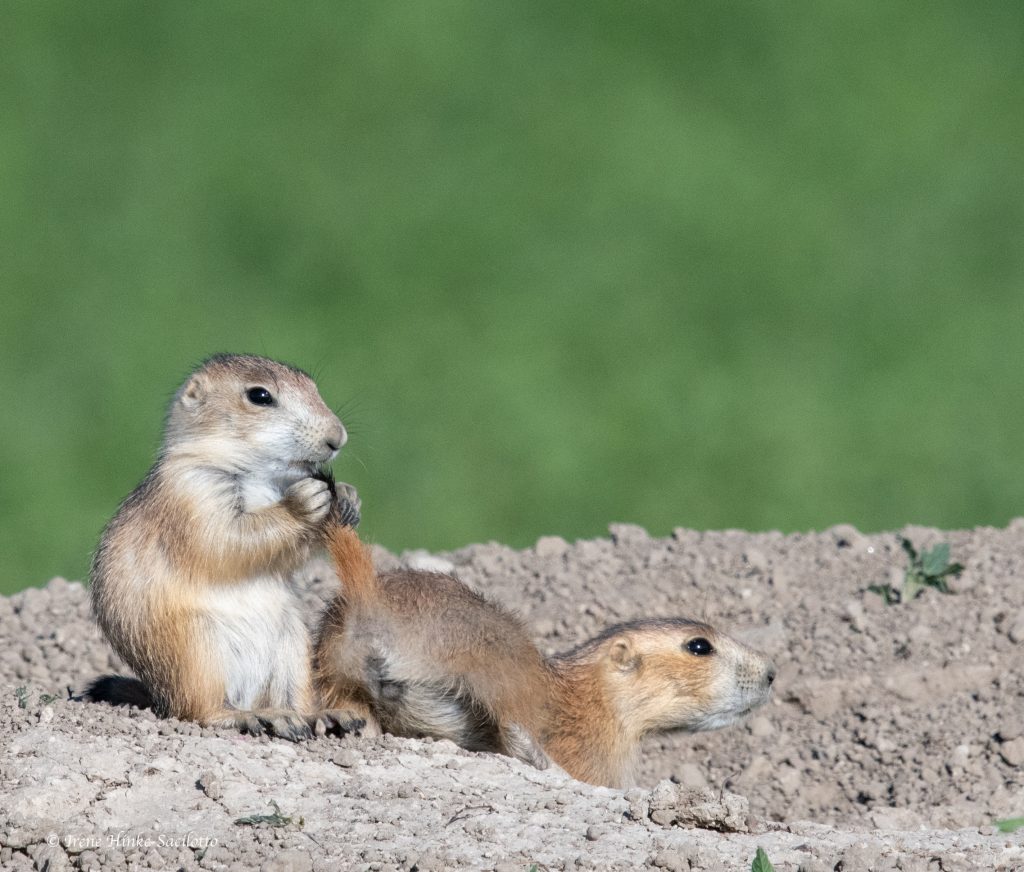
Humor is infectious. I had to laugh when watching this young Black-tailed Prairie Dog playing with the tail of its sibling.
Patience & Perseverance
Patience and perseverance are critical for capturing great images of wildlife behavior. Maybe nothing is happening at the moment. But if you wait, conditions may change. Stay focused but be open to other possible images, different than those you originally had in mind.

This wallaby mom and her joey hung out near my room at O’Reily’s Guest House in Australia. I looked for the pair each day when I walked passed the area. One day, both were in the open and allowed me to capture this and other images.

I spent a long time with this pair of wallabies and took a number of photos of them. This one shows the size of the joey. I suspect junior may shortly be too large to be fit in mom’s pouch.
Knowledge, the Key to Success
The more you know about your subject, the better your photography. Careful observation of animal behavior and research are crucial. Now web searches make gathering information much easier than years ago. Talking to researchers, hunters, fellow photographers, and birders can be quite helpful understanding what you are observing and making it easier to anticipate action.
I saw this Great Egret beginning to stretch after sitting on this branch for a long time. It extended its wing and then stretched its leg. I was lucky to capture this image at the exact moment that the bird’s leg was extended with the wing behind.
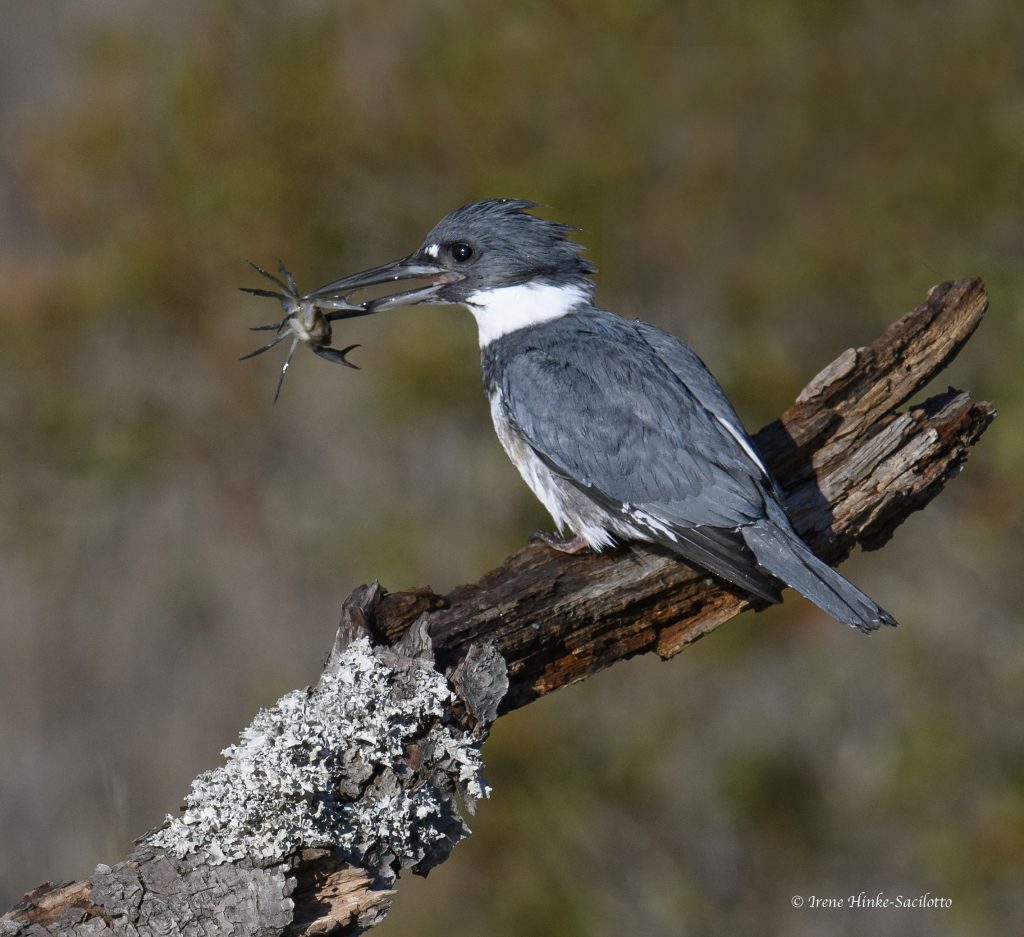
After this Belted Kingfisher caught a crab, it shifted the position of the crab in its bill a number of times trying to eat it. By taking a series of photos in rapid succession, captured this shot at the exact moment that the crab’s claw showed against the background.
Relax and Let your Imagination Soar
Give up preconceptions or labels. Keep an open mind with child-like curiosity and enthusiasm. Be flexible and experiment. Move and change your camera angle. I might lie on my back for an interesting point of view or shoot while lying on my belly. Zoom out for wider views of the surrounding or increase magnification to capture detail. Sometimes I give myself assignments designed to stretch my imagination. I go into the field with a single lens or shoot only with slow shutter speeds.

Ribbon Snake photographed while lying on my belly for a unique point of view.
Identify the Attraction
When photographing, it is important to identify what initially attracted you to the subject. Is it rim-light, texture, patterns, repeating elements, reflections, detail, surprising behavior, unique appearance, etc.? Once you realize what attracted you, then select the lens, approach, and lighting that best captures that feature. Look for shots that tell a story and unique behavior.
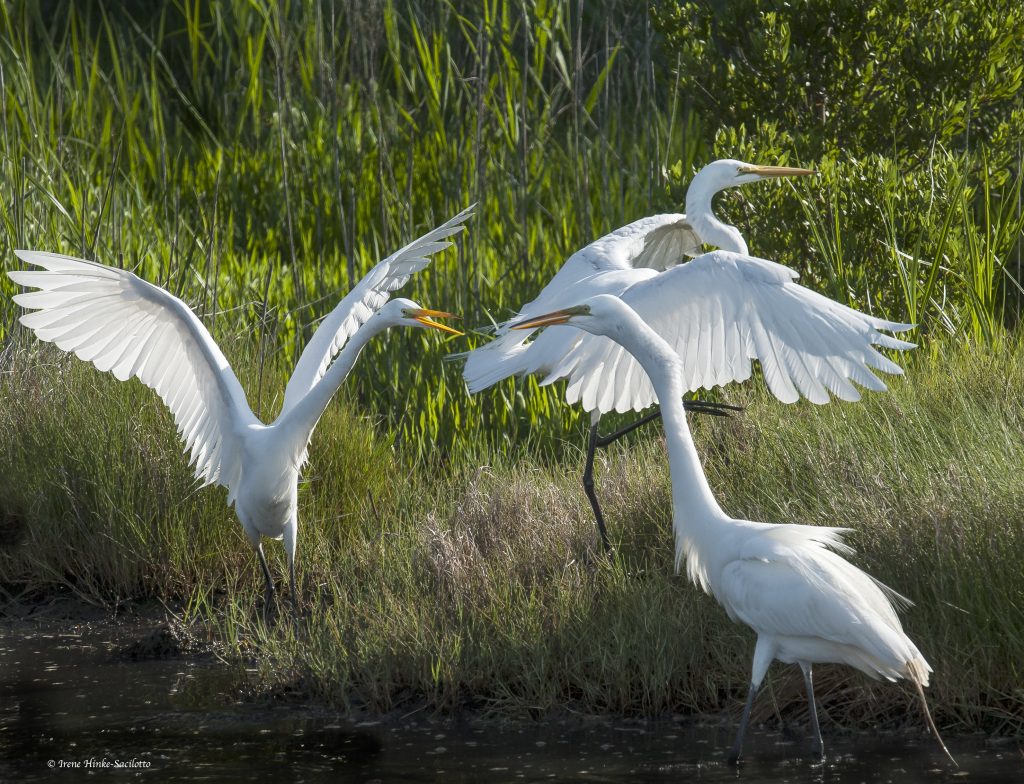
This image shows Great Egret fighting over something. In this case, the squabble was over a pool of water filled with small fish. Apparently, the third bird wanted no part of the disagreement.

Sanderlings are small shorebirds that feed along the shoreline. When waves retreat, the birds follow and feed on mole crabs and other organisms as wet sand is exposed. With incoming surf, they run ahead of it to avoid being swamped.
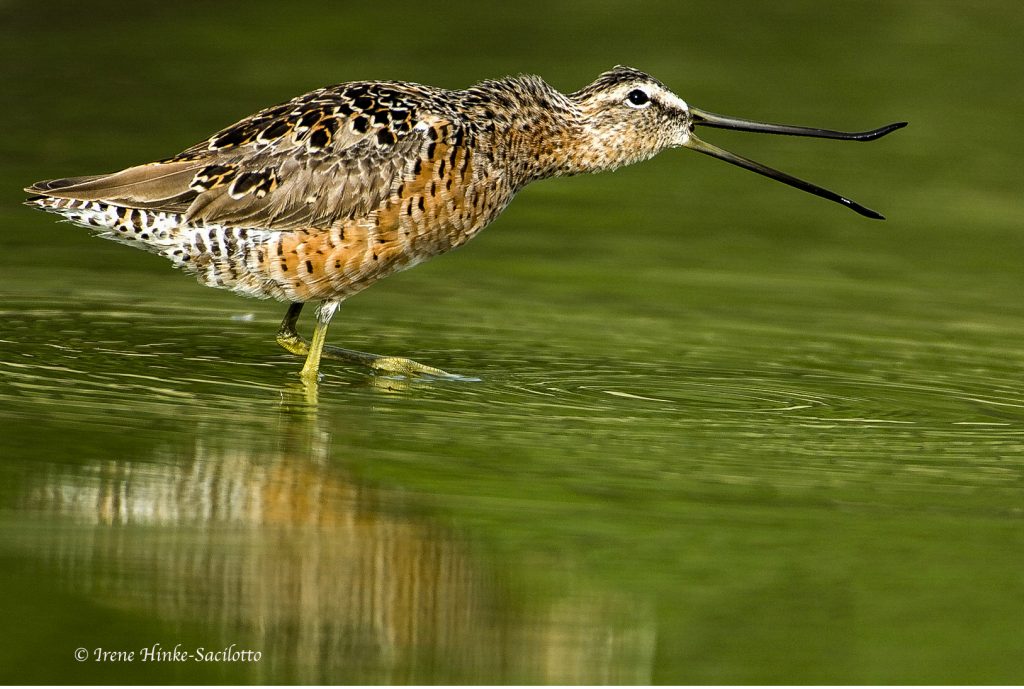
This photo of this Long-billed Dowitcher yawning, shows that the bill is not rigid. The tip with tactile receptors can be manipulated as it feeds making it possible for it to locate prey by touch.
Refining your Images
In the field, I continuously refine my images. Typically if there is time, I take a series of photographs attempting to make each one better than the last. I examine the composition, carefully scan the edges of the frame, and look for potential flaws and distractions. I also consider alternative points of view so I can take full advantage of each situation. I look for lines, contrast, color, etc. that can lead to the subject and keep the viewer’s eye engaged and within the frame. I may spend hours with one subject or return day after day.
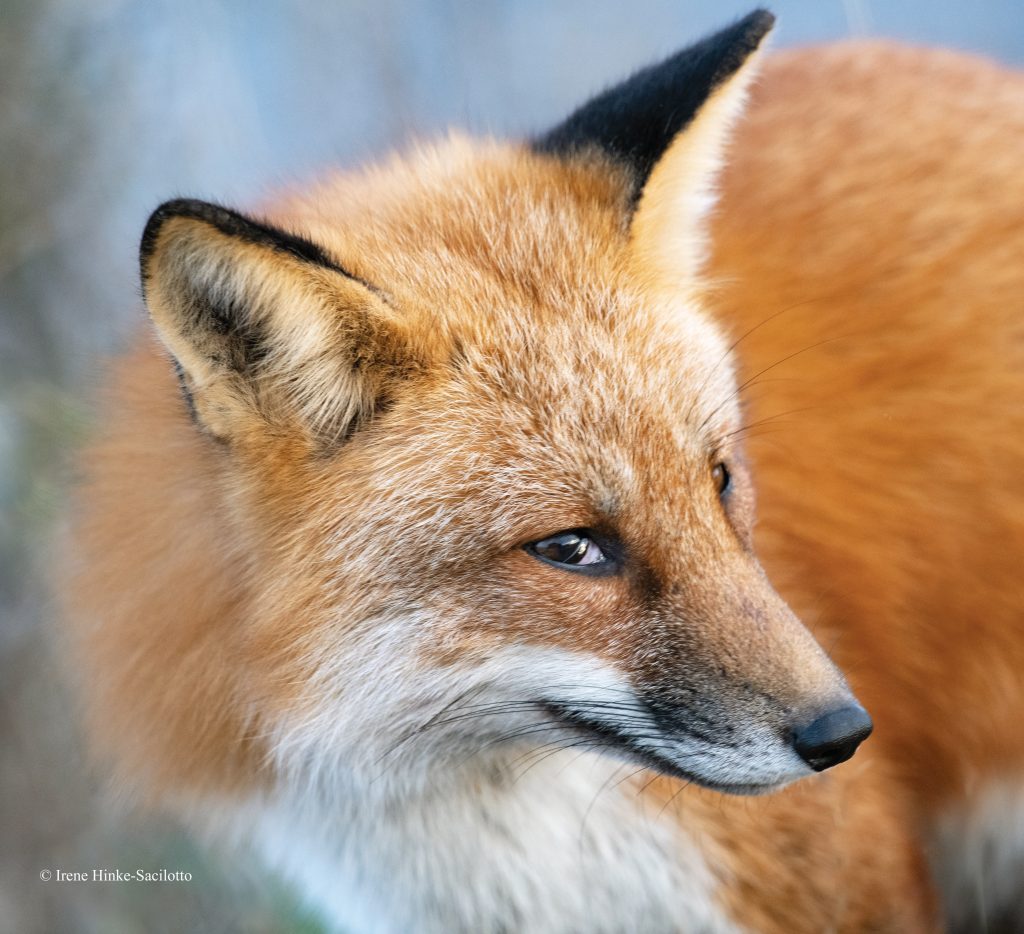
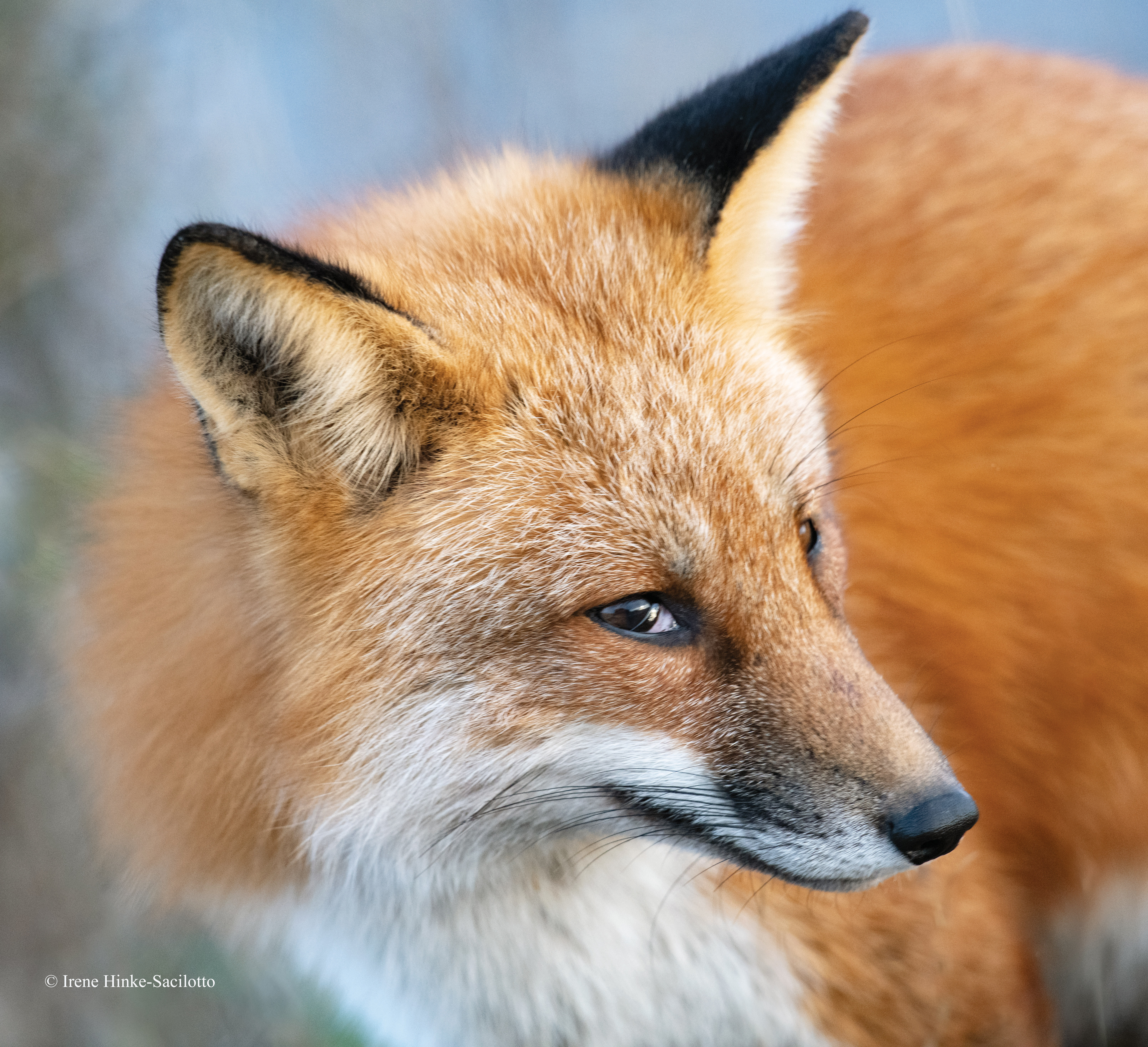
Red Fox image captured with an expression that suggests the saying “sly as a fox”. I took several shots of the fox at the time but this was the only one with this look.
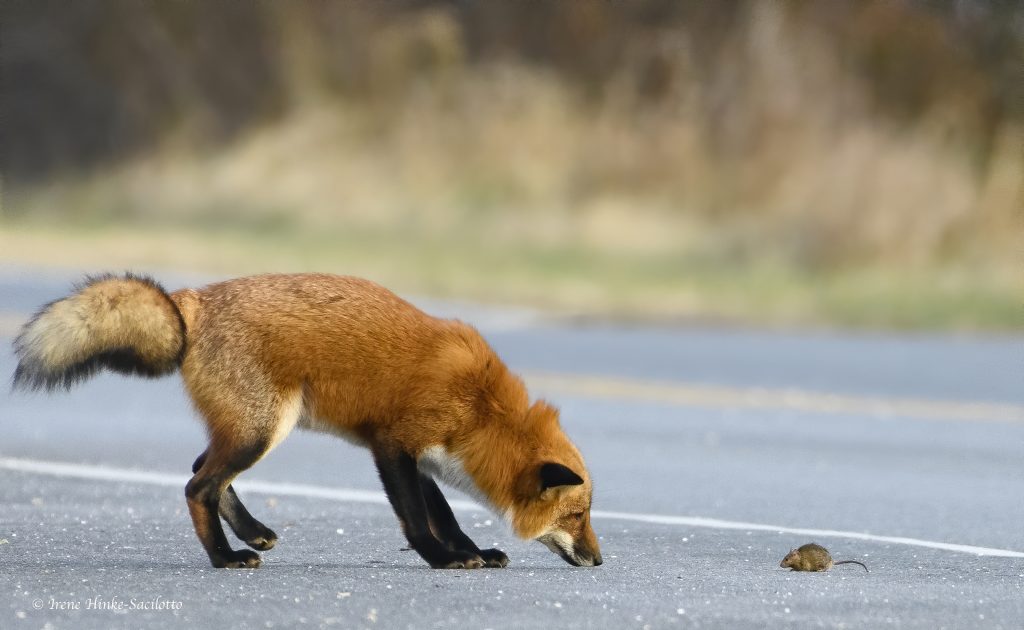
Red Fox standoff with mouse at Chincoteague, NWR. Every day during this trip I looked for fox in same area where I first saw it. Eventually I spotted it toying with a mouse and moved in to take this photo.
Background Control
Sometimes I squint my eyes when looking at a scene to exclude less important details and see what stands out (including lines, forms, etc.) or could present a problem. For example, I use this technique when photographing a subject as a silhouette to be sure its shape does not blend with other unlit portions of the scene and that the animal is recognizable by outline alone.

Silhouette of heron with fish in bill.
For close-up photography, I sometimes shift my camera’s focus off the subject and focus on the background for an instant. This technique allows me to more easily see if strong forms, bright highlights, or other distractions are in the background and may be a problem. Then I refocus on the subject with this information in mind.
The longer the focal length of the lens, the narrower angle of view. So, these telephoto lenses can help you exclude a something distracting in the background. Small shifts in the camera position can dramatically control what appears behind your subject. In some situations where the subject is in sunlight but the background is distracting, I position camera so that a shadowed area falls behind my subject. This approach creates a dramatic image, as is if the animal is lit by a spotlight.

Yellow-Crowned Night Heron after catching soft crab. The bird was in sunlight but the background was in shadow. I made the image a bit more dramatic by darkened the backgound even more during post-processing .
Shooting from a position level with your subject is often desirable, producing less distortion of the image and suggesting a more intimate relationship between you and your wildlife subject. The lower angle can also help isolate the subject if the background is distant and well out of the depth of field.

Black-Tailed Prairie Dog family

Black-Tailed Prairie Dogs nose to nose.
Capturing the Unusual
I love capturing the unique aspects of an animal’s morphology and behavior. I look for the unexpected, humor, or the emotion evoked by the scene. Every situation is unique, for the behavior, environment, and lighting is never the same. Don’t pass up on an opportunity expecting it to be there tomorrow. It won’t!
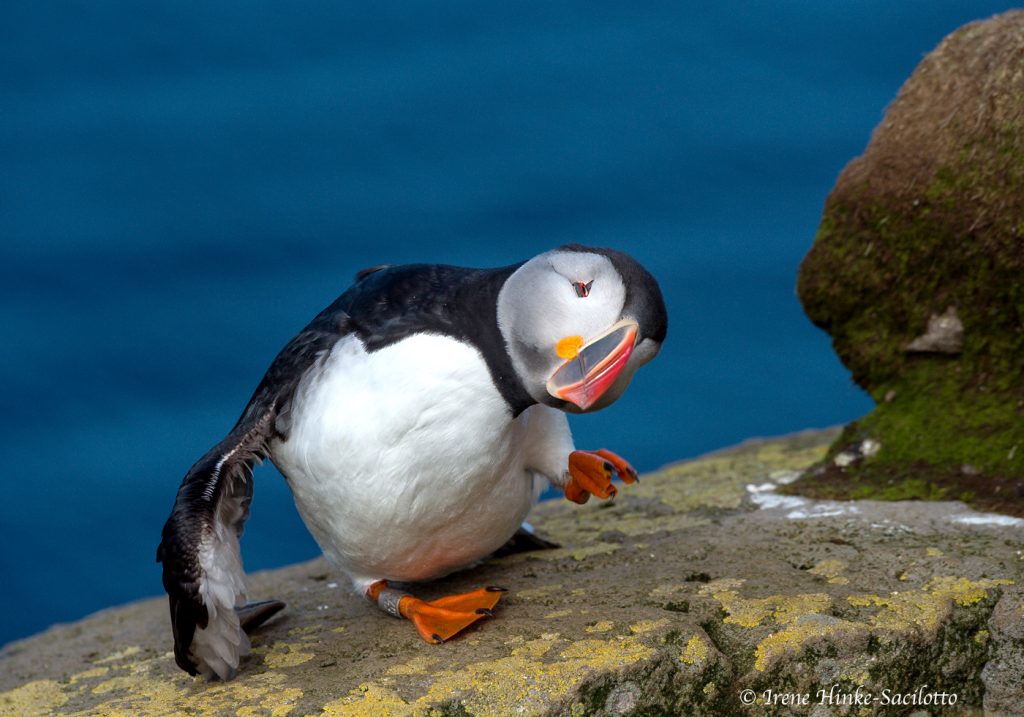
Unique photo of Atlantic Puffin using wing for balance while scratching.
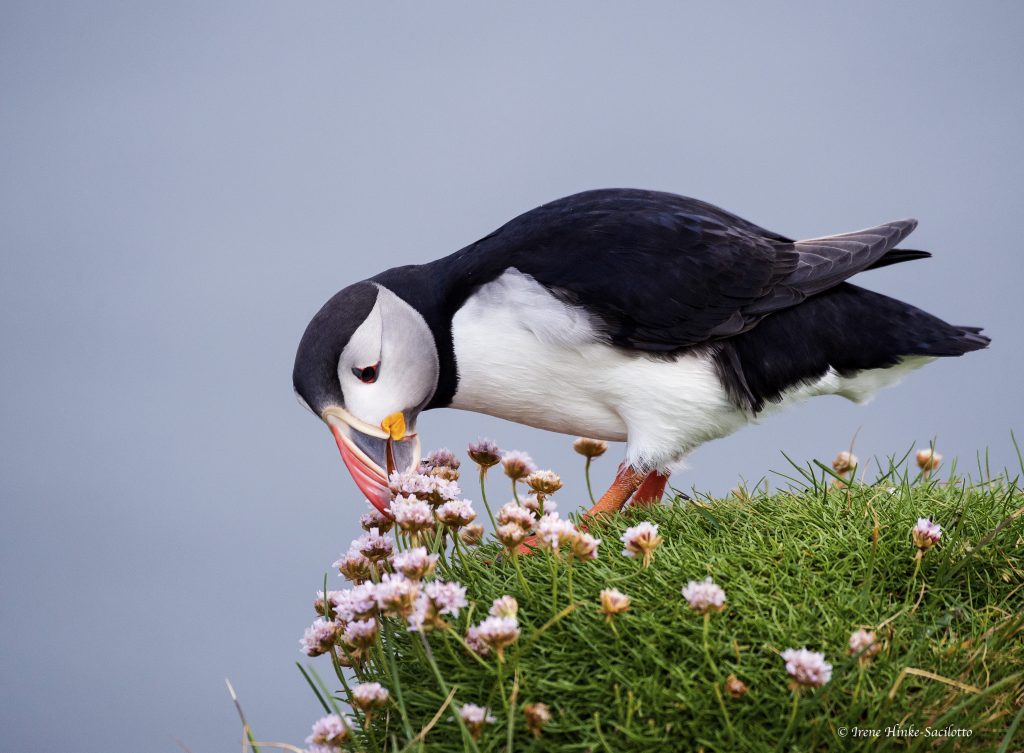
Atlantic Puffin eating flowers. This was so unexpected, that I took a number of photos at the time but only one best showed what the puffin was doing. The distant background and relatively shallow depth of field helped make the bird bird and flowers standout.
Imaginary Gallery
To judge the impact of a photograph, I sometimes imagine it hanging on the wall in a gallery. I examine the photo as if seeing it for the first time. Then I ask myself, have I conveyed the thoughts and feelings I experienced while taking the photo? Is the composition static – perhaps with the subject centered or with the horizon in the middle of the frame? Is the viewers eye drawn into the scene? Does it convey a story?

This is a humorous shot of a young Brown Bear struggling to hold onto a slippery salmon at McNeil State Game Sanctuary in Alaska. I love the story.
I always am learning something new from magazine articles, youtube, experiences in the field, and from other photographers. I keep my workshops small so I can provide individual attention to each person, no matter their skill level. No one should ever be embarrassed to ask questions. I typically learn something each time I conduct a program. If you have an open mind and see disappointments as opportunities, you will gain from your experiences. Everyone has his own unique vision. This becomes very obvious during my workshop image reviews. Even though the photographers are at the same location at the same time, the resulting mages are normally quite different.

by Osprey Photo Workshops & Tours | Apr 21, 2019 | Assateague, Chicoteague, Nature Photography, Photo classes, Photo instruction, Virginia, Wildlife Photography
Photo Opportunities
Chincoteague National Wildlife Refuge & Assateague Island National Seashore

Ospreys can dive to catch fish. Their feathers shed water easily and their talons specifically designed to be able to grab and fly with their catch.
Chincoteague National Wildlife Refuge and Assateague Island National Seashore
Location & Management:
Managed by the US Fish and Wildlife Service, Chincoteague National Wildlife Refuge covers 14,000 acres of beach, dune, marsh, shrub and forest habitats. The majority of the refuge is located on the Virginia end of the narrow, 37-mile-long barrier island of Assateague (Assateague Island National Seashore) just south of Ocean City Maryland. The refuge is managed to benefit wildlife and to protect critical habitat for both resident and migrating species. Birds found on the refuge include ducks, geese, heron, raptors, warblers, and shorebirds plus deer, raccoons, Delmarva Peninsula Fox Squirrels, muskrats, foxes, and otters.

In recent years, there has been a significant drop in the number of migrating snow geese visiting the refuge in the fall. Once reaching nearly 40,000, but today the numbers are much lower. Grabbed this shot several years ago as they landed on the beach. This fall, they were there again this year.
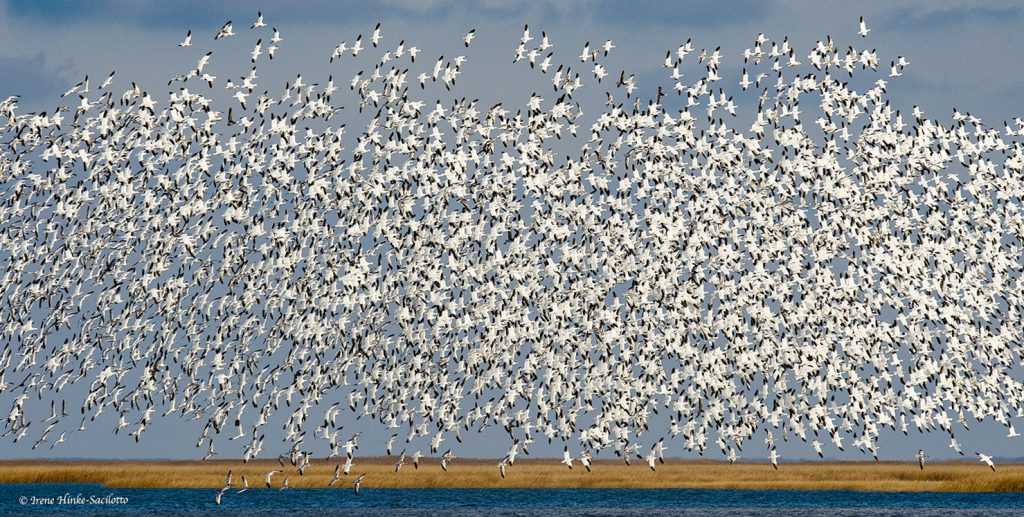
Large numbers of snow geese sometimes stop at Bombay Hook National Wildlife refuge, DE instead of proceeding south to Chincoteague in the fall. This flock circled several times before landing.
A number of impoundments have been created by refuge staff where water levels are managed to provide resting and feeding areas for waterfowl and other species. Some dikes bordering the enclosures are topped with roads adjacent to water-filled borrow ditches where birds congregate. This arrangement offers excellent opportunities to photograph wildlife from your car, steadying your camera on a bean bag or using another means of support. Because the animals are protected on the refuge and are used to seeing people and vehicles, they are less timid than elsewhere and more easily photographed.
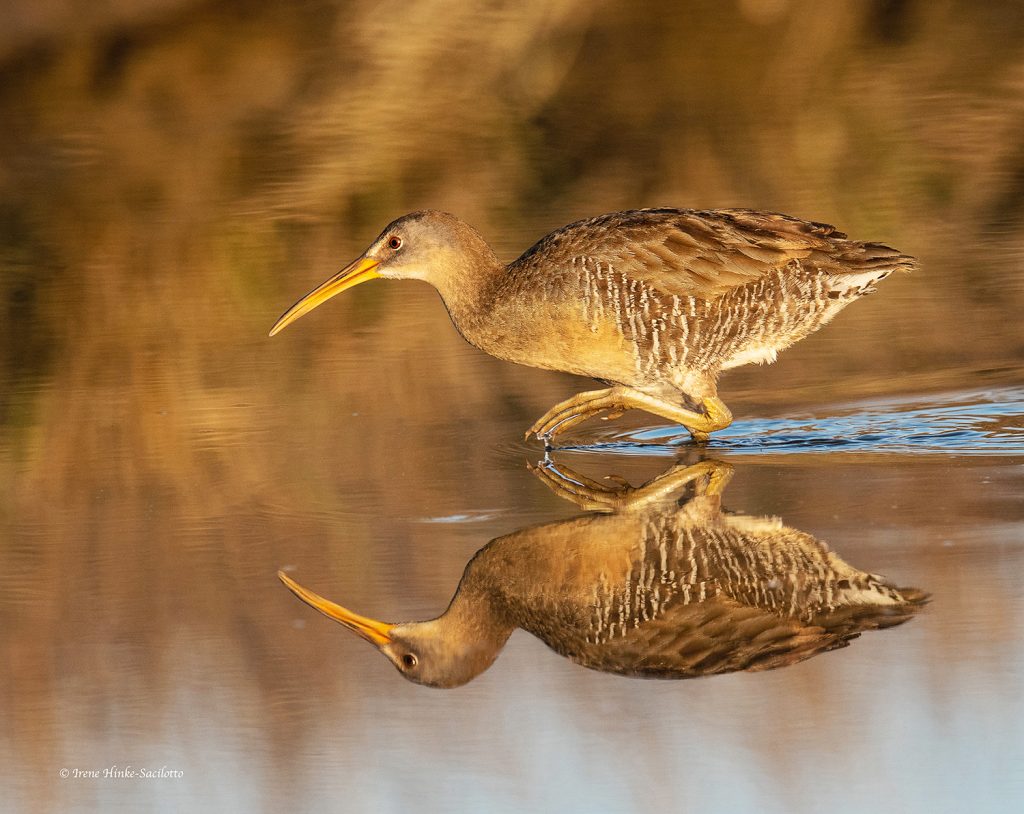
Clapper Rails are secretive birds found in the marshes. They feed at low tide on the exposed mud flats. Rails are often heard before seen.
Wild ponies are a favorite photo subject among visitors. Smaller than standard horses with heavy coats to protect them in this harsh environment. They appear perpetually pregnant with bloated bellies from their diet high in bulk and salt.

New born. Wild pony family.
Constant Change:
As with all barrier islands, the sand shifts with the season and strong storms. The ocean cuts through the dunes sometimes forming temporary inlets. Water-laden sand rolls over the land creating new marsh. With the landscape constantly changing, there are always new and exciting opportunities for photography. No matter when you visit, you will always find something to photograph. Even in the summer when the public beach is packed with people, you can still find photo subjects by venturing out in the early morning and late afternoon when there are fewer people to interfere with your activities.

Once endangered, Delmarva Peninsula Fox Squirrels were transplanted on Chincoteague and now they are often seen at the edge of the maritime forest.
Locating and approaching wildlife:
Spotting animals requires careful scanning of the environment for shapes, tones or colors out of place, and movement. By studying animals, whether photographing or not, you gain insight into their behavior and are better able to capture action shots. Creatures of habit, animals often visit the same locations repeatedly so check these spots on a regular basis. Know your equipment well and be prepared to photograph at any time. Have a suitable camera/lens combination ready with exposure settings pre-set for conditions you are likely to encounter. Once a potential subject is spotted, plan your approach. Consider the lighting, background, subject temperament, and the animals direction of movement. If it is following a predictable path, move slowly and indirectly to position yourself where it is heading. Be careful not to cause it to alter its behavior. Rapidly moving directly towards the animal will normally causes it to flee.

I watched the direction the fox was moving and carefully position my vehicle on the shoulder of the road at a distance in front of where I thought it was going. I made sure the warm afternoon light was illuminating its beautiful red coat

After hearing its distinctive call, I spotted this Belted Kingfisher on one of its favorite branches. As I positioned my camera, it plunged into the water and emerged with a small crab in its bill before returning to its perch. To capture various poses of the bird as the bird struggled to consume the crustacean, I held down the shutter release button and repeatedly fired a series of shots using a high number of frames/second.
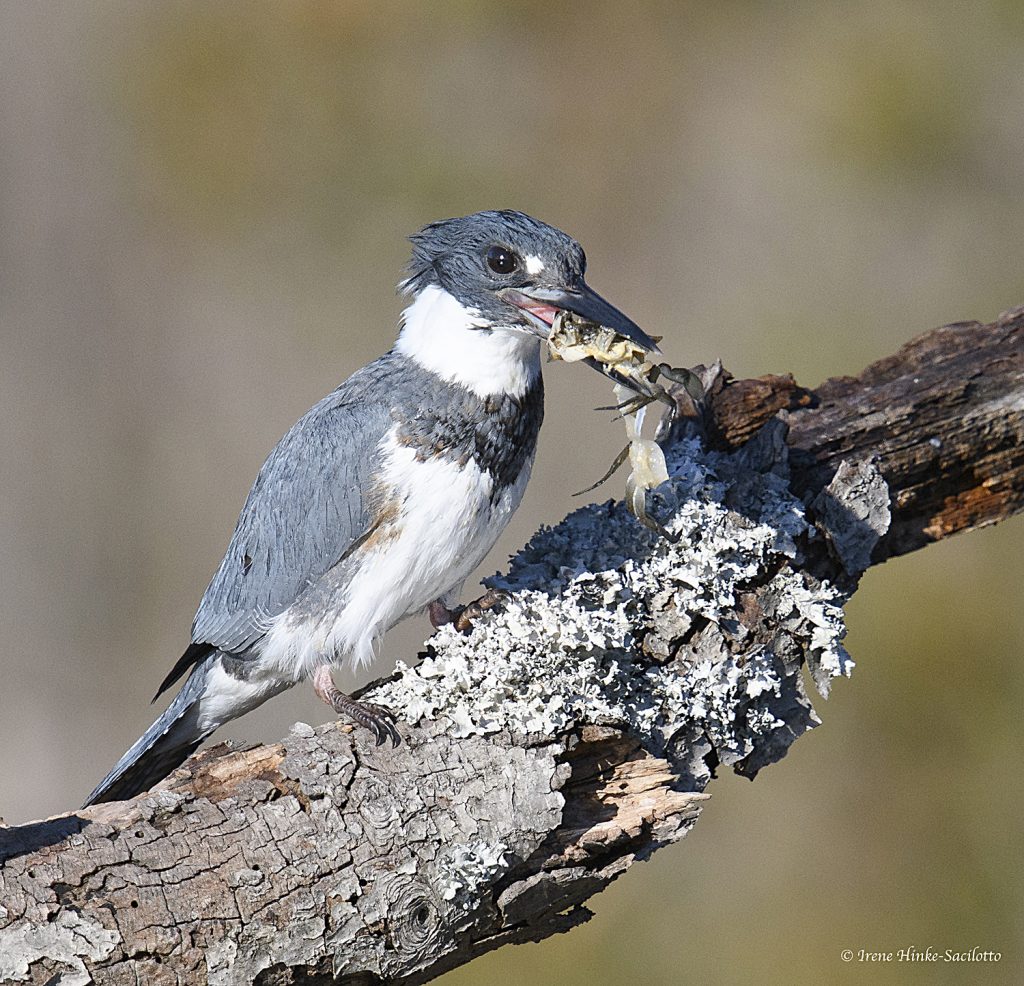
Shot from my car with my Nikon D850 camera and 600 mm lens resting on a bean bag. Settings: ISO 800, F10, and shutter speeds approximately 1/2000 second.
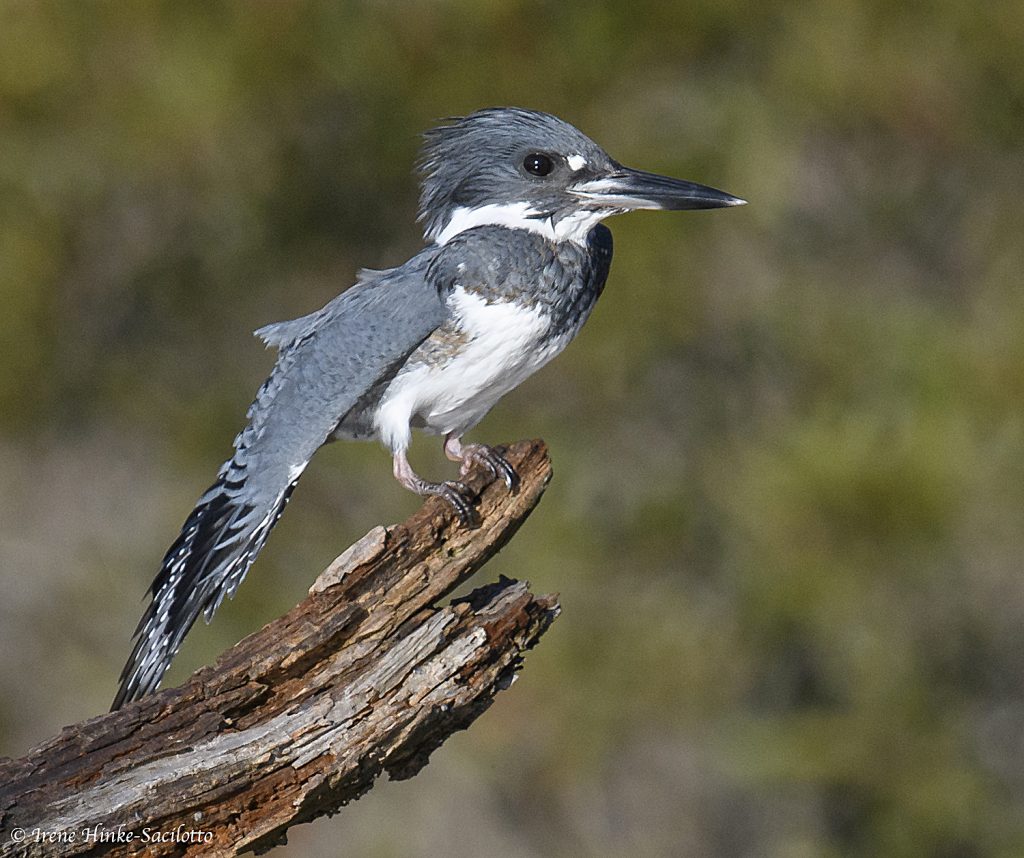
Belted Kingfisher stretched wing just before it dove after fish.
Suggested lenses and other gear:
- A wide-angle for beach scenes, flocks of birds, and sunrise/sunsets and perhaps a 80 to 200 mm zoom lens to isolate portions of the scene.
- A 300, 400 or 600 mm telephoto for small or timid subjects such as shorebirds. It is preferable to buy long lenses that have collars for mounting on a tripod. This makes it easier to handle the camera/lens combination and it allows for quick adjustment of orientation from horizontal to vertical or in-between.

To spot animals, I look for movement. This Cedar Waxwing was part of a flock attracted to the berries. Shot with my 600-mm lens.
- A 1.4 tele-converter to extend the effective focal length of your primary lens for photographing small subjects. Note: The tele-converter reduces the amount of light reaching the sensor, cutting shutter speeds in half. For best image quality, buy one matched to your prime lens.
- A 200-mm macro lens for close focusing and high magnification when photographing a shell, insect, or flower. Compared to shorter macro lenses, with the 200-mm lens, you can obtain the same magnification at a greater working distance from your subject–a benefit if photographing something timid such as a ghost crab.
- Other gear: An electronic shutter release to prevent camera shake when using long exposures or high magnification. A polarizing filter to remove unwanted reflections and shine on surfaces of vegetation intensifying colors. Depending on the angle of the sun, it can also make the sky appear bluer. You might want to include a neutral density filter that reduces the amount of light entering the lens in order to create special effects by using slow shutter speeds to suggest motion of moving objects – the surf, the wings of birds, etc.

The lighting and pose made this photo of a Great Blue Heron special. Shot in the early AM.
- A sturdy tripod, preferably without a center post for maximum stability when using long telephoto lenses. The tripod should be topped with a professional ball head that can easily support the weight of your camera/lens combination or with a Wimberley Head (gimbal) which is preferred by many photographers for manipulating large lenses and tracking animals and birds.
- If shooting on the beach, the wind off the ocean can be fierce and unpredictable, so never walk away from the tripod. Also, watch where you place your camera gear since an incoming wave can swamp your equipment or worse, wash it away. When around blowing sand or dust, shield your camera when changing lenses to avoid particles entering the throat of the camera and making their way to the sensor resulting in dark spots on your images.
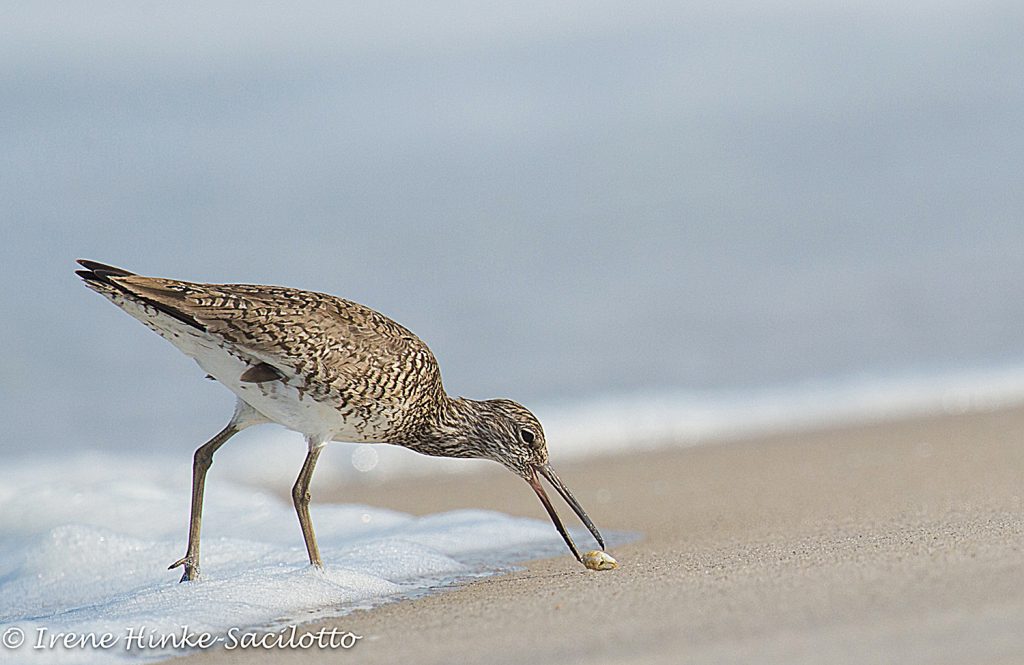
Willet picking up mole crab. Shorebird behavior is often predictable. They follow the edge of the surf, probing for organisms as waves retreat.
Useful tips:
- By having with you two cameras mounted with different lenses when in the field, you can avoid changing lenses in the open and can more quickly switch from one focal length to another.
- When on the beach, wipe or brush the sand off your tripod legs with a damp cloth to prevent particles and salt from entering the joints between tripod segments and making it difficult to adjust the tripod’s height. You can buy or create water-proof tube covers for the lower legs to minimize sand-related problems and to allow you to submerge the legs in the surf.
- If visiting in the spring, summer or early fall, bring insect repellant to guard against mosquitoes, biting flies, and ticks potentially carrying Lyme disease. Reads more on CDC’s website. https://www.cdc.gov/lyme/prev/on_people.html
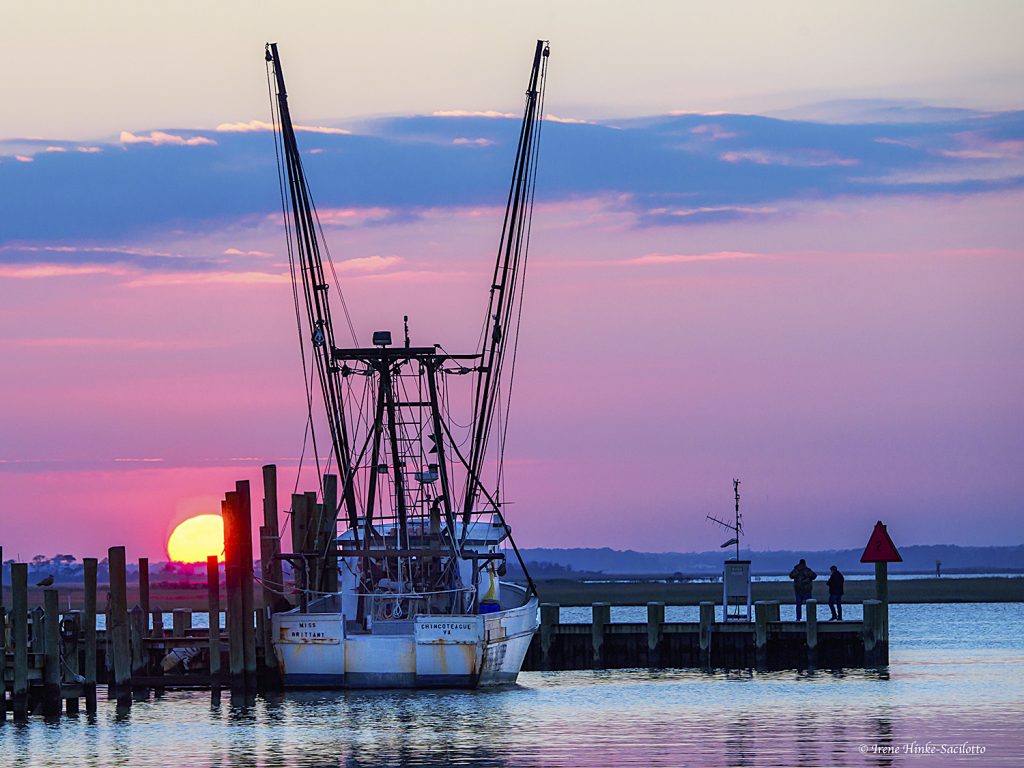
Adjacent to the refuge is the town of Chincoteague with a small boat harbor. Sometimes loons are found here. It is also a good place to photograph sunset.

by Osprey Photo Workshops & Tours | Sep 4, 2018 | Alaska, McNeil River, Nature Photography, Wildlife, Wildlife Photography
McNeil River State Game Sanctuary

Brown bear clutching fish it just caught.
McNeil River State Game Sanctuary. I just returned from McNeil River State Game Sanctuary in Alaska, a location 100 miles from the nearest road system and the town of Homer. It is reachable primarily by float plane when tides are favorable for a safe landing. The area is one of the most remarkable places I have ever visited, with the world’s largest concentration of wild brown bears. Seasonally, after winter hibernation in the high country, the hungry bears gradually gather at McNeil River and Mikfik Creek on the sanctuary to feast on the salmon that spawn there each year. Here the bears are protected and there is no hunting.
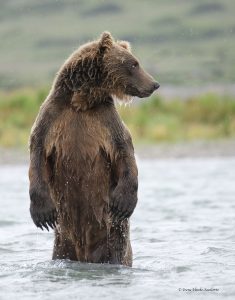
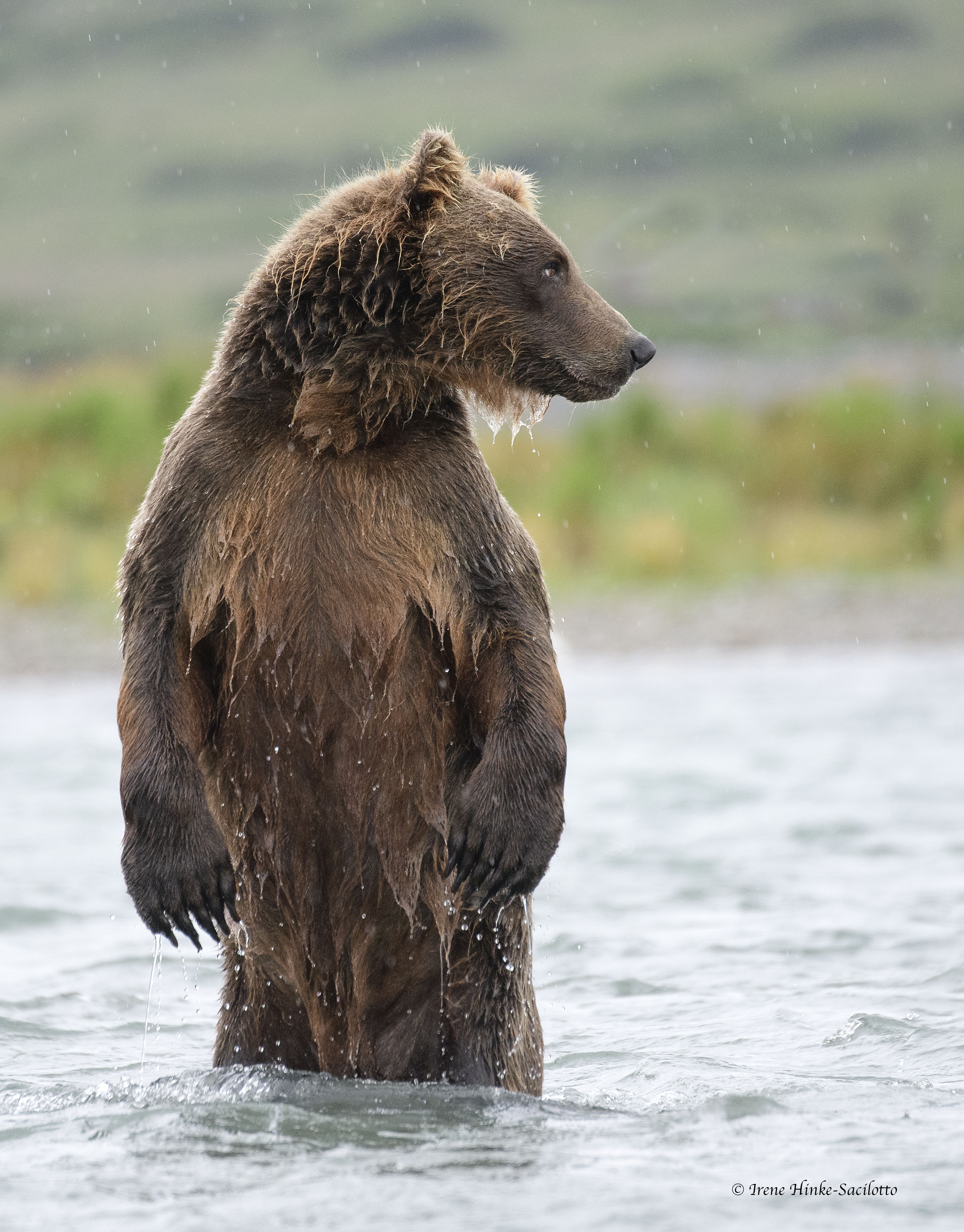
Bear standing in McNeil River
The permits for “guided viewings” of the bears at McNeil River State Game Sanctuary are granted through a state-run lottery system. The number of visitors is limited to 10 at a time, for a period of 3 or 4 days. I had entered the lottery before but lost. But this year a friend and I were finally lucky enough to be selected for 4 days of guided viewing of the bears in the month of August.
From Homer, we flew to McNeil on a float plane which landed in the estuary where the Kamishak Bay meets the mouth of the McNeil River. The location is more beautiful than I had imaged with spectacular views of the distant 3000 to 5000-foot snow-capped mountains of the Aleutian Range. At their base and approaching the coast were rolling hills that met the sea in a series of bluffs, cliffs, lagoons, mud and sedge flats, rocks, and pebbled beaches. Each day, from approximately 10 a.m. to 8 p.m., we spent time in the field with a guide and hiked 4 to 5 miles a day to various locations for bear viewing and photography. One day, from a sand bank along the lower falls, our guide spotted 19 to 22 bears at one time, some close and others farther away and only visible with binoculars. Each seemed to have its own fishing technique—submarine style swimming under water to pouncing on a fish with its paws. Unbelievable!

Mountain view from camp.
As for all visitors, we stayed in a primitive campground with limited facilities designed to minimize disturbance to the environment. It was adjacent to a pebble strewn beach and was partially surrounded by stands of alders and fields of fireweed. We were required to bring in our own camping gear, food, and supplies. We pitched our tents on designated circular gravel beds which were somewhat sheltered from the wind. In terms of permanent structures in the compound, there was a cook house, sauna/wash house, and 2 pit toilets, a tool shed, plus several cabins for the staff. Immediately upon first arriving at the camp, all food and items with odors that might attract bears had to be stored in the cook house. This precaution was to minimize the chance of bears entering the camp and associating humans with food, which could influence bear behavior, creating a problem bear. In the cook house we prepared meals, socialized, and received briefing for each day’s outing. Pots and pans and several burners were provided for cooking. A wood stove offered warmth on chilly days and gave us a way to dry socks, towels and other clothing.
We were very lucky that during our stay the weather was moderate, approximately 60 during day and 50s at night. It only rained steadily part of one day. On the other days, there was a mix of sun and clouds.

Bear carrying fish after catching it.

Young bears sparing.
In August at the McNeil River State Game Sanctuary, most bear activity was confined to the lower falls with a little action at the upper falls due to a reduced number of salmon at this time. Each day we followed primitive, sometimes muddy uneven trails through sedge and mud flats, across slippery pebble-strewn beaches, up hillsides, through steams, and across a tidal lagoon. Waders were definitely required and crossing the lagoon could only be done when the tide was low. Each day we left camp at approximately 10 a.m. and arrived back in camp at 8 p.m. We hiked with our photo gear several miles to visit beaches and areas where we could safely observe and photograph the bears feeding on salmon and interacting. On two days, we visited the upper falls where there was a viewing platform and camp chairs were provided for comfort. The view was super but few bears were present. (In June, most bear activity is at Mitfik Creek and in July it is at the upper falls where up to 80 bears may congregate.
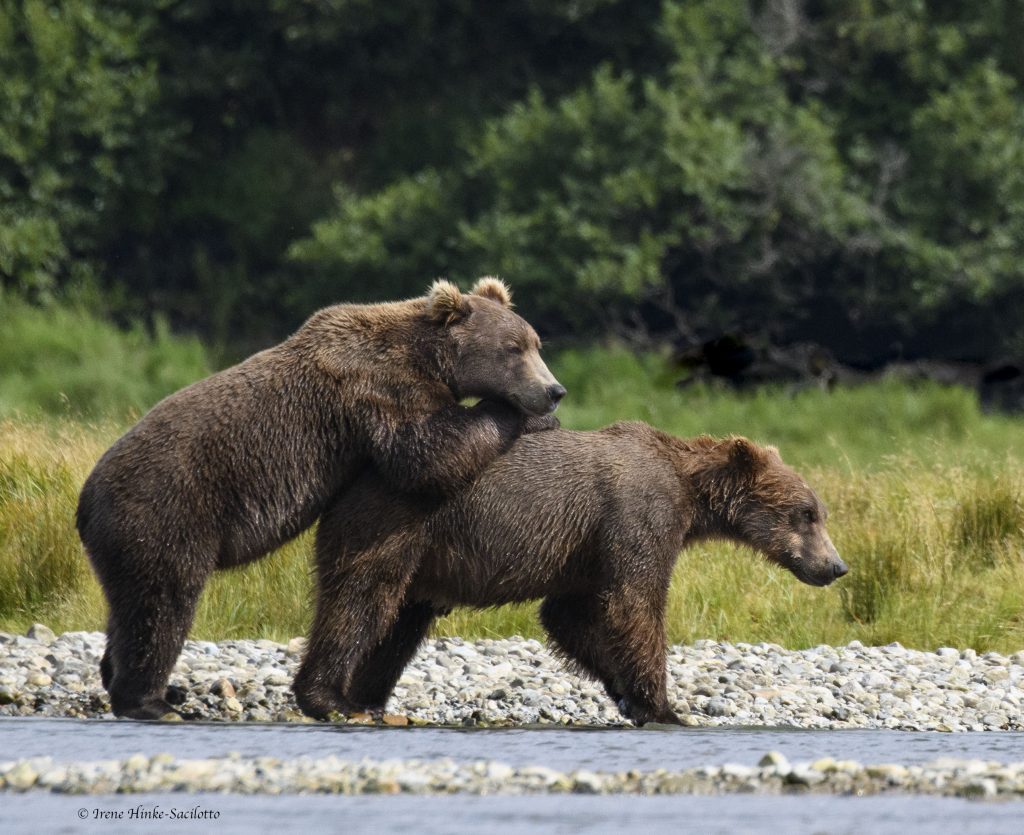
Young bears at lower falls
We followed the protocols established for visitors. We were required to be in the presence of a guide except at camp. In the field, the bears paid little attention to our presence and we felt relatively safe. These rules of human behavior around bears was developed primarily by a remarkable man, Larry Aumiller, who for over more than 30 years has studied the bears of McNieil. He concluded that human safety was more dependent on managing human behavior than managing the bears. For the last 40 years, no humans have been harmed nor has it been necessary to shoot any bears.
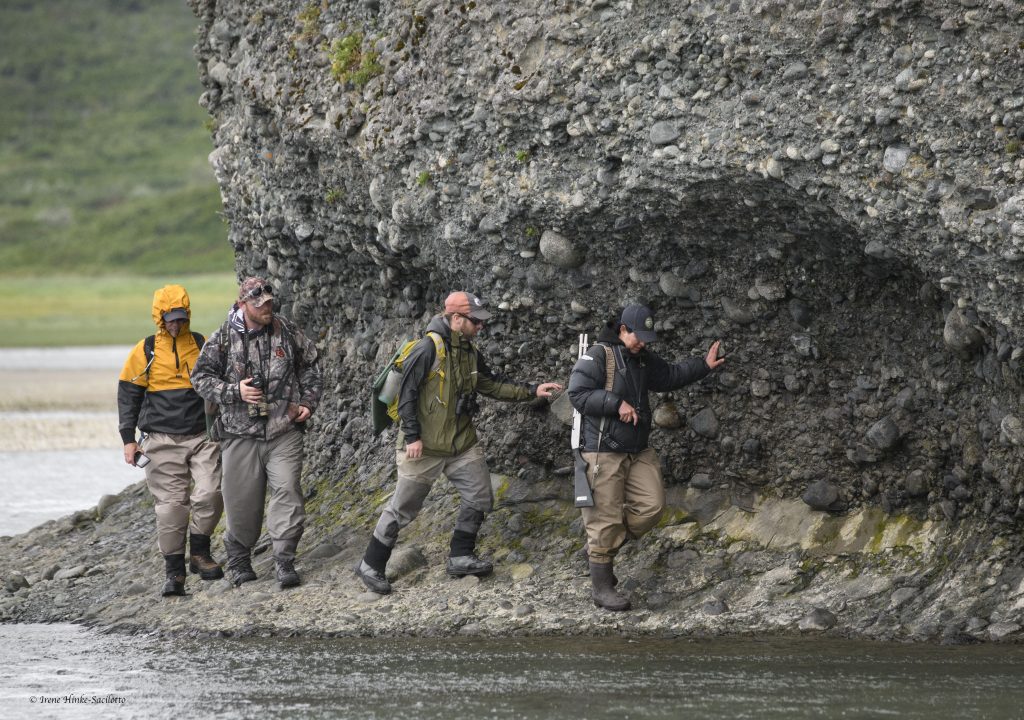
Trail to viewing point at McNeil River.
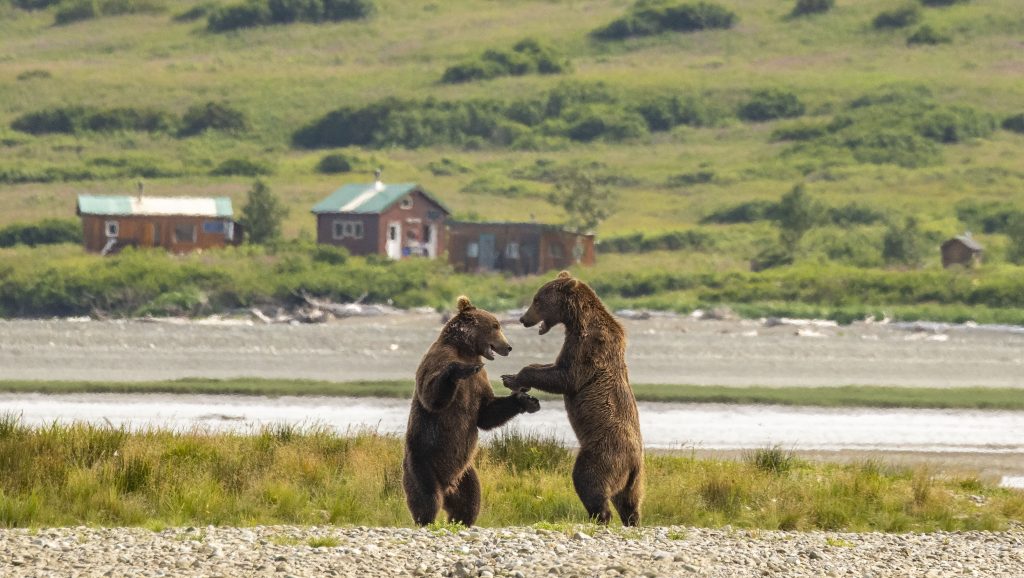
Bear sparing in front with camp in background
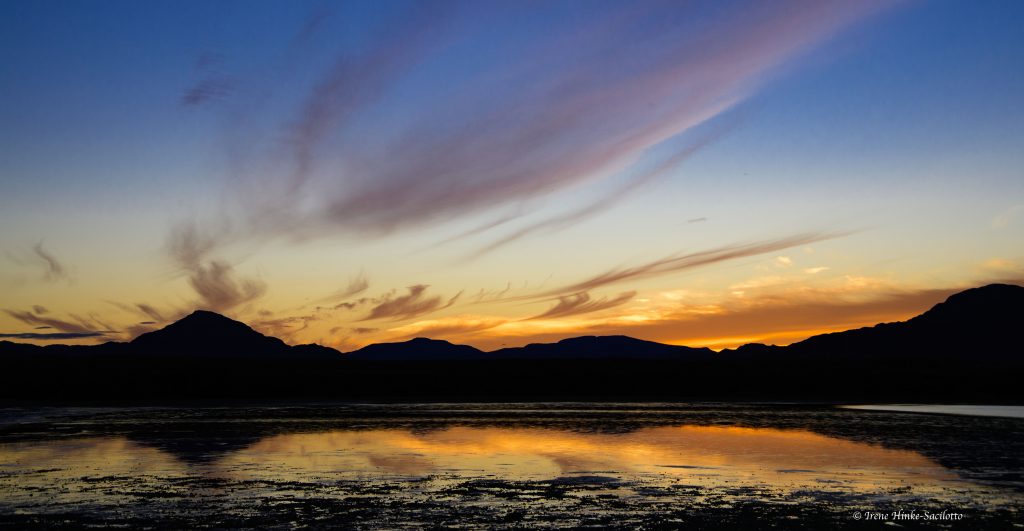
Sunset at McNeil River Camp. Overlooking lagoon.

Staff & guests going to fill containers with water that will then be filter by guests for drinking.

Least Sandpiper along McNeil River. One of the bird species that visit the sanctuary.

Bear shaking off water
The guides at McNeil River State Game Sanctuary were very knowledgeable about bear behavior and made it clear that our activities would not alter the animal’s activity. Part of the safety protocol was that neither guides or visitors were to surprise the bears. Hunan movement was to be consistent and nonaggressive, so the bears perceived humans as no threat. Group sizes were limited to no more than 10. Times of excursions and routes taken were roughly the same each day. As we hiked and whenever we stopped to photograph, we were required to stay in a tight group with no one making sudden movements, sounds, or bounding away from the group for a better photo. When leaving a location, we were reminded to be sure to leave nothing behind, particularly food scraps. The bears were allowed to decide their path and how close to approach. When we rounded blind corners or entered areas of heavy vegetation, the guide would repeat in a low voice phrases such as “hey bear”. If a bear seemed to be overly focused on us and could possibly be a threat, the guide used the least contentious aversion technique to dissuade it, such as clicking two stones together. This was never necessary. On several occasions, a bear passed by within 12 feet from the nearest member of our group and just slowly sauntered by. In the unlikely event of an attack, the guides do carry a 12-guage shotgun slung over their shoulder or lashed to side of their pack.
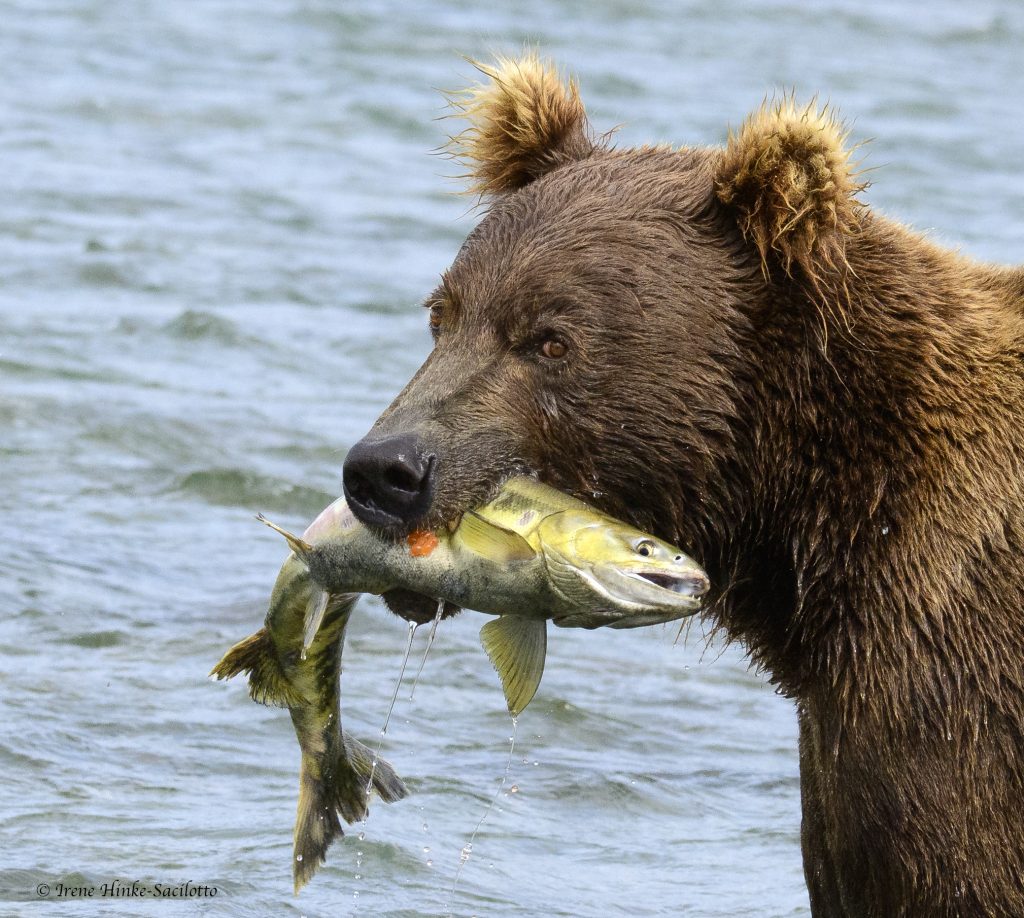
Brown bear with salmon.

Bear skinning salmon before eating it.

Red fox at sunset that hung out near the camp ground.
A red fox and her kits sometimes appeared at the camp in the evening. During our forays into the field, we often saw bald eagles perching on snags and cruising overhead. We were told ground squirrels and wolves were around but we did not see either. Picking up scraps of food left by the bears were Glaucous-winged and Mew Gulls. As we hiked at various elevations, besides fields of fireweed and sedges, we saw pea, Senecio, arctic daisy, Siberian asters, wild geraniums, cow parsnip, low growing willow, crowberry, bunch berry, mules tail, and low bush blueberry. When the supply of salmon at the end of the season runs low, the bears would feed on the sedges and berries, adding variety to their diet.

Sibling bears in McNeil River.

Adult bear with fish and with cub and Glaucous-Winged Gulls to pick up scraps.

Bear walking along rock wall along side McNeil River.
For me, the time spent on McNeil Sanctuary was one of the highlights of my life.
You can read more about the sanctuary in two books: “River of Bears”, with text by Tom Walker and photos by Larry Aumiller and a book about Larry Aumiller’s thirty years among the bears, “In Wild Trust”.

Young bears sparing.

Brown Bear eating salmon at lower McNeil River Falls.

by Osprey Photo Workshops & Tours | Jul 17, 2017 | Badlands, Badlands National Park, Nature Photography, Photo Tour, Photo Workshops, Wildlife Photography
South Dakota Badlands Photos and Tips

The following blog introduces you to South Dakota Badlands Photos and Tips from my photo workshop this June.
In early June, I conducted a photo workshop in the Badlands of South Dakota with co-leader Sandy Zelasko. It is a great location for dramatic landscapes with striped limestone formations, sharp pinnacles, canyons, and sprawling prairie grasslands frequented by pronghorn and mule deer. In the past, I conducted photo tours in the Badlands and Blackhills in the fall. But this time, Sandy and I elected to hold the workshop in early June when newborn animals were plentiful along with vibrant spring colors. On most days, temperatures were comfortable in the morning but rose as the day progressed. Therefore, we were on location to shoot sunrise and photographed throughout the early morning. Then we took a mid-day break at our hotel in Wall to rest, review images, photograph around town, and grab an early dinner before returning into the field until sunset. From Wall, it was only a 25-minute drive to the park’s northeast entrance and 15 minutes to Pinnacles Overlook. The small town of Wall has several good restaurants, a grocery store where we bought snacks and food for breakfast, and a gas station plus a few convenience stores.

Note: Many of images you see in this newsletter were taken while scouting locations I the Badlands for the workshop. Sandy and I did photograph with clients at times but only if we were demonstrating techniques or in the event they did not desire our assistance.

Bighorn sheep are social animals with the females and lambs living separately from the males until breeding season. Rams, we encountered several times at the northeast end of the park near Big Badlands Overlook and the parking area at Notch, Door, and Windows trails. Remarkably, the length of the rams curled horns are managed as not to block their vision. While we photographed, they occasionally engaged in mock fighting which will become quite aggressive during rutting season in November and December as they compete for the attention of the females and run at each other heads down and horns clashing. The sound of the impact reverberates throughout the canyons. Even the youngsters engaged in shoving matches practicing for their roles later in life. The sheep’s ability to climb steep slopes even when small is amazing and is possible because of the rough pads on the bottom of their flexible two-toed hooves. It is wise to use long lenses (300 mm or greater) when photographing wildlife as not to alter their behavior. Wild animals are not predictable and these sheep can actually run at speeds of 30 mph over level ground.

These bighorn sheep once populated the park and other areas in the western U.S. in large numbers. But due to hunting and habitat loss their numbers dropped to near extinction at the beginning of the century. The bighorn seen the Badlands are Rocky Mountain sheep that were reintroduced into areas of the western U.S. In the Badlands, researchers monitor the health and distribution of the bighorn population by capturing lambs just after birth and attaching collars with tracking devices that will eventually fall off.

Young prairie dogs were one of the most entertaining but challenging subjects in the park to photograph. Our favorite family group was along Quinn Road where there was little traffic or disturbance. We photographed the youngsters at eye-level, lying on our bellies and using bean bags or low tripods for camera/lens support. This approach provided us with an intimate view of the animals and an out of focus background. Even though the background was blurred, we had to carefully examine the image in the viewfinder to be sure there are no strong forms or bright objects that could distract the viewer’s attention. The small prairie dogs were more animated than the adults particularly in the morning and during the cooler parts of the day. Therefore, we concentrated our effort on photographing them under those conditions, trying to capture their interactions — nuzzling, tail pulling, and playing.

Bison
Sage Creek Rim Road was the best location for bison. Late one afternoon as the sun was setting, I photographed a bison lit by the setting sun with the warm light illuminating the badlands in the background. One of my favorite photos from the trip.

Landscape Photo Opportunities
For dramatic landscape photos, we shot when the sun was low in the sky, warming and intensifying colors, and emphasizing the relief of the land. In the spring the weather is less stable than at other times of the year resulting in large cumulus clouds appearing in the afternoon along with dark, threatening storm clouds. Both add interest to images by replacing boring washed out or solid blue skies.
Some of the better views of the Badlands were at Yellow Mounds, Conata Basin, and Panorama Point Overlooks and the area from the Ben Reifel Visitor Center to Norbeck Pass. I particularly liked the views along the loop road from Pinnacles Overlook to Conata Road. There were convenient pull-offs along the way where we could stop and photograph multi-colored yellow mounds with contrasting banded formations in the background.
Some of the locations we used for sunrise and sunset photography were at or near Pinnacles Overlook, the red eroded rocks along Sage Creek Ridge Road, Big Badlands Overlook and at Windows, Door, Notch Trails.

Sheep Mountain Table
Sheep Mountain Table is in the south unit of Badlands NP. At the base of the plateau there are unusual rock nodule and toadstool-like formations. The road leading to the top is narrow and dirt can be treacherous after hard rains. We had a limited amount of time to explore the area due to an approaching storm with ominous dark clouds. However, it was the storm that added dimension to our images of the surrounding badland formations. Among the grasses on top of the table, we found the giant fuzzy puff balls containing seeds for the flower goat’s beard. One participant with a mirrorless camera took photos of the plant using a macro lens with a modeling light built-in. When comparing his images taken with this set-up to mine, his were far superior as the light penetrated to the center of the sphere. Great job Jim!

Lessons Learned
When the light on a scene was flat due to heavy clouds or deep shade, I still took photos using high ISOs to freeze action and hoped for the best. In many cases, the high ISOs resulted in unacceptable noise levels in my images (looks similar to film grain). I used Nik and Topaz software plug-ins with Adobe Photoshop and Lightroom to reduce the noise but I was not always satisfied with the results.
What was worse, the subjects appeared unrealistically flat and blended with the background. On the last day of the trip, I resorted to shooting video with my Nikon D500 camera, something I had only tried once before. My results from that day were not always perfect due to the wind, a focus issue, and my inexperience. However, because the animals were moving and interacting during the video. they no longer blended into the background and the images were much more engaging. Needless to say, I plan to learn more about filming videos and plan to experiment with the technique more in the future.

Images in this blog are from scouting trip and photo workshop in the South Dakota Badlands. Planning similar program in 2018.
To see details from June workshop go to https://www.ospreyphoto.com/event/badlands-national-park-spring-escape/