
by Osprey Photo Workshops & Tours | Feb 28, 2016 | Uncategorized
Wildlife Photography Tips – Approaching Wildlife

Black Throated Green Warbler. Located it in a tree at Assateague. Patiently waited for it to move into a clear opening.
Wildlife photographers share a lot in common with hunters despite the difference in the final outcome. Both employ similar techniques of approaching wildlife and require knowledge of animal behavior such as where they find the food, water, and shelter. Both photographers and hunters on occasion may use blinds, camo netting, Ghillie suits, decoys, cover scents, and bait where permitted. Camo clothing helps the wearer blend with the environment and masks human form. Learning from duck and big game hunters, I have occasionally used game calls. Manual calls require skill and practice whereas electronic calls are easy to use particularly those with a wireless connection to remote speakers. They attract prey by play recordings varying from moose and elk mating calls to bird songs, gobbling turkey, distress calls to attract predators, and many others. Such hunting supplies are available on websites such as http://www.sportsmansguide.com, www.basspro.com, www.dickssportinggoods.com, or http://www.cabelas.com as well as in their stores.
Talking to local hunters can be quite educational. For instance, they know how to locate animals by their tracks, scat, tunnel trails through vegetation, and other indicator of local activity. Whitetail bucks leave scrapes (disturbed areas) on the ground and rubs on trees marking their territory. Freshly gnawed branches near a beaver dam or lodge and flattened paths leading to the water suggest recent activity in a beaver pond. A game camera placed along a trail can confirm suspicions.
Besides the obvious, a major difference between the hunting and photography is the distance to the target. Hunters can successfully shoot a deer or other animal at distances of 100 to 200 yards. For a photographer, even with a super telephotos lens, the distance of the camera to the subject is often 50 feet or less particularly for ducks and other small animals. When photographing warblers with 600 mm lens and 1.4 tele-converter, the distance of the lens from the subject is often 15 feet or less, near the close focusing limit of the lens (add an extension tube to focus closer). This distance consideration leads to the conclusion that because a photographer is often close to his subject, the animal is likely to be aware of his presence. Therefore, being accepted by your subject in his environment is often more critical than being hidden.

Easter Cottontail. I kept a low profile and was patient waiting for action to occur. Moved slowly and indirectly closing the distance to the rabbits.
Tips for approaching wildlife
- Emulate your subject’s behavior and movements suggesting that you are just another non-threatening animal sharing the environment.
- As you approach, move slowly, meander, & stop periodically.
- Don’t walk directly towards it.
- Don’t rush forward trying to close the distance between you and it quickly.
- Don’t block an animals escape route or stand in its path. You put your safety at risk.
- Keep a low profile as not to appear a two legged human.
- Use camouflage to blend with the environment and to break-up your outline. Doesn’t have to be an exact match.
- Close distance to the animal by watching its movements. Take an indirect route designed to intersect with its
- When practical, approach from the water by kayak, canoe, boat, or wading. Experience has shown that this often makes you appear less threatening and a curious animal may come closer to you.
- Avoid loud noises – equipment, clothing, rocks being displaced, loud talking, etc.
- Avoid wearing shiny objects, perfumes, and smelly soaps since they are foreign to the environment and may be disturbing.
- Avoid intense direct eye contact. Can be perceived as challenging.
- For animals with a sharp sense of smell, approach from down wind.
- For animals such as bobcats with sharp eyesight, your movement will attract their attention quickly.
- Minimize disrupting the animal’s current behavior.
- If the animal notices you and stops from what it is doing, pretend you are not interested in it. Don’t resume shooting until it returns to its original activity or moves closer to you while engaging in normal behavior. This suggests you are not considered a threat.
- Be ready with your camera for action if another animal approaches the first. This could be an amorous meeting or prelude to a fight.
- From experience I have noticed that speaking softly in a monotone voice to an animal you are photographing seems to have a calming effect on some. What you say does not matter. I suspect it lets them know where you are and that you are not a threat.
- Animals are often more wary on a windy day.
- Carefully observe your subject and try to anticipate what will happen next. The more you know about that species, the better.

Elk. Can be dangerous if not approached with care.
An animal’s curiosity often works in the photographer’s favor. For example, when leading a small photo workshop in South Dakota, I spotted a herd of pronghorn some distance away. We decided to see if we could get closer using some of the techniques above. We stopped at a reasonable distance from the pronghorn and took a few photos. To our amazement, the dominant male left the herd and walked to within short distance from us. It stopped, stared at us, turned, and slowly walked away with the females following him. Apparently we did not meet his standards.
No matter where you find animals, even in parks and refuges where they are protected, all wild animals are unpredictable. So exercise caution. No photo is worth your life.

Pronghorn. Approached the herd slowly and indirectly. Male was curious and approached us.

by Osprey Photo Workshops & Tours | Jan 6, 2016 | Chicoteague, Fall photography, Nature Photography, Photo Tour, Photo Workshops, Uncategorized, Wildlife Photography
Chincoteague National Wildlife Refuge/Assateague Island
Trip Report (Dec 2015)

Snow Geese Flock
Arrived at Chincoteague, VA on Thanksgiving 2015 to spend several days with friends for the holiday. On Friday, at the Chincoteague National Wildlife Refuge Visitors Center, I delivered a presentation on wildlife photography as I do for the refuge at least once a year. My friends departed at the beginning of the week leaving me to begin scouting locations for my upcoming workshop, sites most likely to provide participants with good photo opportunities. The weather was rainy and cloudy much of the week making my job challenging. To make matters worse, the number of birds, particularly snow geese, this year was fewer than in the past, perhaps due to the warm weather in November and early December. It did not help matters that the phragmites along the banks of the borrow ditches was high in many places making photography difficult and the birds hard to spot.
Luckily there were some small breaks in the weather. Sleeping-in is not wise since you never know what Mother Nature has in store for you. One morning at dawn, light fog floated over the water that reflected the golden color of the sky. Geese floated into the scene and provided some needed foreground. Later that day I spotted a fox squirrel in soft light gathering leaves for her nest. On another day, I spotted her again on the side of the road dining on pinecones. The low light meant I had to use ISOs higher than normal to freeze the action (800 and 1600). On another morning, I grabbed a striking pre-dawn shot of the lighthouse as I enter the refuge.

Sunrise

Sunrise Beach Road

Dawn at Chincotegue Lighthouse

RudyTurnstone
Outside the refuge, I explored the town of Chincoteague and the small boat harbor. I talked to a few watermen and photographed them off-loading their catch. This year was the first time I witnessed workboats returning to the harbor at sunset. This presented me with nice opportunities for sunset photography.

Fishing boat returning
With the low number of birds present of the refuge, I was concerned that my workshop participants arriving on the upcoming weekend would be disappointed with photo opportunities. Besides the small boat harbor, I looked for new subjects to photograph around town. On a foggy morning, I stopped at the intersection where there was a steam driven tractor on display. I had passed it many times but never took the time to examine it. With camera in hand, I discovered interesting details worthy of snapping some shots. Elsewhere in town I took a few shots of outdoor displays and a peculiar mallard with feathers stuck on its bill.

Mallard Duck Quacking
On Friday, finally the weather improved. At dawn, the sky had a bit of color near the horizon so I combined silhouettes of pines against the colored background – layers of color for a slightly abstract feel. Weather conditions continued to improve and so did the number of birds on the refuge. The small group of snow geese that had been hanging out on the beach at Toms Cove near the Life Saving Station, moved north resting on the sand near the beach parking lot. Honking as each new wave of geese arrived, their numbers grew. Against the blue sky, one V of geese after another filled the sky and descended to join the original flock. It was a beautiful sight. I spent the better part of morning photographing the spectacle, much of the time photographing from in my car to avoid disturbing the birds. (Lens primarily used: Nikon 80-400 mm chosen for its flexibility).

Snow Geese landing
In the afternoon Friday, 4 Dec, the impoundment along Beach Road was full of birds – ruddy ducks, buffleheads, cormorants, and flocks of yellowlegs and herons. Weirdly as quickly as the birds appeared, the number dropped significantly the following day when my workshop began.

Trawler at sunset
I had a full workshop this time with 8 participants of varying skill levels. The critique sessions revealed that all walked away from the workshop with very nice images and fresh ideas to improve their photography. Saturday ended with a great sunset at the small boat harbor. We arrived just in time to catch a huge sun dropping behind a trawler tied up at end of the dock. Sunday began with sunrise photography at the beach to be followed by photography of horses and a few herons along the service road. (I rented the Chincoteague Natural History Association tram for part of Sunday morning.)

Fox squirrel
My lesson learned. Don’t give up despite the weather or other disappointments. If you keep a positive attitude, you are bound to find something interesting to photograph.

by Osprey Photo Workshops & Tours | Sep 20, 2015 | Digital Photography, Nature Photography, Uncategorized
Nature Photography highlights from Canadian Rockies

Sunrise view from hotel in Canmore, Alberta, Canada, Canadian Rockies
Arrived in Canadian Rockies 13 Sep. It was in the mid-80s that I was here last. Lots more buses and tourist now. Points accumulated on IHG rewards credit card and previous stays at IHG hotels qualified us for free overnight stays in several locations. IHG rewards club Good way to save money and extend our stay. First nights stayed in Canmore, approximately 20 km from Banff. Quieter town with fewer tourists. Beautiful view of mountains in front of hotel and behind town but warm light striking mountain tops did not last long, 6:45 to 715 PM. Aspen were yellow and were a striking contrast to the evergreens. Wildlife around Banff was limited – black bear inside forest edge & several elk on Banff Golf Course. More critters later. Raining yesterday and today. Hoping for better weather ahead.
by Osprey Photo Workshops & Tours | Jun 28, 2015 | Uncategorized
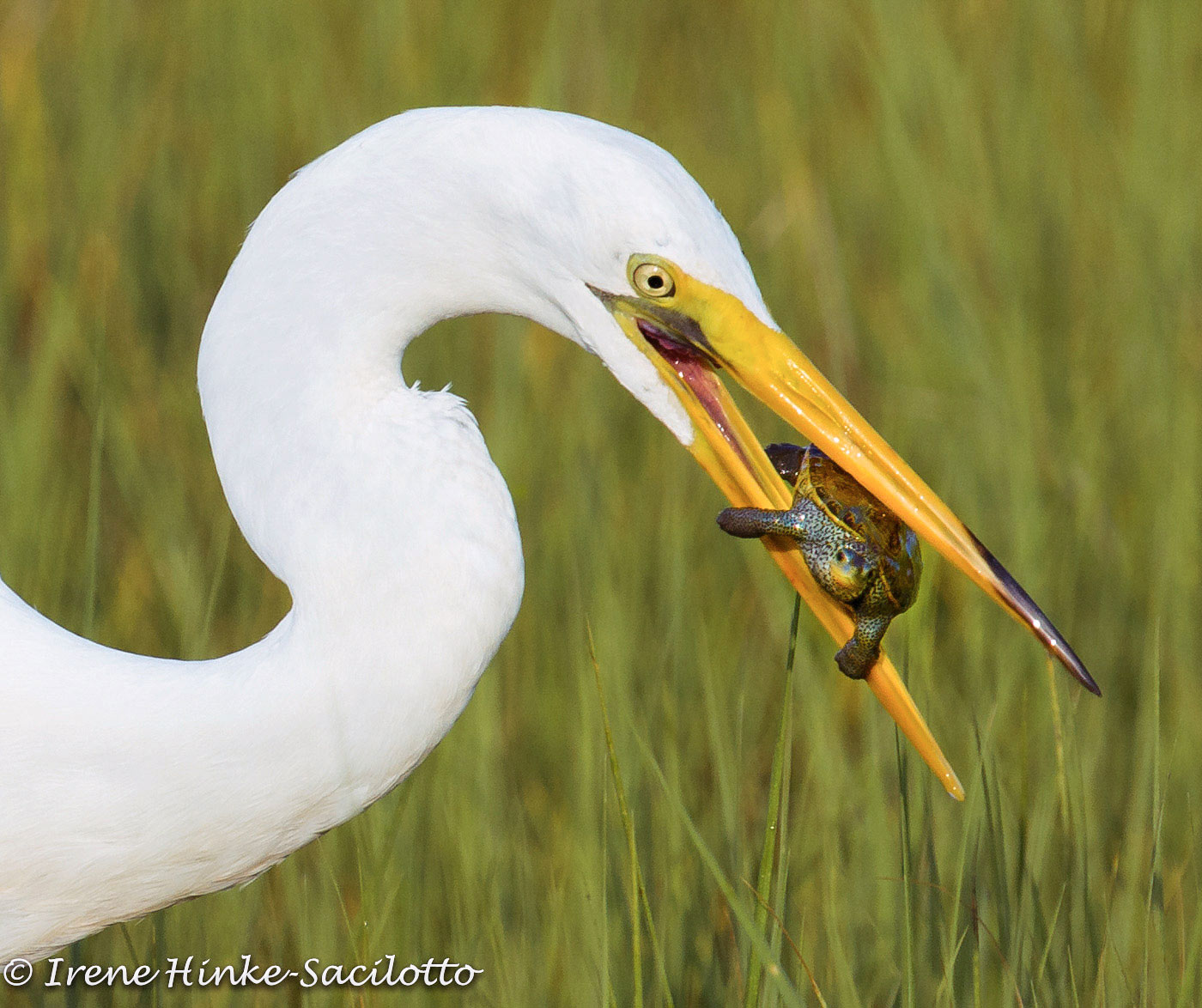
Photographed on Tangier Island in the middle of the Chesapeake Bay. I have seen herons pick up eels, fish, and crabs but never this. Kind of sad, but part of nature. Took 15 minutes to position turtle in order to swallow it. Dipped the turtle in water so it could finally swallow it.

by Osprey Photo Workshops & Tours | May 1, 2015 | Uncategorized
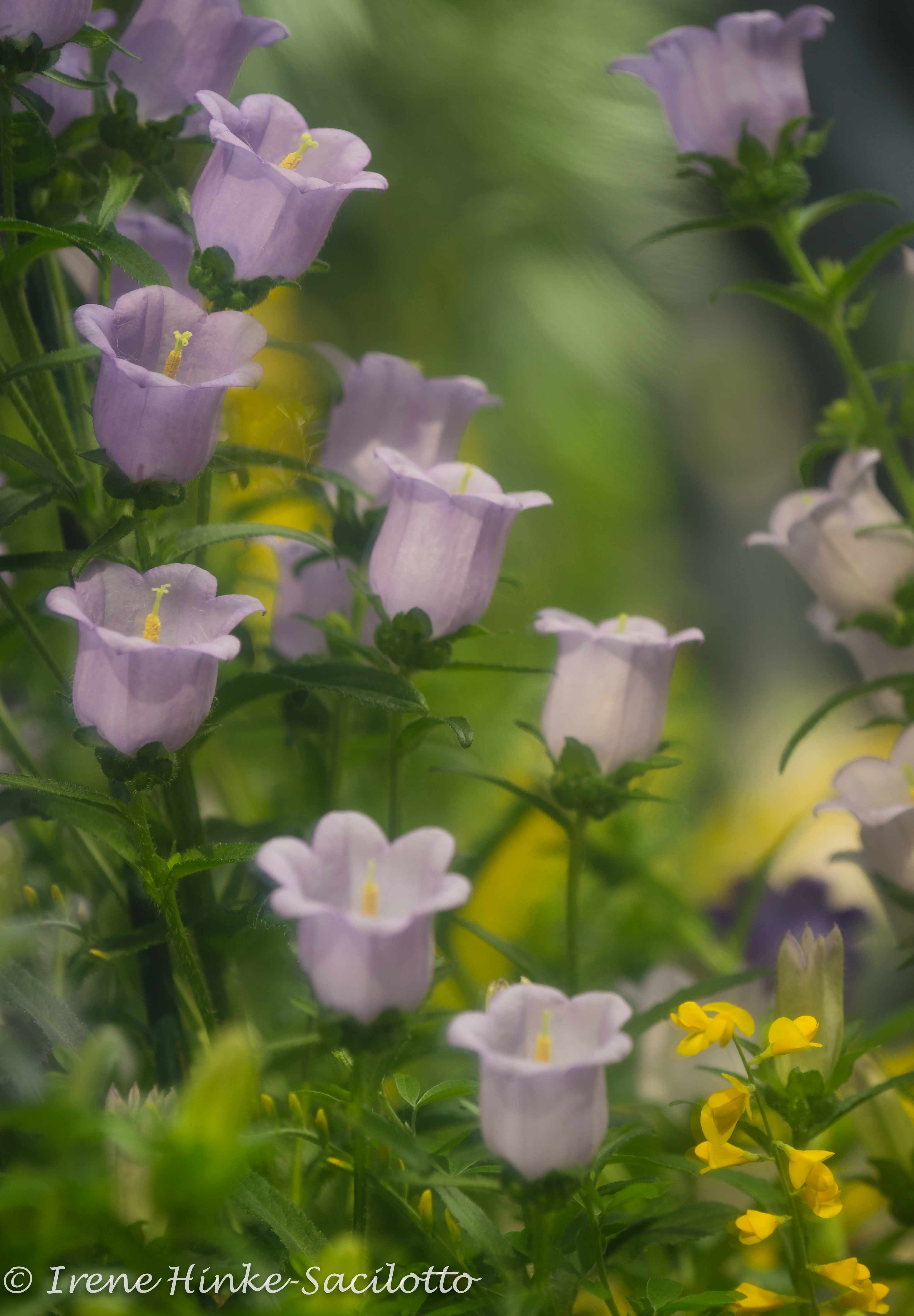
Photographed in a window to create the soft impressionistic effect.
I was very pleased to receive the following comment from Ed Bouwer, a member of my recent class at Johns Hopkins University, “Intermediate Digital Photography, Longwood Gardens Field Trip”.
“This class on flower and garden photography centered on Longwood Gardens gave me several new perspectives on how to take photographs. Irene has a wealth of knowledge and experience which helped me improve composition and see images in a new way. I came away from the class with a completely new appreciation for taking photos of flowers and garden scenes. Irene has a very helpful teaching style.”
Edward Bouwer, Ph.D., Abel Wolman Professor of Environmental Engineering and Chair, Department of Geography and Environmental Engineering, Johns Hopkins University
by Osprey Photo Workshops & Tours | Dec 4, 2014 | Uncategorized
For the last several years during fall migration, the snow geese at Chincoteague have been fewer and later arriving. Finally on my recent visit over the Thanksgiving weekend, they arrived again in high numbers. It gives me chills to see so many soaring overhead, swirling in a circle as they land Oddly many spent most of their time near the Atlantic beach – actually on the beach, in Toms Cove and in the impoundment next to the shore.
I am heading to Bosque del Apache in Jan and hope to see large flocks of both snow geese and sandhill cranes. Having both present is great. Planning to conduct a unique photo tour 12-22 Jan, combining Sedona’s red rock country and Bosque. Space still available. For details go to www.ospreyphoto.com


