
by Osprey Photo Workshops & Tours | May 8, 2015 | Digital Photography, Flower Photography, FlowerPhotography, Nature Photography, Photo Technique, Photo Tours, Photo Workshops

CREATIVE APPROACH to GARDEN PHOTOGRAPHY
@ Norfolk Botanical Garden, VA
12-14 June 2015
Designed for those who wish to advance their photographic skills, creating images that are more imaginative, distinctive, and visually exciting. Classroom discussions include subject selection, equipment, camera settings, composition, lighting, spatial relationships, and utilization of graphic elements. Includes PowerPoint program, class discussions, and image critiques. Class assignments will encourage creativity and reinforce concepts discussed during the workshop. Includes field practice at the Norfolk Botanical Gardens, in the Tropical Display Greenhouse, outside gardens, and butterfly house. Roses, azalea, camellia, magnolia, dogwood, and other spring flowers should be in bloom. Mirror Lake and other reflecting pools and ponds should provide opportunities to capture images of frogs, turtles, wading birds, waterfowl, dragonflies, and colorful reflections. Includes sunrise photography on Sunday over Lake Whitehurst. To register contact Norfolk Botanical Garden Education Department, http://norfolkbotanicalgarden.org/events/the-joy-of-garden-photography-2/

by Osprey Photo Workshops & Tours | May 7, 2015 | Photo classes, Photo Clubs, Photo Tours, Photo Workshops

I received several nice comments and notes such as the following after serving as a judge for the NBCC photo competition May 6, 2015. “You undertook a long drive and a tough subject, and came through in spectacular fashion!” Such complements are always appreciated. I have both presented and judged competition previously for the club. This time, as before, I was impressed with the talent and creativity of the members. Although the topic, “it’s raining” is pretty far off my wildlife/nature photography radar, I really enjoyed reviewing the images. It is always a pleasure seeing how photographers vary approaching the same topic. As do the images from my students, seeing these photographs also expanded my vision. If you have an open mind, there is I always something new to learn. I may even borrow the topic “it’s raining” as part of an assignment for my Creative Photography workshops. My hat is off to the competition winners. http://www.nbccmd.org

by Osprey Photo Workshops & Tours | Apr 27, 2015 | FlowerPhotography, Nature Photography, Photo classes, Photo Technique, Photo Workshops, Wildlife Photography

NEW ….. Garden Photography Class
Lilypons Water Gardens (Field Trip)
23, 27, 30 Jun, 7 Jul 2015
with Irene Hinke-Sacilotto
Classroom @ Y in Abingdon, MD: 23 & 30 Jun, 7 Jul 2015 (630 – 8:30 PM)
Field practice @ Lilypons: 27 Jun 2015 (Saturday 8:00 – 11:30 AM)
Date for the field trip was selected because it is the best time to see lilies and lotus blooming at the same time. Garden is located near Frederick, MD. (Max number of participants – 6)

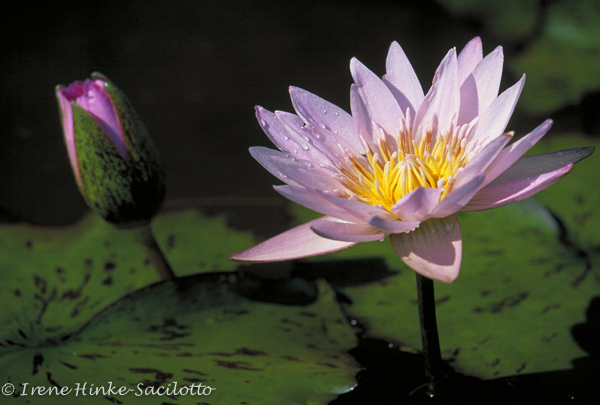
With exotic flowers in attractive surroundings, Lilypons Water Gardens offers you a wide range of subjects to photograph. Although designed to showcase lilies, lotus, and other aquatic plants, the gardens include terrestrial favorites — iris, cone flowers, ornamental grasses, flowering shrubs, black-eyed susans, and other colorful blooms. Some gardens are accented with ornamental waterfalls, fountains, and statues. These and other decorative touches add interest, perspective, and a sense of motion to the images. The gazebo reflecting in a lily pond is my favorite. In addition to their aesthetic appeal, the gardens provide opportunities to photograph wildlife drawn to the water, shelter, and food. Common visitors include an assortment of insects, birds, frogs, turtles, snakes, deer, fox, muskrats, raccoons, and squirrels.

Topics of discussion include: equipment selection, composition, lighting, exposure, creative design, and perspective. Field practice @ Lilypons Water Gardens. Classroom sessions are at the Ward Center, Y of Central Maryland, Abingdon, MD. (Based on Digital SLR cameras)

Directions to Lilypons – near Frederick, MD. Take Route I-70 and follow Route 85 south through Buckeystown until you see Lilypons Road. Turn left; cross the bridge; and turn into the entrance to Lilypons Water Gardens on the left. Proceed to the parking area. (Approximately 2 hours from Baltimore).
Register with the Y of Central MD, Abingdon, MD
http://ymaryland.org/locations/familycenterys/wardharfordcounty
410-679-9622


by Osprey Photo Workshops & Tours | Apr 23, 2015 | Bird photography, Nature Photography, Osprey, Photo classes, Photo Tours, Photo Workshops, Wildlife Photography

Each month I and other photographers post info and images on our photo workshops and classes in the “Upcoming Classes, Tours & Workshops” section of the Outdoor Photographer Magazine website www.outdoorphotographer.com
This month you will find info on my Tangier Island, VA workshop, 29-31 May 2015. Located in the middle of the Chesapeake Bay, the island is perfect for photographing community life, waterman at work, crab shacks, peers and waterways, and the wildlife that lives in the marshes and along the shoreline.

It is a terrific location to see and photograph ospreys. There are many platforms near Tangier Island in the waterways and on nearby islands and jetties where the birds nest. Part of the credit for the success of the ospreys in this portion of the bay goes to the mayor of Tangier Island, James “Ooker” Eskridge who loves watching the birds soaring overhead as works and helps maintain the nesting platforms. More images of Tangier Island and ospreys on my web gallery https://www.ospreyphoto.com


by Osprey Photo Workshops & Tours | Apr 6, 2015 | Nature Photography, Photo Technique, Photo Tours, Photo Workshops, South Dakota, Wildlife, Wildlife Photography

Prairie Dog. Approach low and slowly. Pausing periodically.
Stalking Techniques
- Emulate movements of subject. (For reindeer, a local guide suggested simulating antlers by holding tripod legs over our head.)
- Move slowly, pause periodically, & make no sudden moves.
- Keep a low profile to avoid appearing human and a threat.
-

Elephant seal. Approached with low profile.
- Observe the animal’s movement. Don’t walk directly towards it. Move on an indirect route. Where possible, move in a direction to intersect the path the subject is taking.
- Avoid wearing shiny objects, noisy clothing, perfumes, or anything that is not natural to their environment.
- Avoid intense eye contact with the subject & loud noises.
- Leave an escape route for the animal.
- Don’t block its path. (I accidentally did this once and had an elk run its antlers into the tree where I had taken refuge.)
- Animal curiosity can act in your favor.
-

Badger. Approached careful and kept distance using 600 mm lens. Only once when someone walked by me did it show signs of concern and briefly retreated to its burrow. Can be a nasty adversary.
- Photographing from the water seems to improve success in many cases where from a kayak, canoe, or wading.
- No matter if in a national park or refuge, animal behavior is Use your longer lenses. If the animal feels threatened, it may attack you and the attack can be lethal.
-

Black Bear. Shot from vehicle for safety reasons with long lens.
- Wearing camouflage clothes may be helpful since you better blend in with the surroundings. Like humans, animals can spot shapes and movements that are out of place. Literature says some but not all can detect colors so camouflage clothing may be a wise choice. In addition, camouflage clothing discourages approach by curious human who might disrupt your activities.
- I believe in some cases talking softly in monotone can provide an animal with a sense of security. The tone is not threatening, and the animal has a good sense of your location and is more comfortable with your presence.
- On windy days animals are often more nervous since noises can be confusing. It is harder for them to identify the direction noises and threats are coming from. This is not the case in places in South Texas where the wind blows constantly.

Moved into field taking a path that would intersect where the deer is moving.
by Osprey Photo Workshops & Tours | Mar 19, 2015 | Digital Photography, Nature Photography, Photo Technique, Photo Tours, Photo Workshops, Wildlife Photography
Hunting vs. Wildlife Photography

Young javelina attracted by corn under log. Shot from blind.
Similarities
Both disciplines require knowledge of subject, i.e. where and when to find the animal. What does their behavior indicate? The hunter and photographer can both gain useful knowledge from signs that an animal is present – tracks, scat (cat, bear, etc.), rubs, scrapes (deer), slides (otter), broken branches and claw marks on tree (bear), freshly gnawed logs near a beaver lodge or dam (active beaver), paths through vegetation, etc.

Game calls Found at hunting stores – Bass Pro, Dicks’s, and Cabelas.
At times hunters attract animals using decoys, game calls (predator, courtship, challenge}, camo clothing or netting for concealment, cover scents (fox urine, skunk), baiting, stalking, or blinds/hides So can the photographer. (see later blog).

Ghille suit used to hide from wildlife. Option to a blind.

Shot during a workshop in SD. The workshop group tracked a herd of pronghorn. Eventually the male left herd and approached us . It stop, stared and slowly turned around and walk away with his females. Guess we were to ugly for his herd.
Differences between hunting and photography (besides the obvious that the animal can walk away).
Hunting depends on concealment & you can successfully bag your prey at 100 to 200 yards. On the other hand, photography depends more on acceptance and the shooting distance is much closer (mallard, ¾ frame, @ 30 feet w/600 mm lens.) Much of the time photographers cannot approach the animal close enough to be able to photograph it successfully without being seen. Therefore stealth is critical and the ability to carefully approaching the subject in a non-threatening way (see later blog on stalking techniques). Approaching from the water can make the task easier whether you are wading in the surf or photographing from a canoe or kayak. It appears that without your legs showing you are not perceived as a threat. The animal’s curiosity also acts in your favor. These factors do not mean that blinds and camo cover should not be used when required.

Painted bunting. Because of the bird’s small size, used a 600 mm lens with 1..4 tele-converter for this shot. Was at my closest focusing distance, less than 15 feet away.

Waded into the icy waters of Iceland for this shot. Curiosity drew him closer to me.
Stallking & the use of blinds – see upcoming blogs.


