by Osprey Photo Workshops & Tours | Oct 5, 2015 | Canadian Rockies, Nature Photography, Photo Tour, Photo Tours, Sunrise, Wildlife Photography

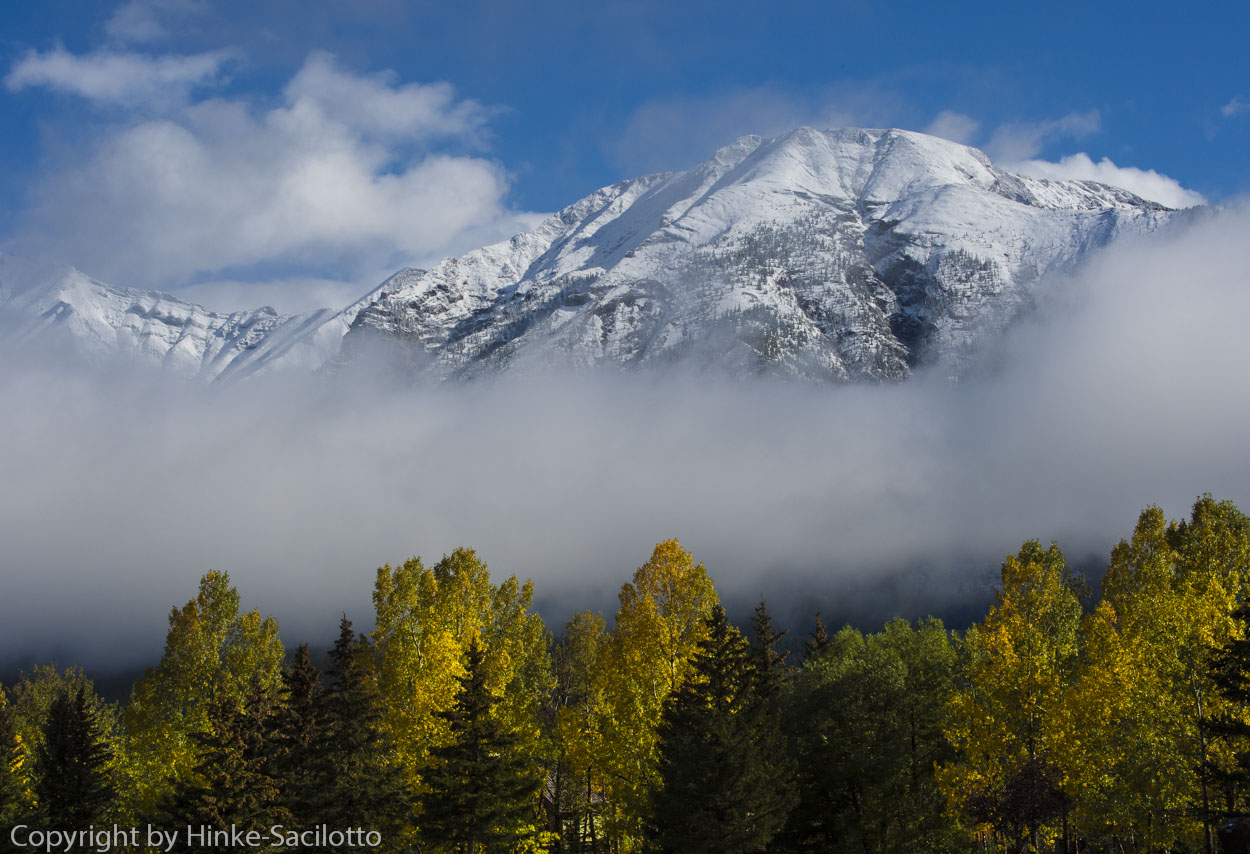
Fog Lifting
Photo Tour of the Canadian Rockies – a brief trip report of our adventures
This is far from a complete review of the photo opportunities in the Canadian Rockies. Just some highlights from my recent trip this fall. Summer is the high tourist season and to my mind, not the best for photography and reasonable cost for lodging.
I visited the Canadian Rockies 13 – 26 Sep 2015. Early in the trip, I stayed in the town of Canmore which is bisected by the Trans-Canadian highway and located 50 miles west of the City of Calgary. It is within a 15 to 20 minute drive to Banff National Park and is located in the Bow Valley near the park’s Southeast boundary. It served as a good base of operation to explore Banff NP and the surrounding area. It was a peaceful town with reasonable hotel rates and not as crowed and filled with tourists as the town of Banff. A variety of good restaurants are found on Main St including an Argentine Grill. Impressive mountains are nearby for early morning photography that could be done from right outside your hotel. Local hiking trails offered access to other scenic views of the mountain range along the Bow River.
A friend and I visited Banff, Kootenay, Yoho, and Jasper National Parks on this trip. Banff NP, with more than 25 peaks over 9800 ft was my favorite with regard to scenery. I loved its snow-capped mountains and beautiful lakes such as the elongated, turquoise colored Peyto Lake. Like many lakes and rivers, its color is attributable to an influx of the fine particles of glacial flour. Near Lake Minnewanka, my friend spotted our first black bear. Unfortunately, like the one we saw later in Jasper, it stayed just inside the protection of the forest making photographing it impossible. Lake Louise was impressive but the crowds and heavily overcast sky made the experience less enjoyable. In one photo, I featured a person sitting alone by the lake implying he was enjoying the solitude of the wilderness. If you were there and looked behind him at the crowds of people, you might doubt he found the location is as peaceful as the image suggests. I preferred nearby Lake Moraine where a path leads you to a high overview of the lake and large boulders could be used as the foreground of your photos.

Horse with aspen in fall
One day we took the 48 km long Bow Valley Parkway which paralleled the Trans Canada Highway leading from of the town of Banff. We took photos of the golden aspen along the way and Steller’s jays in a garden at an inn just before the Parkway ended. We also checked out Mount Norquay where a small group of bighorn sheep grazed and where we could photograph the Vermillion Lakes below with fall color. (Also shot the lakes from below. Beautiful reflections). We stayed at the Lake Louise Inn and then Saskatchewan Crossing on our way to Jasper to give us more time to explore the areas. (Note: The Crossing hotel (the only hotel in this area) closes early Oct. The Icefield Parkway heading to Jasper is not maintained once winter comes. Significant snows can begin as early as the beginning of October and sometimes before that date. Snow is possible in any month. The road from Edmonton through Jasper is maintained and open year-round since it is a major route for trucks moving cross country. Flying into Edmonton may be a better choice for visits to Jasper in October.

Ground Squirrel staring at me hoping for food.
In Kootenay NP, the Marble Canyon was a worthwhile stop with water running through a deep crevice. But the best part was the friendly squirrels who played hide-and-seek beneath the cars in the parking lot. In Yoho NP, we checked out the tall Takakkaw Falls reached from the main highway by a road that climbs to the falls parking lot with extreme switchbacks. The flow of the falls was slow and photos uninteresting, so we retreated to a bridge down-stream of the falls for some interesting slow motion photography. (There is always an alternative photo opportunity if you look hard enough.)
Jasper offered the best opportunities for wildlife photography with salt licks that attracted goats and bighorn sheep and open areas where elk grazed. The mountains were not as snow covered as those in Banff but were still beautiful. They were spaced farther apart than those along the Tans Canada Highway and Icefields Parkway allowing light to strike meadows and lakes earlier and later in the day. Therefore, the geography made it easier to spot wildlife while in good light. (Note: Due to the northern location of the parks, the sun was never directly overhead even at noon. Therefore the light was softer and at a lower angle to better accent the topography and illuminate the wildlife.) In September, it was rutting season for the elk with the males gathering their females and bugling. (Love the sound). In terms of small animals, some Columbian ground squirrels, red squirrels, and chipmunks were still above ground busily eating and gathering food for the winter.
It rained and often poured constantly for two days mid-way through the trip. This was a good time for a little scouting and working on images but not for photography. The situation was a bit disappointing until we woke on the morning of the third day and saw that the rain had stopped and fresh snow covered the surrounding mountain peaks. What was perceived as a negative event initially, offered us great opportunities to photograph locally and as we moved north. Even the waterfalls benefited from the fresh supply of water and were more photogenic. The change in color of the aspen leaves from green to gold even seemed accelerated. (The leaf color seemed to peak during the 2nd half our trip, particularly on the southern part of our journey back to Calgary to catch our flight home.)
NOTE: In late Sep and early Oct, crowds thin out, animals are more visible, and snow coats the mountain peaks. However, the chance of bad weather increases, possibly hindering travel.

Sunrise near Canmore Alberta Canada

by Osprey Photo Workshops & Tours | Jul 8, 2015 | Wildlife Photography
Safety/ethics
– Don’t corner an animal or block its path.

Watched me for a moment and even approach me closer but decided I was not threat and resumed eating. Good sign that you are not stressing an animal.
– With animals, be aware of signs of agitation or aggression: scrapping ground with hoof, thrashing grass or bushes with antlers, strong stare, ears back, showing whites of the eyes, bluff charge, growl, bearing teeth, etc. If approached by a predator, don’t run and appear as prey. Make your self appear large and slowly retreat.

Saw when returning to car from hike. I paused of a second and she did a bluff charge. I immediately returned to my car. Grabbed by long lens and got photos from the car.
– Just because an animal is in a national park or refuge, don’t assume it is not dangerous.
– Animals with young are the most dangerous.

Guanaco. If they run at you with their head down, you are definitely in danger. They will spit, kick, and “chest but’.
– Be careful not to slip and fall on wet grass, leaves, seaweed, moss or muddy surfaces.
– Be careful crossing muddy surfaces. You can slip, fall, or worse yet, get stuck in the soft mud. Some muds are like quick sand.

On slippery seaweed. Difficult to cross rocks without falling.
– Take care near cliff ledges. The support beneath them can be undermined and the ledge may break away.

Red-legged cormorants on cliff in Argentina. Much prettier than ours. Laid on belly on a secure part of the cliff to get shot.
– Be aware of the incoming tide and rising surf. You may become stranded.
– When hiking, be careful of tripping hazards: rocks, branches, roots, etc. Wear boots with good ankle support and gripping soles.
– When walking avoid stepping into hidden holes – groundhog, badger, penguin, fox, moss-covered spaces between rocks, etc.
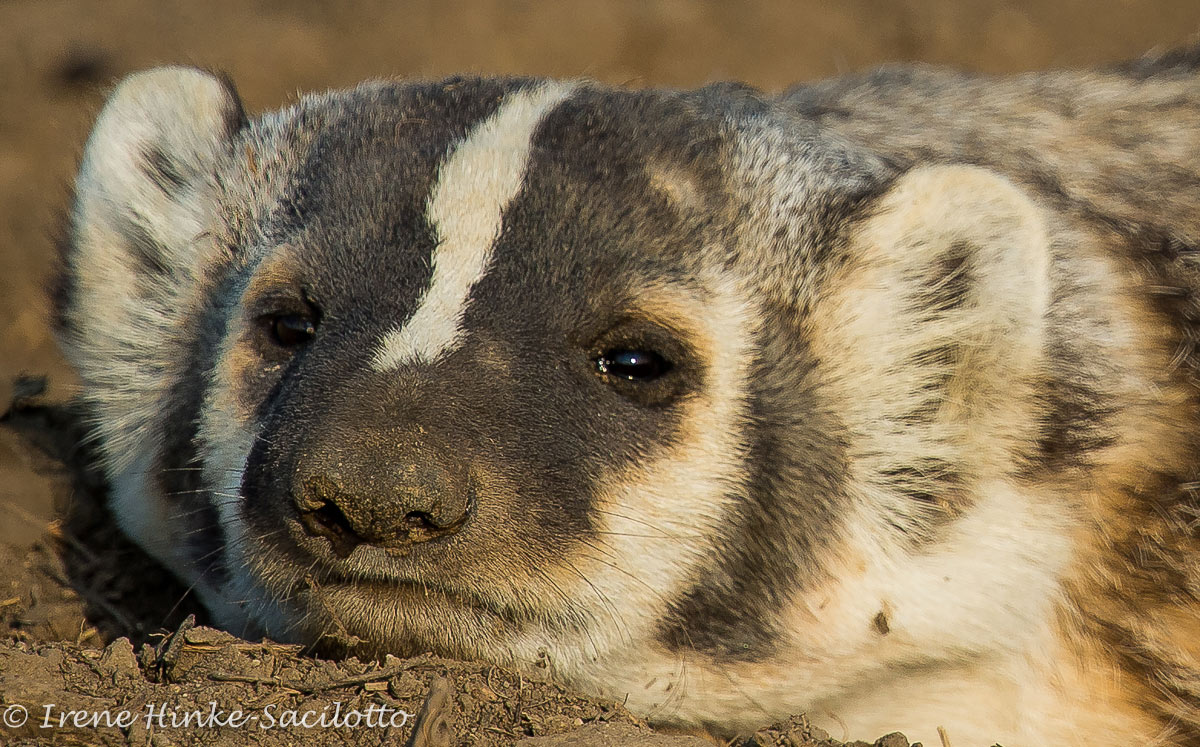
Could have been very aggressive but was not as long as i moved slowly and did not corner him. Seems comfortable with easy access to its burrow..
– When navigating through marsh, be aware that high grasses, soft mud, and changing water level may make navigation confusing and make it difficult to return to your origin.
– Let someone reliable know where you are going and when you plan to return.
– Don’t feed wild animals. It can result in their expecting food or bitting or kicking you. People food will make animals ill.
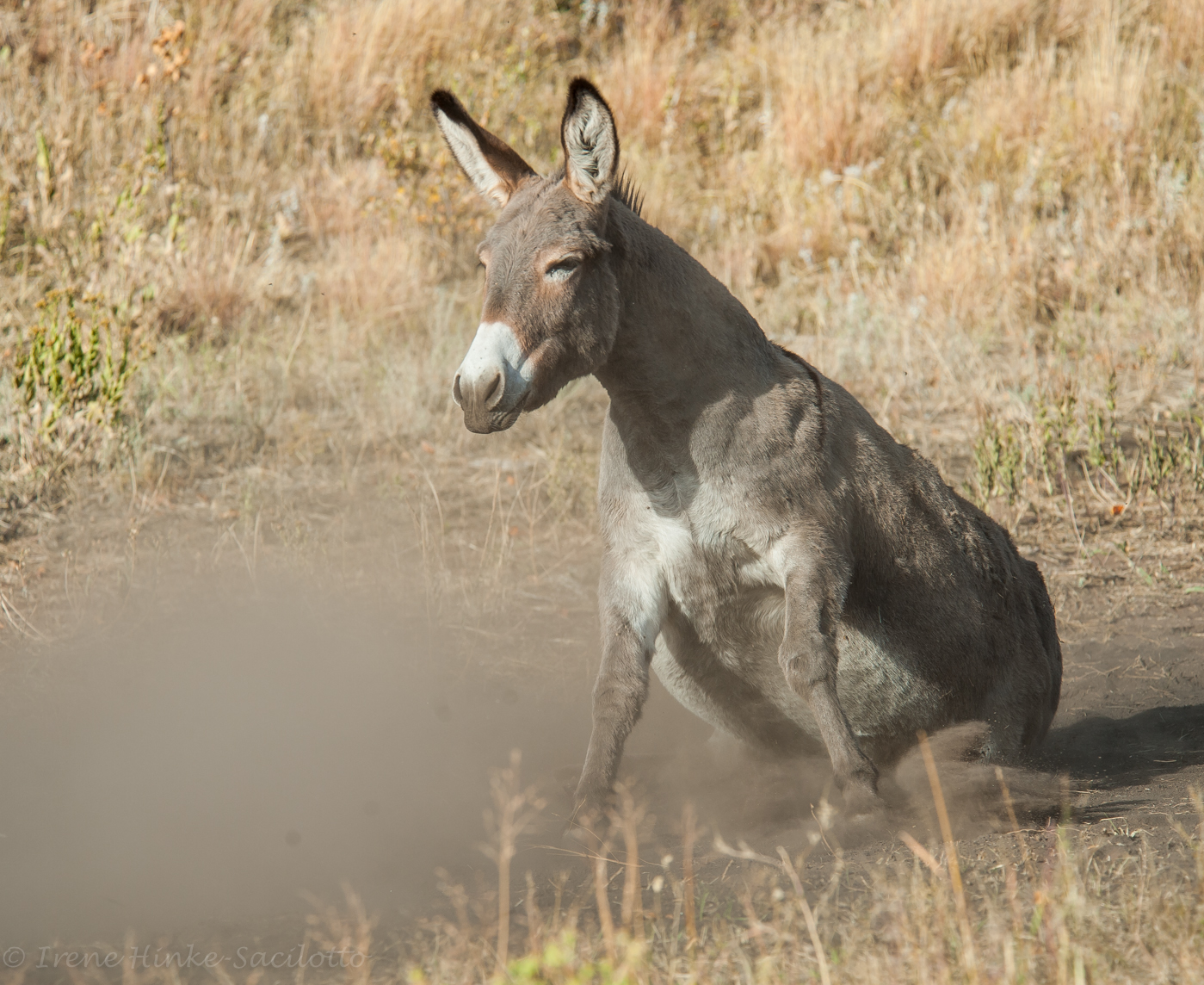
Wild Burrow in Custer State Park, SD. People had fed the burrows in the past and one expecting I had food gave me a surprise nudge from behind.
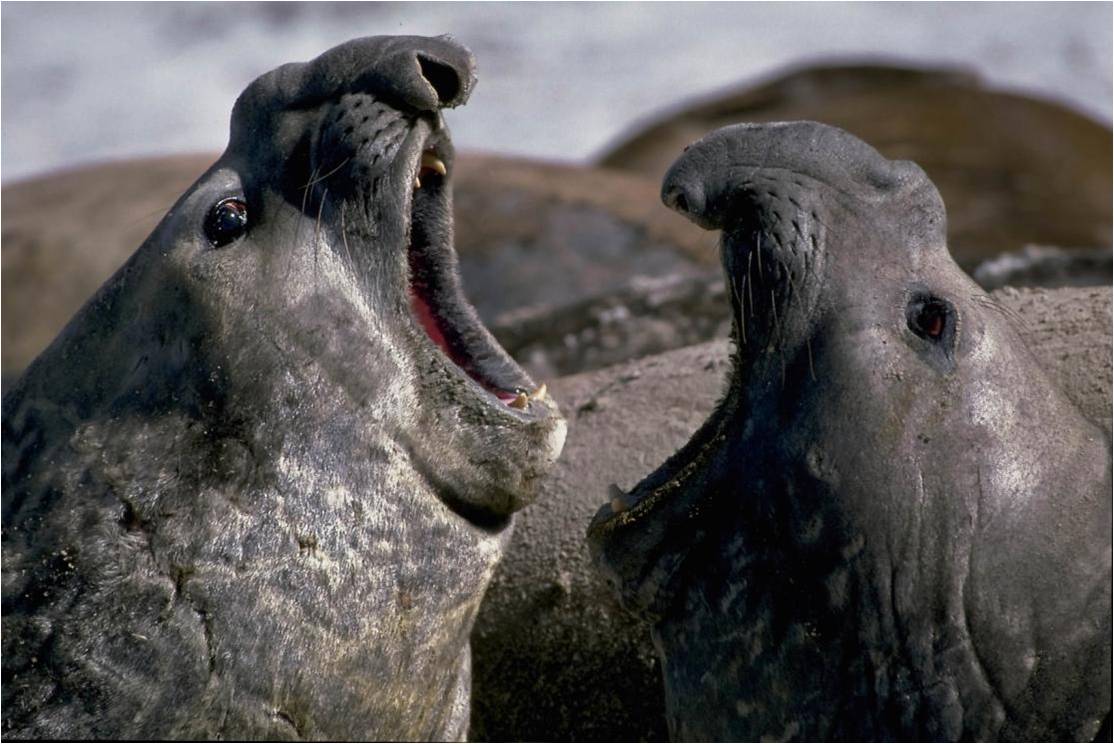
Fighting elephant seals. Stay clear of them for they weight a lot and can deliver a very dangerous bite not only from their teeth but the bacteria that dwell in their mouths.
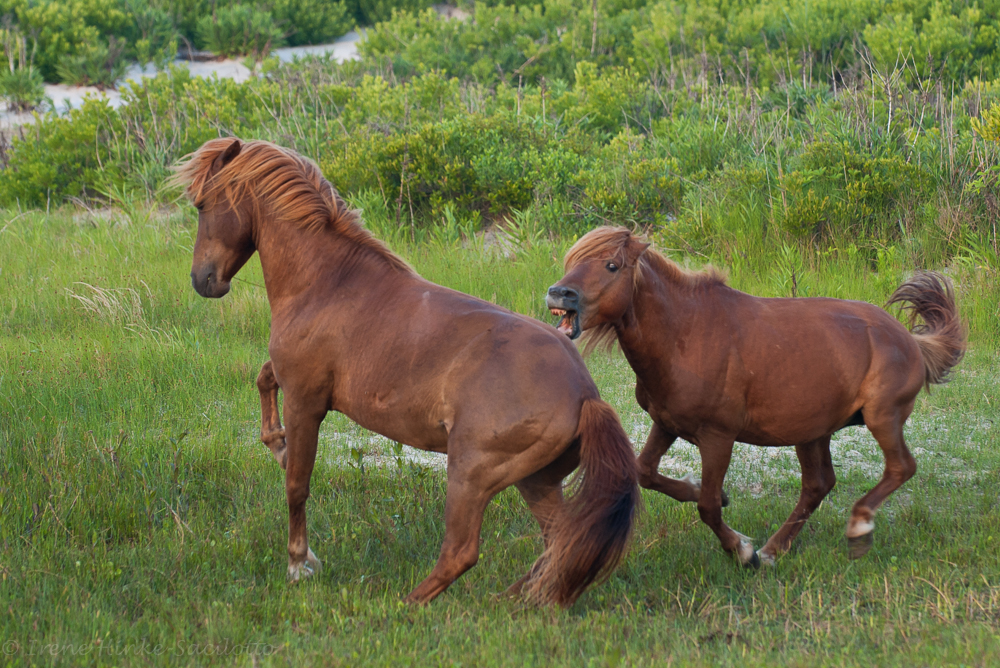
Wild Horses Fighting & Biting – Just because they are on a National Seashore and wander past people in the parking lots, they will bite or kick if approached too closely.
– Be careful where you put your hands when moving logs or reaching under something where poisonous spiders, snakes, etc. might be hiding. Consider wearing heavy gloves.
– Look before lying on the ground – fire ants, etc.
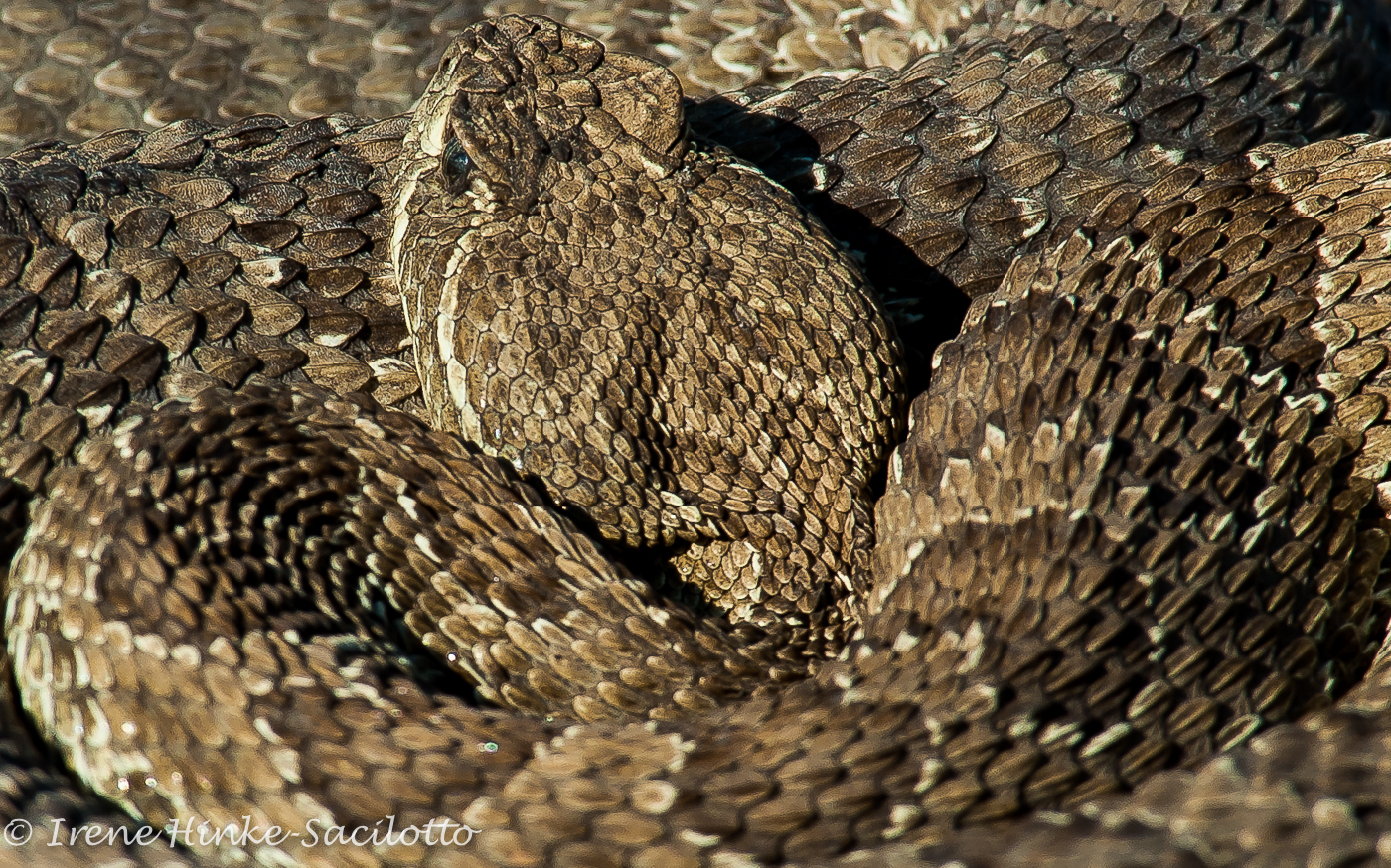
Prairie Rattle Snake. Not very aggressive but still will strike if it feels threatened.
– Don’t leave equipment unattended even in parks. Be alert around strangers.
– When traveling overseas, visit your local travel clinic for the most recent info on health concerns, vaccinations, etc.
– Avoid insect bites. Tics and mosquitos can carry serious diseases. Spray clothes with permethrin and consider using insect repellent such as those containing 30 % Deet. Net jackets and hats can be helpful in areas where mosquitos are present in high numbers.

Night Heron with crab. Walking into a marsh can be dangerous. Mud can suck off your shoes, you can fall, and may have difficulty finding firm ground. In many areas tidal guts criss-cross the marsh and make it difficult to navigate. On the coast changing tides can complicate the problem.
– Bats carry rabies so if scratched or bitten seek medical help immediately. Without the proper shots, it can kill.
– Use sunscreen and SPF 50 rated clothing for protection from the sun and to reduce the chances of skin cancer.
– Wear a hat to shade your face from the sun.
– For emergencies, carry a whistle, cell phone, or personal locator such as a handheld satellite communicator. Depending on the model, some locators can send and receive text, track your location, and send out SOS in case of emergency. They vary in power, coverage, and application with some primarily for emergencies. Check out www.delorme.com or www.outdoorgearlab.com. The later web site helps you decide what type of device is the best for your application.

Samples of personal Locator Beacons
– Be considerate of other photographers.
– Avoid damaging habitat.
– Don’t stress an animal or put it in danger.
– Only enter private property with permission.

by Osprey Photo Workshops & Tours | Apr 27, 2015 | FlowerPhotography, Nature Photography, Photo classes, Photo Technique, Photo Workshops, Wildlife Photography

NEW ….. Garden Photography Class
Lilypons Water Gardens (Field Trip)
23, 27, 30 Jun, 7 Jul 2015
with Irene Hinke-Sacilotto
Classroom @ Y in Abingdon, MD: 23 & 30 Jun, 7 Jul 2015 (630 – 8:30 PM)
Field practice @ Lilypons: 27 Jun 2015 (Saturday 8:00 – 11:30 AM)
Date for the field trip was selected because it is the best time to see lilies and lotus blooming at the same time. Garden is located near Frederick, MD. (Max number of participants – 6)

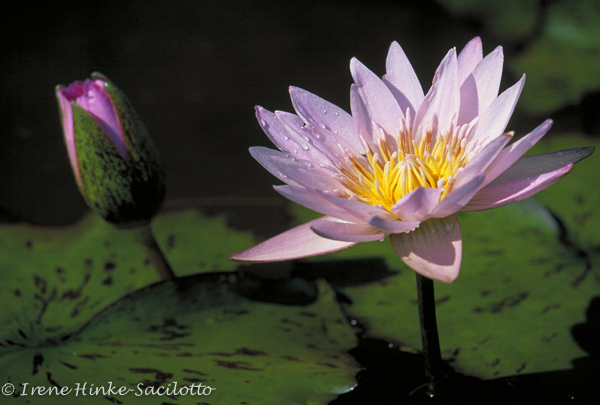
With exotic flowers in attractive surroundings, Lilypons Water Gardens offers you a wide range of subjects to photograph. Although designed to showcase lilies, lotus, and other aquatic plants, the gardens include terrestrial favorites — iris, cone flowers, ornamental grasses, flowering shrubs, black-eyed susans, and other colorful blooms. Some gardens are accented with ornamental waterfalls, fountains, and statues. These and other decorative touches add interest, perspective, and a sense of motion to the images. The gazebo reflecting in a lily pond is my favorite. In addition to their aesthetic appeal, the gardens provide opportunities to photograph wildlife drawn to the water, shelter, and food. Common visitors include an assortment of insects, birds, frogs, turtles, snakes, deer, fox, muskrats, raccoons, and squirrels.

Topics of discussion include: equipment selection, composition, lighting, exposure, creative design, and perspective. Field practice @ Lilypons Water Gardens. Classroom sessions are at the Ward Center, Y of Central Maryland, Abingdon, MD. (Based on Digital SLR cameras)

Directions to Lilypons – near Frederick, MD. Take Route I-70 and follow Route 85 south through Buckeystown until you see Lilypons Road. Turn left; cross the bridge; and turn into the entrance to Lilypons Water Gardens on the left. Proceed to the parking area. (Approximately 2 hours from Baltimore).
Register with the Y of Central MD, Abingdon, MD
http://ymaryland.org/locations/familycenterys/wardharfordcounty
410-679-9622


by Osprey Photo Workshops & Tours | Apr 23, 2015 | Bird photography, Nature Photography, Osprey, Photo classes, Photo Tours, Photo Workshops, Wildlife Photography

Each month I and other photographers post info and images on our photo workshops and classes in the “Upcoming Classes, Tours & Workshops” section of the Outdoor Photographer Magazine website www.outdoorphotographer.com
This month you will find info on my Tangier Island, VA workshop, 29-31 May 2015. Located in the middle of the Chesapeake Bay, the island is perfect for photographing community life, waterman at work, crab shacks, peers and waterways, and the wildlife that lives in the marshes and along the shoreline.

It is a terrific location to see and photograph ospreys. There are many platforms near Tangier Island in the waterways and on nearby islands and jetties where the birds nest. Part of the credit for the success of the ospreys in this portion of the bay goes to the mayor of Tangier Island, James “Ooker” Eskridge who loves watching the birds soaring overhead as works and helps maintain the nesting platforms. More images of Tangier Island and ospreys on my web gallery https://www.ospreyphoto.com


by Osprey Photo Workshops & Tours | Apr 6, 2015 | Nature Photography, Photo Technique, Photo Tours, Photo Workshops, South Dakota, Wildlife, Wildlife Photography

Prairie Dog. Approach low and slowly. Pausing periodically.
Stalking Techniques
- Emulate movements of subject. (For reindeer, a local guide suggested simulating antlers by holding tripod legs over our head.)
- Move slowly, pause periodically, & make no sudden moves.
- Keep a low profile to avoid appearing human and a threat.
-

Elephant seal. Approached with low profile.
- Observe the animal’s movement. Don’t walk directly towards it. Move on an indirect route. Where possible, move in a direction to intersect the path the subject is taking.
- Avoid wearing shiny objects, noisy clothing, perfumes, or anything that is not natural to their environment.
- Avoid intense eye contact with the subject & loud noises.
- Leave an escape route for the animal.
- Don’t block its path. (I accidentally did this once and had an elk run its antlers into the tree where I had taken refuge.)
- Animal curiosity can act in your favor.
-

Badger. Approached careful and kept distance using 600 mm lens. Only once when someone walked by me did it show signs of concern and briefly retreated to its burrow. Can be a nasty adversary.
- Photographing from the water seems to improve success in many cases where from a kayak, canoe, or wading.
- No matter if in a national park or refuge, animal behavior is Use your longer lenses. If the animal feels threatened, it may attack you and the attack can be lethal.
-

Black Bear. Shot from vehicle for safety reasons with long lens.
- Wearing camouflage clothes may be helpful since you better blend in with the surroundings. Like humans, animals can spot shapes and movements that are out of place. Literature says some but not all can detect colors so camouflage clothing may be a wise choice. In addition, camouflage clothing discourages approach by curious human who might disrupt your activities.
- I believe in some cases talking softly in monotone can provide an animal with a sense of security. The tone is not threatening, and the animal has a good sense of your location and is more comfortable with your presence.
- On windy days animals are often more nervous since noises can be confusing. It is harder for them to identify the direction noises and threats are coming from. This is not the case in places in South Texas where the wind blows constantly.

Moved into field taking a path that would intersect where the deer is moving.
by Osprey Photo Workshops & Tours | Mar 19, 2015 | Digital Photography, Nature Photography, Photo Technique, Photo Tours, Photo Workshops, Wildlife Photography
Hunting vs. Wildlife Photography

Young javelina attracted by corn under log. Shot from blind.
Similarities
Both disciplines require knowledge of subject, i.e. where and when to find the animal. What does their behavior indicate? The hunter and photographer can both gain useful knowledge from signs that an animal is present – tracks, scat (cat, bear, etc.), rubs, scrapes (deer), slides (otter), broken branches and claw marks on tree (bear), freshly gnawed logs near a beaver lodge or dam (active beaver), paths through vegetation, etc.

Game calls Found at hunting stores – Bass Pro, Dicks’s, and Cabelas.
At times hunters attract animals using decoys, game calls (predator, courtship, challenge}, camo clothing or netting for concealment, cover scents (fox urine, skunk), baiting, stalking, or blinds/hides So can the photographer. (see later blog).

Ghille suit used to hide from wildlife. Option to a blind.

Shot during a workshop in SD. The workshop group tracked a herd of pronghorn. Eventually the male left herd and approached us . It stop, stared and slowly turned around and walk away with his females. Guess we were to ugly for his herd.
Differences between hunting and photography (besides the obvious that the animal can walk away).
Hunting depends on concealment & you can successfully bag your prey at 100 to 200 yards. On the other hand, photography depends more on acceptance and the shooting distance is much closer (mallard, ¾ frame, @ 30 feet w/600 mm lens.) Much of the time photographers cannot approach the animal close enough to be able to photograph it successfully without being seen. Therefore stealth is critical and the ability to carefully approaching the subject in a non-threatening way (see later blog on stalking techniques). Approaching from the water can make the task easier whether you are wading in the surf or photographing from a canoe or kayak. It appears that without your legs showing you are not perceived as a threat. The animal’s curiosity also acts in your favor. These factors do not mean that blinds and camo cover should not be used when required.

Painted bunting. Because of the bird’s small size, used a 600 mm lens with 1..4 tele-converter for this shot. Was at my closest focusing distance, less than 15 feet away.

Waded into the icy waters of Iceland for this shot. Curiosity drew him closer to me.
Stallking & the use of blinds – see upcoming blogs.


